


Copper Water Pitcher
A copper water pitcher brings warmth and utilitarian grace to a room, offering robust metal vessels shaped for practical service and display.
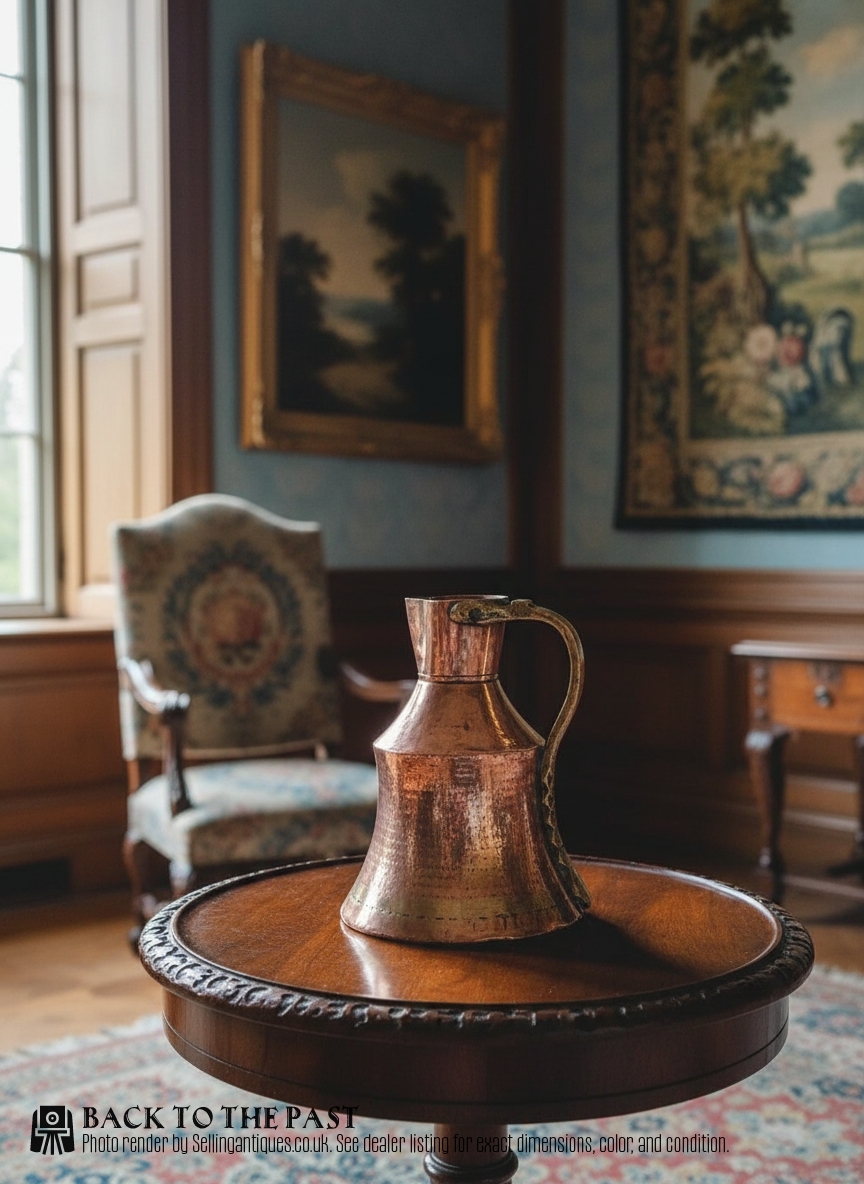
Copper Water Pitcher
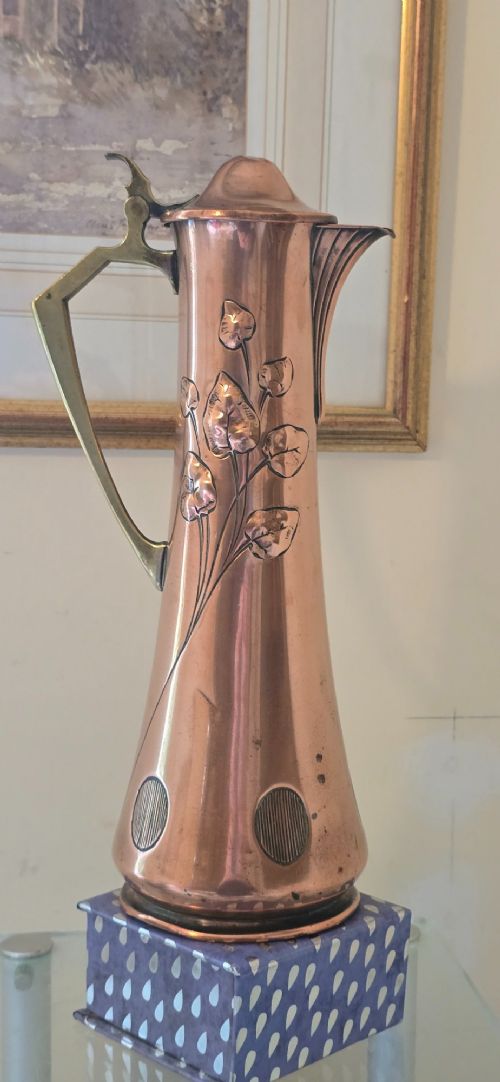
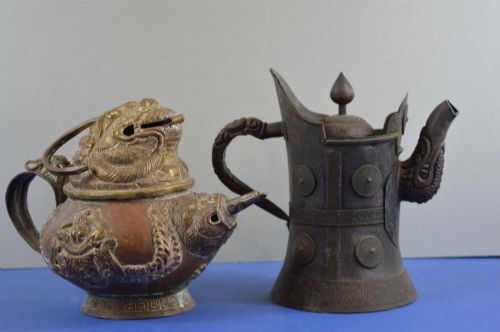
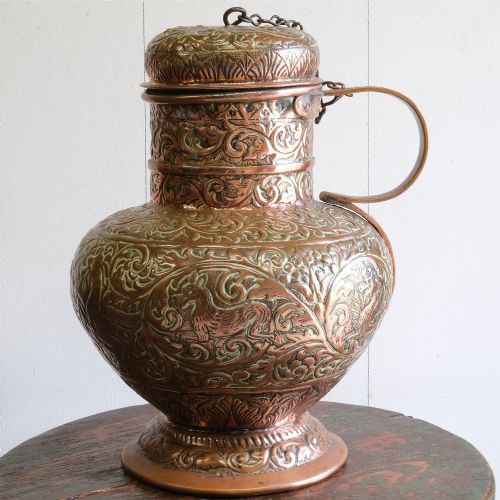
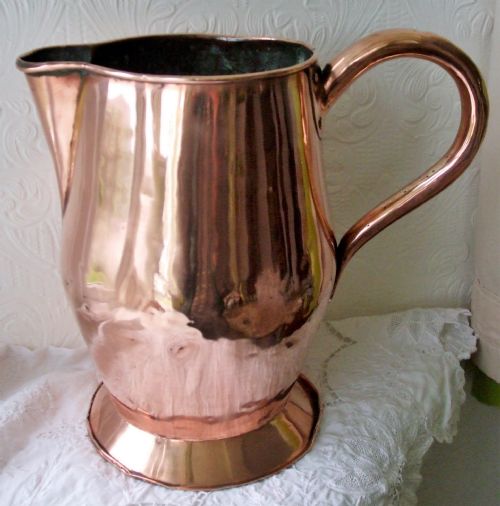
When you search for a copper water pitcher, you encounter a variety of metal vessels spanning Georgian, Victorian, and Arts and Crafts periods. These containers range from large tavern jugs and measuring vessels to decorative ewers and domestic pouring jugs.
You are most likely to meet 19th century English examples on this page, alongside Georgian pieces and continental or Middle Eastern forms. Makers such as Joseph Sankey and WMF also contribute distinct stylistic interpretations in copper and brass.
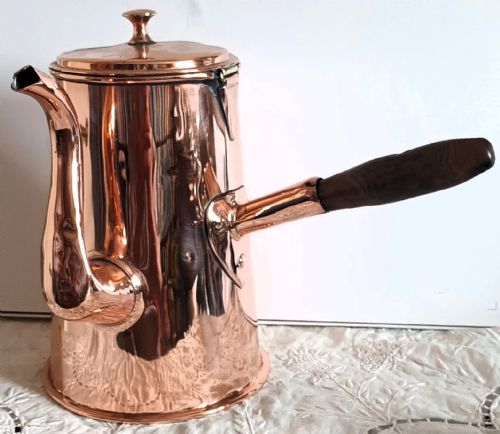
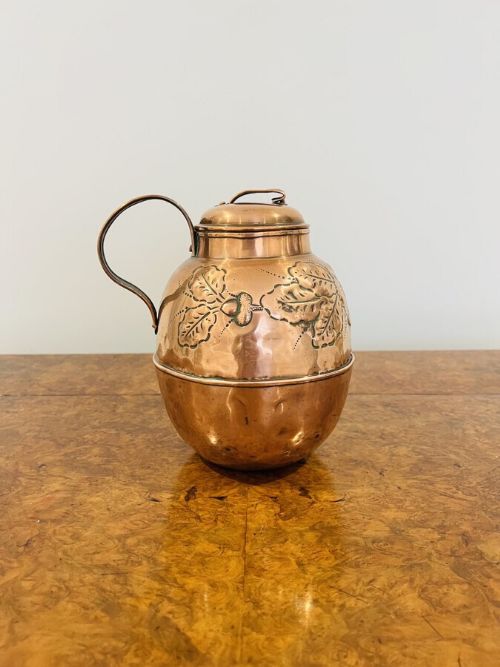
The selection includes specialised forms like Jersey cans and coffee pots, reflecting the diverse domestic and ceremonial uses of copperware across different regions and centuries.
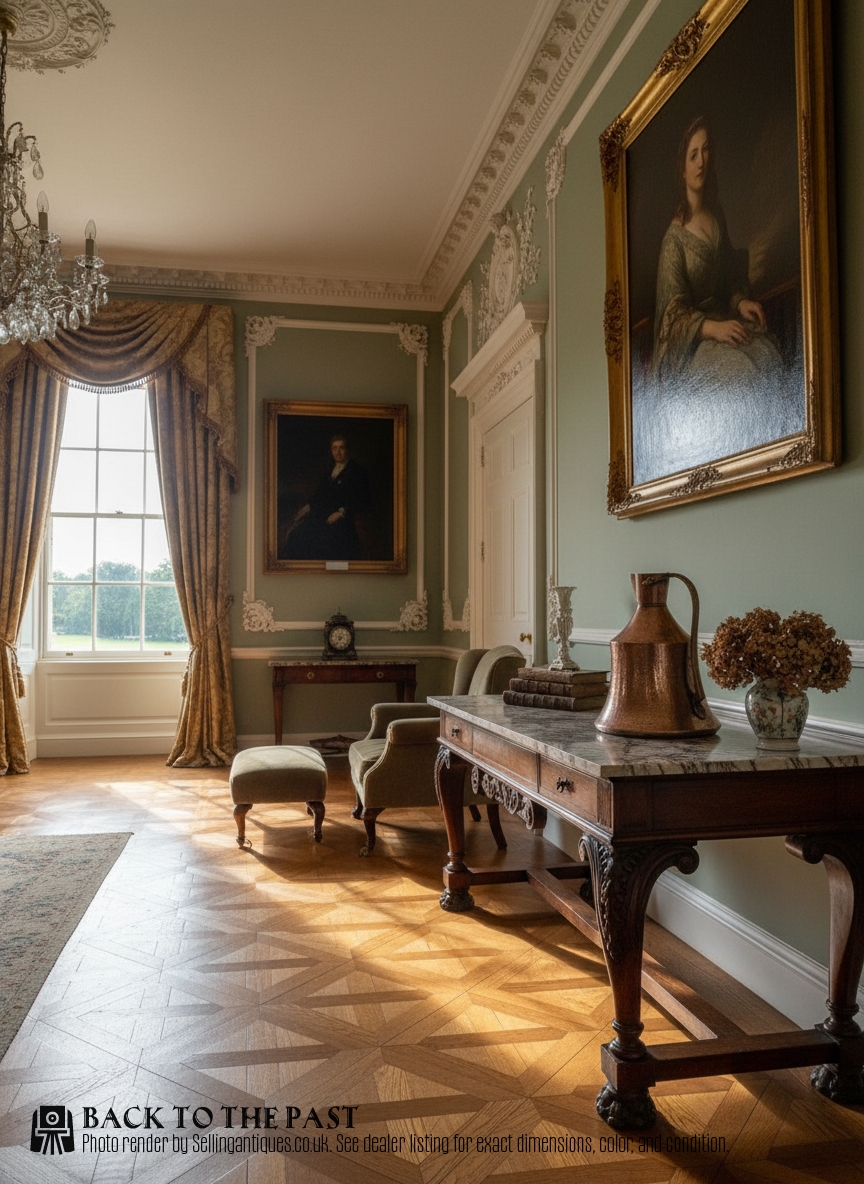
Materials and construction
Makers formed these vessels primarily from sheet copper, often incorporating brass for handles, rims, or finials, and sometimes lining the interior with tin for safe liquid containment. Bronze and earthenware also appear in related regional pieces.
Construction techniques include hand-seamed joints and hammered surfaces, reflecting both utilitarian strength and decorative ambitions in styles ranging from plain Georgian utility to ornate Art Nouveau relief work.
Copper Water Pitcher Retail Price Guide 2026
Typical asking prices for copper water pitcher among the pieces listed under this phrase on Sellingantiques today, from the lower quarter to the upper quarter. They describe what is for sale here now, not the wider market.
Listings span from the 18th century through the Edwardian era, utilising copper, brass, bronze, tin, and earthenware.
Assessing quality
Quality rests in the weight of the metal, the rigidity of the handle attachment, and the cleanliness of the seams. Heavier gauge copper maintains its structural integrity better over centuries of use.
Artistic execution distinguishes standard utilitarian ware from superior examples, visible in crisp relief work, balanced proportions, and thoughtful integration of brass and copper elements.
Joseph Sankey·WMF·Livesley Powell and Co·Orme Evans and Co·Loftus of Oxford Street London
The Copper Water Pitcher Glossary
- Ewer
- A large jug with a wide spout, traditionally used for holding water for washing or serving.
- Jersey can
- A distinctive tall, slender copper can originating from the Channel Islands, traditionally used for storing and pouring dairy or water.
- Aftaba
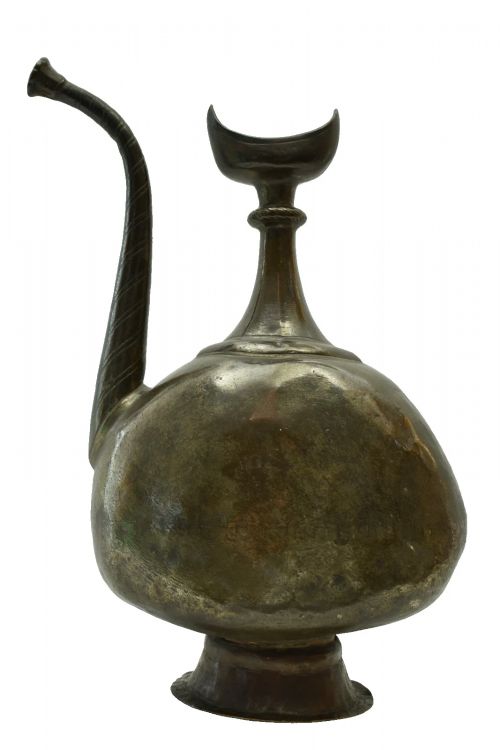
- A traditional Islamic metal ewer used for ritual ablutions, typically featuring a long spout and crescent finial.
- Arts and Crafts
- A design movement emphasising handcraftsmanship, simple forms, and natural materials over mass production.
- Copper lustre
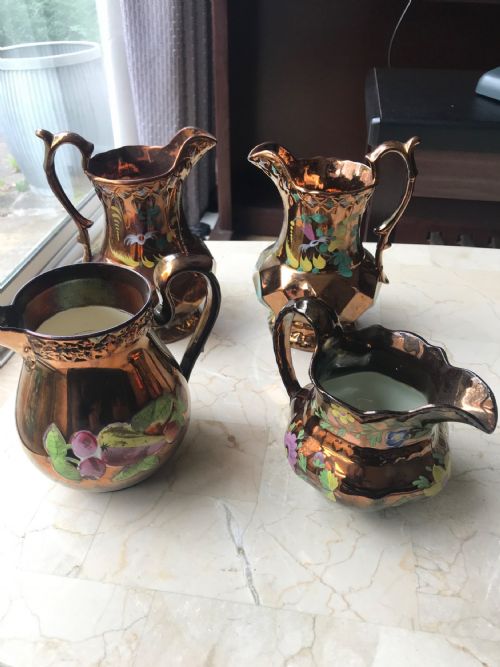
- A pottery glaze containing metallic elements that produce a reflective, iridescent copper sheen on ceramic jugs.
Copper Water Pitcher: Frequently Asked Questions
How do I clean an antique copper pitcher?
Wash the vessel gently with warm soapy water and a soft cloth to preserve the surface. Avoid harsh chemical polishes that strip away the natural patination accumulated over centuries.
Dry the metal thoroughly after cleaning to prevent spotting. Many collectors prefer to leave the aged surface untouched as a mark of authenticity.
Are old copper pitchers safe for drinking water?
Most antique copper pitchers feature an internal tin lining designed to prevent direct contact between the water and the copper. Over long periods, this lining can wear thin.
It is generally wiser to treat these historic vessels as decorative objects rather than for daily beverage consumption unless a professional inspection confirms the interior safety.
How do I tell a Georgian copper jug from a Victorian one?
Georgian copper jugs often display heavier, simpler utilitarian construction with hand-beaten seams and sturdy brass handles suited for tavern or household service. They tend to prioritize rugged capacity over elaborate ornamentation.
Victorian examples frequently incorporate maker marks, standardised capacity stamps like VR crowns, or distinct stylistic flourishes inspired by Arts and Crafts and Art Nouveau movements.