

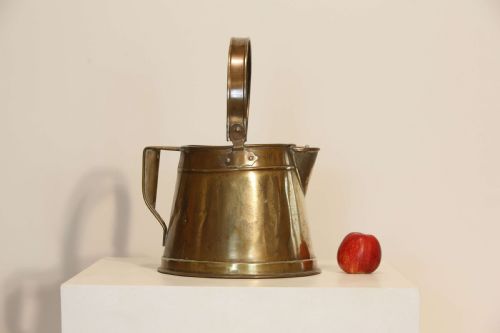
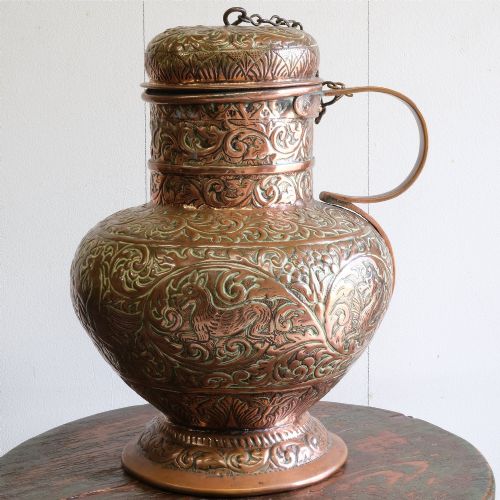
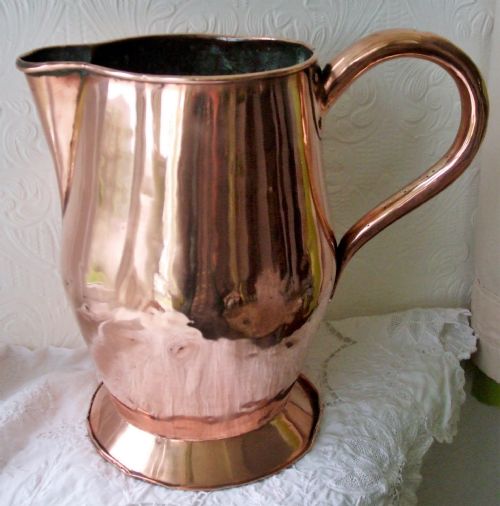


Large Copper Water Jug
These large copper water jug pieces offer robust domestic utility and warm metal tones that anchor an interior.
Large Copper Water Jug
When you search for a large copper water jug, you are looking at substantial vessels designed for carrying, storing, or measuring liquids in domestic and institutional settings. The forms on this page range from generous tavern measures and club flagons to tall ewers and pitchers.
The version you are most likely to meet here dates from the Georgian and Victorian periods, often holding several pints up to multiple gallons. These pieces combine heavy-gauge metalwork with utilitarian forms that reflect their original daily use.
How they were made
The construction of these vessels relies primarily on heavy sheet copper, shaped and joined with seamed edges and frequently lined with tin for safe liquid containment. Many examples incorporate contrasting brass handles, rims, or stamps to reinforce structural stress points.
Craftsmen utilised hand-hammering and riveted joints to build durability into each body, while later Arts and Crafts makers applied surface texturing and simpler, honest construction methods.
Large Copper Water Jug Retail Price Guide 2026
Typical asking prices for large copper water jug among the pieces listed under this phrase on Sellingantiques today, from the lower quarter to the upper quarter. They describe what is for sale here now, not the wider market.
Some tavern jugs retain enough capacity to test the lifting strength of the most determined host.
What varies in quality
Quality in these pieces is dictated by the thickness of the original metal sheet and the integrity of the structural seams. Heavier gauge copper retains its structural rigidity over centuries, whereas thin metal succumbs easily to dents and distortion.
The refinement of the handling and the crispness of maker or capacity stamps also separate standard utilitarian vessels from finer examples. Proportion and balance in the handle attachment distinguish superior craftsmanship from basic workshop output.
The Large Copper Water Jug Glossary
- Flagon
- A large drinking vessel with a handle and often a lid, used for serving liquids. These pieces frequently appear in heavier tavern or institutional contexts.
- Ewer
- A large jug with a wide spout and a curved handle, traditionally designed for pouring water. This form often possesses a more decorative silhouette than standard measuring vessels.
- Tin lining
- A protective interior coating applied to prevent the copper from reacting with water or food contents. Most functional vessels received this treatment for safe daily usage.
- Measure
- A vessel certified to hold a specific volumetric quantity of liquid, often bearing official verification marks. These items served commercial purposes in pubs and clubs.
- Seamed
- A method of joining flat metal sheets together by overlapping and folding the edges, frequently secured with rivets. This technique provides the structural backbone for large holloware.
Large Copper Water Jug: Frequently Asked Questions
How were large copper water jugs used?
These vessels served for transporting and dispensing water and other liquids in domestic households, inns, and taverns. Large capacity pieces often acted as central reservoirs or communal serving containers.
Many examples functioned as official measure jugs in clubs and public houses, holding exact volumes of liquid for trade and consumption.
How do I clean an antique copper jug?
Routine maintenance requires only a soft cloth and warm soapy water to remove surface dust and grime. Avoid harsh chemical cleaners that strip away the natural historic patina accumulated over centuries.
If polishing is desired, use a dedicated copper cream applied gently to preserve the underlying metal and surface texture without scratching.
Are these copper jugs safe for drinking water?
Original vessels were typically lined with a thin layer of tin to prevent direct contact between the water and the reactive copper metal. Over long periods, this historic tin lining may wear thin or become compromised through use.
For practical daily drinking use, a professional retining of the interior is often necessary to ensure food safety standards are met.
How do I tell Georgian copper jugs from Victorian ones?
Georgian pieces often display simpler, heavier hand-beaten construction with restrained decorative detailing and generous proportions. Their handles and seams reflect older blacksmithing and brazing traditions.
Victorian examples frequently incorporate standardised capacity stamps, such as royal cyphers, alongside more mechanized seaming techniques and occasional brass mounts.