



Copper Wall Lanterns
Copper wall lanterns bring genuine history to an exterior wall, combining robust metalwork with clear glass to light porches and entrances.
Copper Wall Lanterns
Copper wall lanterns encompass exterior and porch lighting shaped by Victorian, Edwardian, and mid-century aesthetics. These fixtures emerge from street lighting, railway carriages, and coach-houses, adapting utilitarian origins for domestic use.
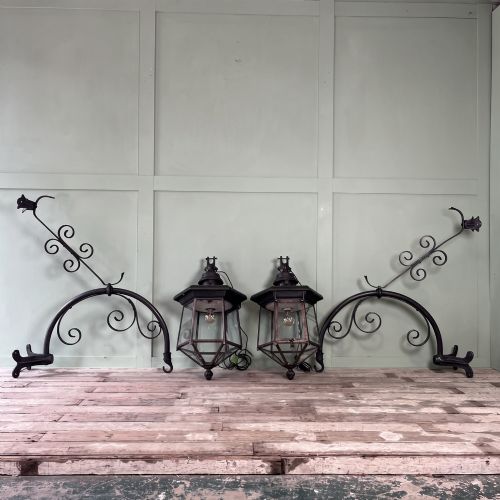
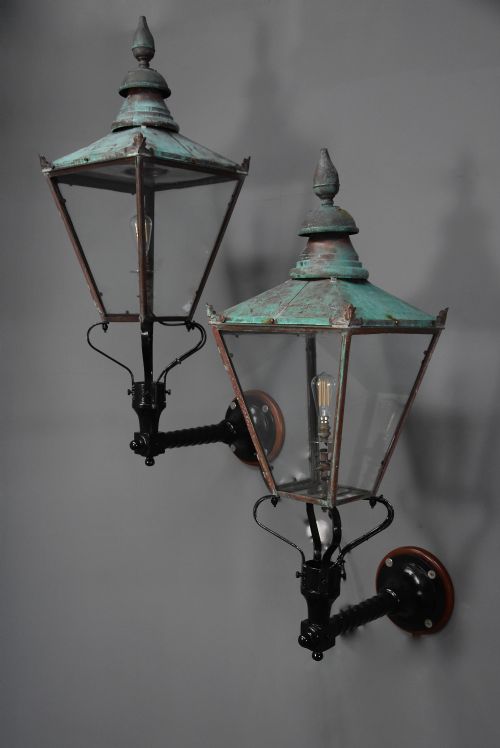
The versions most commonly met on this page span the late nineteenth century through to the 1940s. They arrive in forms such as large octagonal bodies, half lanterns, and sophisticated pairs supported by spiral twist wall brackets.
Makers and designers of the period utilised durable metals alongside glass panels to withstand exterior conditions. Many examples began their service as gas lamps before conversion to electricity.
How they were made
Makers constructed these lanterns using sheet copper, brass, and iron, often combining materials for structural strength. Supporting brackets frequently employ wrought iron or cast iron to bear the weight of large glass and metal bodies.
Panels of glass are fitted into metal frames, secured to hold against weather while protecting the interior burner or bulb. Surfaces show patination, including verdigris finishes developed through age and exposure.
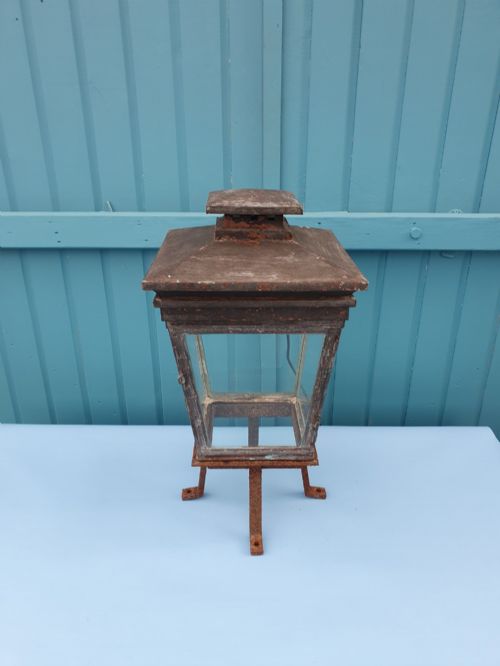
Several lanterns served previous lives illuminating railway carriages and foggy nineteenth-century streets before finding their way onto domestic walls.
What varies in quality
Quality rests in the substantial weight of the metal and the precision of the assembly. Finer examples display careful attention to structural brackets, such as spiral twists, and well-proportioned octagonal or coach-house framing.
The condition of the original patination and the integrity of the integrated brass and copper components separate robust workshop pieces from simpler utilitarian items.
REVO Leicester
The Copper Wall Lanterns Glossary
- Verdigris
- A green patina that forms naturally on copper over time through atmospheric exposure. This surface layer indicates considerable age and original material composition.
- Coach-house style
- A traditional design aesthetic modelled after the large lanterns mounted on nineteenth-century carriage houses. These fixtures typically feature prominent bracket supports and protective roof caps.
- Octagonal
- A geometric form possessing eight distinct sides, frequently utilised in the construction of larger wall lanterns. This shape allows for maximum light dispersal through multiple glass panels.
- Gas conversion
- The technical adaptation of a historic lamp originally built for gas lighting to house modern electrical fittings. This process preserves the original exterior housing while enabling practical use.
Copper Wall Lanterns: Frequently Asked Questions
Can these outdoor lamps withstand modern weather?
These lanterns were originally built for exterior or street use, constructed from durable copper and iron designed to endure the elements.
Buyers should inspect the specific condition of the metalwork and glass to ensure it suits an outdoor environment today.
How do I wire a historic gas conversion?
Most converted lanterns require a qualified electrician to install modern internal lamp holders and safely connect the wiring.
The original structure remains intact while the internal fittings are updated for standard domestic power supply.
What periods do these wall lights represent?
The selection spans from the Victorian and Edwardian eras through to the 1940s, including nineteenth-century railway and street designs.
Stylistic markers such as neo-classical framing or Arts and Crafts simplicity help identify the manufacturing decade.
Are pairs commonly found together?
Many listings feature matched pairs originating from street lighting, porch installations, or railway carriages.
Finding matching pairs offers a balanced look for flanking an entrance or large doorway.