


Copper Preserving Pan
A copper preserving pan is a heavy kitchen essential built for boiling down fruit and sugar, combining raw utility with handsome metalwork.
Copper Preserving Pan
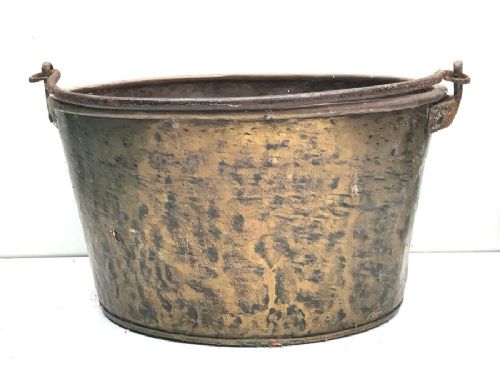
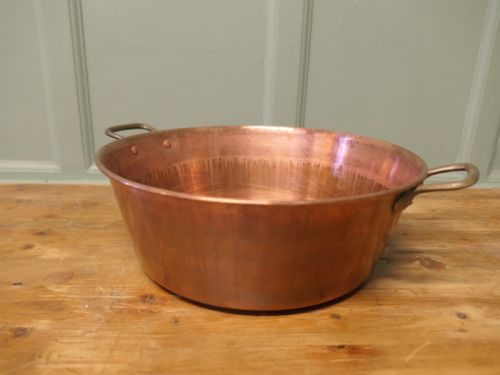
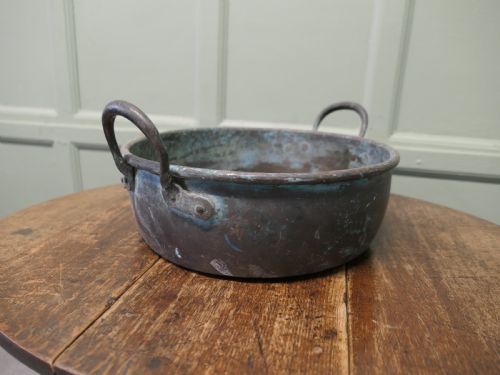
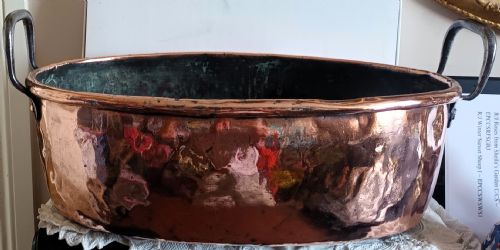
A copper preserving pan takes the form of a wide, open bowl or basin designed for heavy kitchen tasks like jam-making and boiling down fruit. The inventory on this page ranges from Georgian George III examples to Victorian country pieces and later 1930s kitchenware.
You will encounter various utilitarian forms, including cream setting pans, duck roasting pans, and double-handled preserve pans. Most items originate from the eighteenth and nineteenth centuries, reflecting a long tradition of heavy domestic cookware.
How they were made
Makers formed these vessels primarily from heavy copper, pairing the metal with iron, wrought iron, brass, bronze, and tin linings. Many examples feature riveted construction, attaching handles securely to withstand the weight of hot contents.
The heavy gauge metal distributed heat evenly across the base and sides, which was crucial for boiling fruit without burning the sugar. Blacksmiths and metalworkers hammered and shaped the thick sheets by hand to create durable cookware and vessels.
Copper Preserving Pan Retail Price Guide 2026
Typical asking prices for copper preserving pan among the pieces listed under this phrase on Sellingantiques today, from the lower quarter to the upper quarter. They describe what is for sale here now, not the wider market.
Some heavy preserve pans survived centuries of bubbling jam only to retire as decorative umbrella stands by the front door.
What varies in quality
The thickness of the metal sheet and the heft of the handles dictate the quality of a pan. Heavier gauge copper indicates a vessel built for serious kitchen work rather than light display.
Skill in the hammering and the neatness of the riveting separate standard utilitarian kitchenware from finer workshop production. Surviving maker marks or well-finished handles also elevate specific pieces above ordinary kitchen vessels.
Hodges & Sons
The Copper Preserving Pan Glossary
- Preserving pan
- A wide, open cooking vessel specifically shaped for boiling fruit and sugar to make jam. The shallow profile allows steam to evaporate quickly during the process.
- Cream setting pan
- A wide, shallow bowl used in dairies to let cream rise to the top of milk before skimming. These pieces share the same heavy metal construction as preserve pans.
- Wrought iron
- Tough, fibrous iron worked by a blacksmith to form sturdy handles and fittings. It appears on older pans where strength was needed to lift heavy loads.
- Riveting
- A method of joining metal plates using pins hammered flat at the ends. This technique secured handles firmly to the body of heavy copper vessels.
Copper Preserving Pan: Frequently Asked Questions
What was a copper preserving pan used for?
These large vessels were designed for boiling fruit, sugar, and jams over an open fire or stove. The wide shape and heat-conducting properties helped prevent scorching during long simmering sessions.
Today, they make practical planters, log holders, or striking decorative items for a hearth or kitchen counter.
How do I clean an antique copper pan?
Wash the metal gently with warm soapy water and a soft cloth to remove everyday dust and grease. Avoid harsh abrasives that scratch the surface and strip away the aged tone.
Many collectors prefer to leave the dark oxidation and historic marks untouched rather than polishing the metal to a bright shine.
How can I tell a Georgian pan from a Victorian one?
Georgian pieces, including George III examples, often display earlier hand-beaming techniques and distinct handle attachments from the eighteenth century. Victorian pans tend to be slightly heavier and frequently feature machine-rolled rims or sturdier iron drop handles.
Examining the construction methods and fastener types helps clarify the likely period of manufacture.
Are these pans safe for modern cooking?
Most antique pans were lined with tin to prevent food from reacting directly with the copper. Over centuries of use, this inner lining often wears away entirely.
If you plan to cook with the pan rather than display it, you should check the interior condition and have the tin lining restored by a specialist.