


Copper Preserves Basin
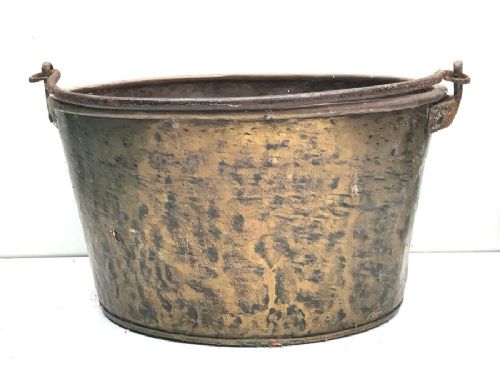
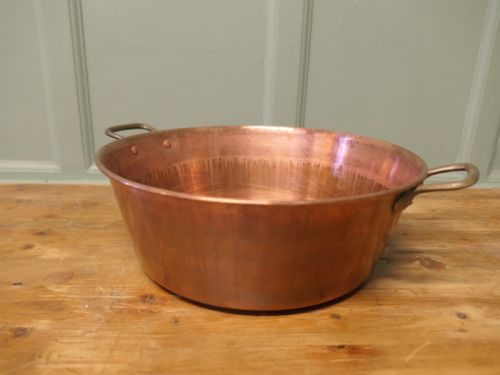
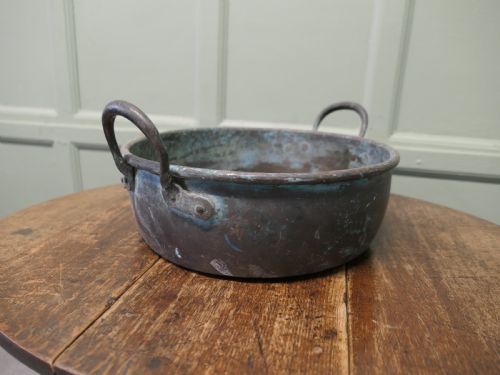
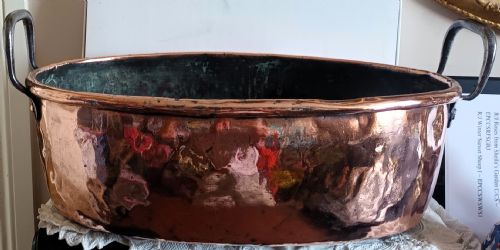
These copper preserves basin examples are heavy kitchen vessels shaped for boiling fruit and sugar, combining warmth and utility for the home.
Copper Preserves Basin
A copper preserves basin serves as a traditional kitchen tool designed for boiling fruit, jam, and cream across different historic eras. The selection here ranges from George III and Georgian pieces to 19th Century Victorian examples.
Most pieces take the form of large pans, bowls, and cooking vessels intended for heavy domestic use. Buyers will frequently encounter versions featuring double handles and wrought iron or brass attachments.
Origins stretch from the 18th century through to the early 20th century, representing rustic farmhouse and country kitchen traditions. These items function both as historic cookware and as decorative focal points in modern spaces.
How they were made
Makers formed these vessels primarily from heavy sheet copper, hammering the metal to shape deep basins suitable for heat distribution. Workshops often incorporated iron handles, secured with heavy rivets to withstand the weight of boiling contents.
Selected pieces include brass and bronze elements, alongside tin linings applied to protect the copper during culinary tasks. The combination of wrought iron and beaten copper defines the structural construction seen across the period.
Materials documented across the inventory include copper, brass, iron, wrought iron, bronze, and tin.
What varies in quality
The weight of the metal and the substance of the handles separate heavier utilitarian vessels from lighter domestic items. Substantial walls and robust attachments indicate a vessel built for rigorous kitchen service.
Form and proportion distinguish individual pieces, with well-balanced double handles and clean hammering marks showing superior metalwork. Maker attribution, such as signed foundry work, adds distinction to specific pans.
Hodges And Sons
The Copper Preserves Basin Glossary
- Preserving pan
- A wide, open vessel designed for boiling fruit and sugar to make jam. The shallow shape allows steam to evaporate quickly.
- Cream setting pan
- A specialised shallow bowl used in dairies to allow cream to rise to the top of milk. These examples feature wide rims for easy skimming.
- Wrought iron
- Iron beaten and shaped by hand into handles and mounts. This material provides strong support for heavy copper bodies.
- Tin lining
- A protective layer applied to the interior surface of copper cookware. This coating prevents copper from reacting with acidic ingredients.
Copper Preserves Basin: Frequently Asked Questions
What were copper preserves basins used for?
These vessels were utilised primarily for boiling fruit with sugar to create jams and preserves in domestic kitchens. The metal distributed heat evenly, preventing the mixture from burning during long cooking sessions.
Certain variations functioned as cream setting pans in dairies or as general cooking vessels. Their robust construction allowed them to handle heavy daily workloads over open hearths or stoves.
How do I date a copper pan?
Dating relies on observing construction methods, handle attachments, and overall form recorded in the piece. Georgian and George III items often display distinct hand-beaten characteristics and specific handle shaping.
Victorian pieces frequently appear heavier with standardised rivet patterns and broader regional styles. Comparing the metal thickness and handle materials helps narrow the period of manufacture.
Are these pans safe for modern cooking?
Many historic copper vessels feature interior tin linings that may require re-tinning before modern culinary use. Buyers should inspect the interior surface condition carefully if planning to cook with the pan.
Alternatively, many collectors choose to display these basins as decorative objects in kitchens. They bring historical warmth and texture to interior spaces without needing active culinary restoration.
How do I clean and polish copper?
Cleaning involves using specialised copper creams or traditional mixtures of salt and acid to remove oxidation. Gentle washing preserves the historic patina while lifting surface tarnish.
Avoid abrasive scrubbers that scratch the hand-beaten metal surface. Regular dusting and occasional polishing keep the material bright without stripping its age.