


Copper Pots and Pans
Copper pots and pans are heavy metal vessels built for utilitarian kitchen service, bringing tactile warmth and historic utility to modern homes.
Copper Pots and Pans
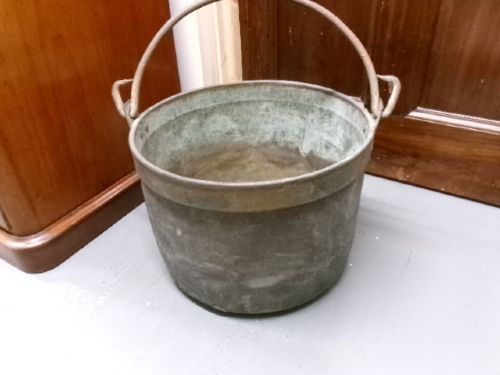
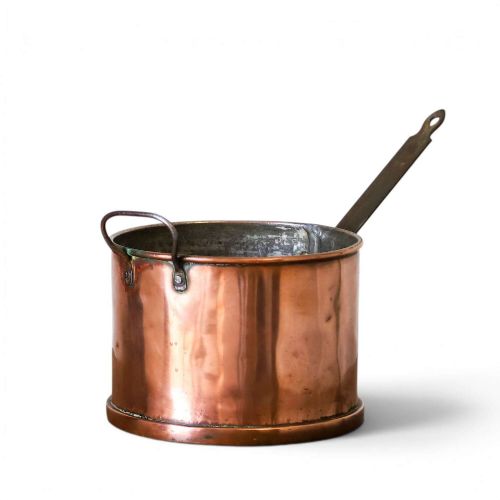
When you search for copper pots and pans, you encounter heavy kitchenware spanning the Georgian, Victorian, and Arts and Crafts periods. These survivors of historic domestic spaces include saucepans, preserving pans, jam pans, and cauldrons designed for daily culinary labour.
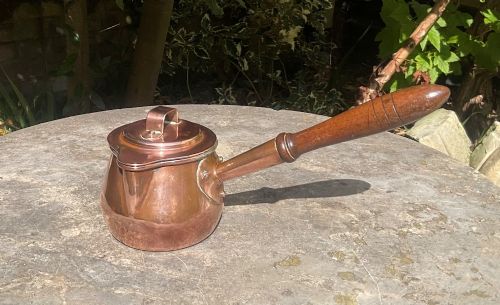
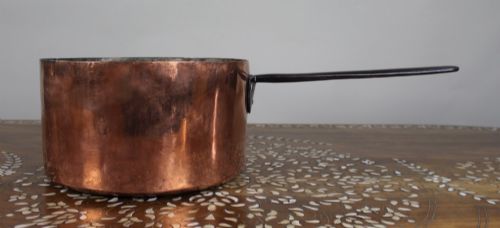
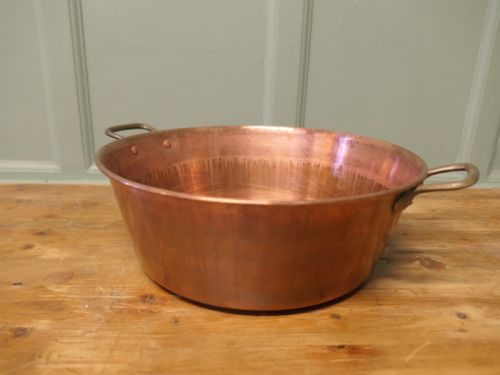
The pieces appearing on this page most frequently take the form of nineteenth-century French and English saucepans, alongside large preserving pans fitted with iron or brass handles. You also find sets of graduated pans and specialised vessels such as brandy warmers and cream setting pans.
Originating from both rural farmhouses and formal kitchens, these objects reflect domestic traditions where metalware was an essential investment. Their varied forms reveal how cooking methods changed across the eighteenth and nineteenth centuries.
How they were made
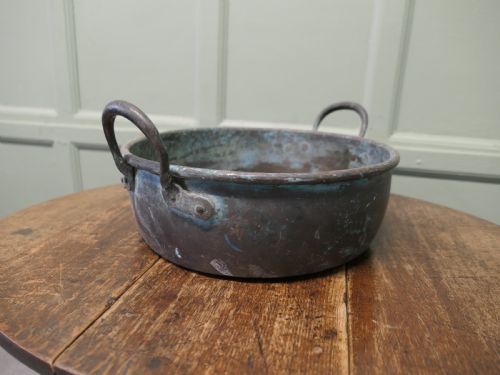
Makers formed these pieces primarily from heavy gauge copper, shaping the metal by hand-beating sheets into deep vessels. Wrought iron, brass, and cast iron frequently provide structural contrast through swing handles, rivets, and mounts.
Interior surfaces typically feature a lining of tin to prevent the copper from reacting with acidic foodstuffs during cooking. Rivets secure handles tightly to the body, ensuring the vessels could withstand heavy loads of preserves or liquids over open fires.
Historic grain measures repurposed as kitchen vessels show that eighteenth-century cooks measured ingredients by volume with heavy metal authority.
What varies in quality
Quality rests in the thickness of the copper plate and the integrity of the original construction rather than mere decorative appeal. Heavier gauge metal indicates a vessel intended for rigorous professional or large household use.
The refinement of the hand-beaten surface and the survival of original patination distinguish superior examples. Maker stamps and balanced proportions elevate certain pieces above standard utilitarian output.
Hodges and Sons·Liptons·Griffiths
The Copper Pots and Pans Glossary
- Preserving pan
- A wide, open vessel designed for boiling fruit and sugar. These heavy pans allow rapid evaporation during jam-making.
- Brandy warmer
- A small vessel with a pouring lip and long handle used for heating spirits. They date frequently to the Georgian period.
- Cream setting pan
- A wide, shallow dish utilised in dairies for separating cream from milk. Their broad surface aided the cooling process.
- Cauldron
- A large round-bottomed cooking vessel suspended over a hearth. They often feature robust wrought iron swing handles.
- Gauge
- The thickness of the metal sheet used to form the vessel. Heavy gauge pieces maintain heat evenly and resist warping.
Copper Pots and Pans: Frequently Asked Questions
How do I clean old copper?
Traditional methods rely on mild acidic pastes to remove tarnishing while preserving the underlying metal. Avoid abrasive pads that scratch the historic surface.
Leaving the natural patina intact is often preferred by collectors who value the aged appearance of nineteenth-century kitchenware.
Can I still cook with them?
Many antique pans require a fresh tin lining before modern food preparation can safely occur. Old tin linings wear thin through centuries of scrubbing and use.
Consult a specialist tinner if you intend to use your vessels on a contemporary hob or open flame.
How do I date a copper pan?
Examination of the construction marks, handle attachments, and dovetail seams provides clues to age. Hand-beating marks and early rivet styles point towards the Georgian and Victorian eras.
Maker stamps or patent names also help narrow down the decade of manufacture.
Were they made in sets?
Kitchens of the eighteenth and nineteenth century often utilised graduated sets of pans that nested together. These matched collections were designed for efficient storage and varied culinary tasks.
Finding a complete surviving set from the same period is uncommon and highly sought after.