





Continental Wood Sculpture
Continental wood sculpture brings centuries of devotion and craftsmanship into a room, offering rich textures and historic presence through carved figures of saints, angels, and holy personages.
Continental Wood Sculpture
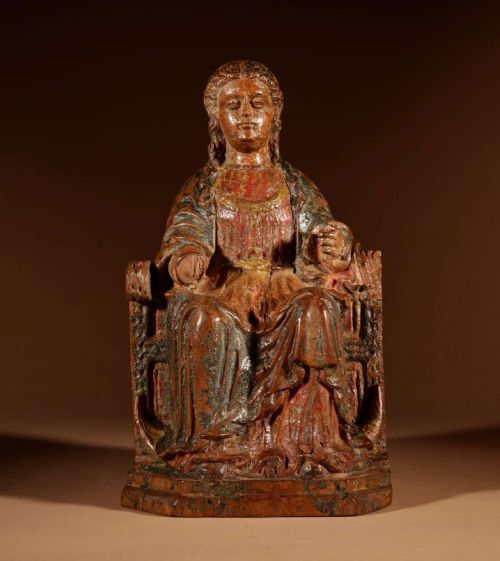
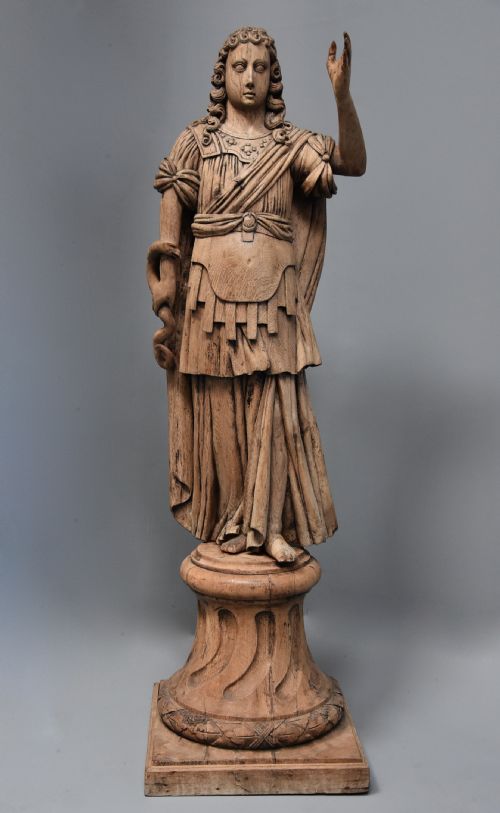
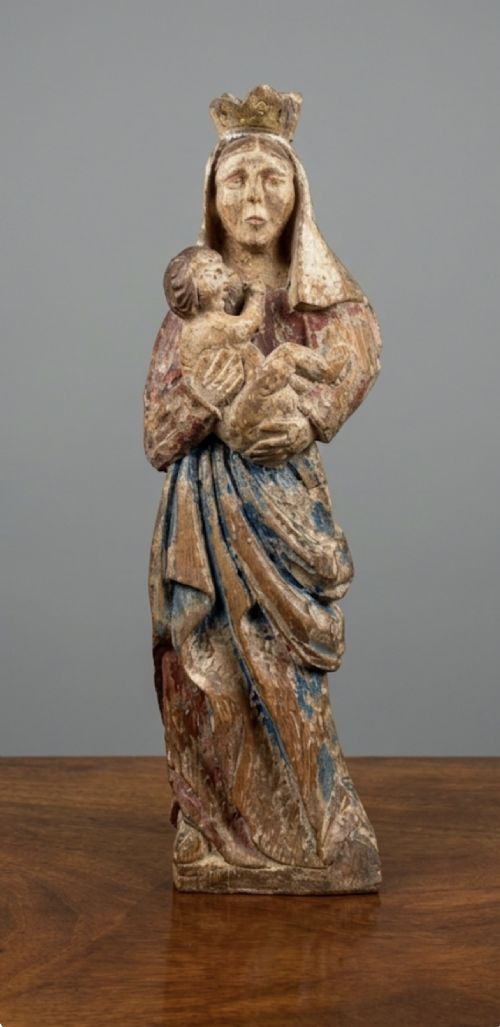
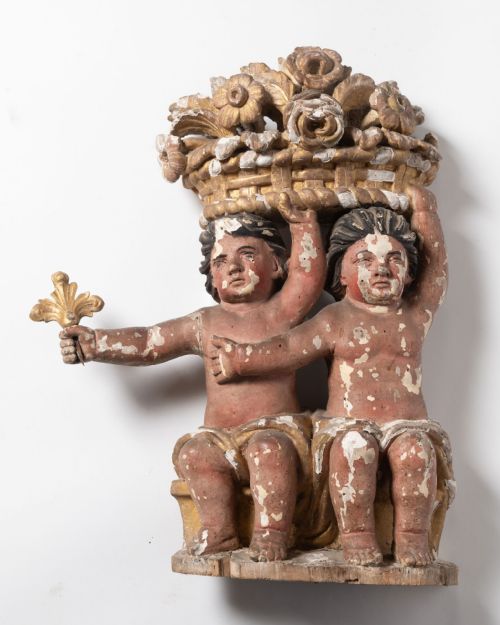
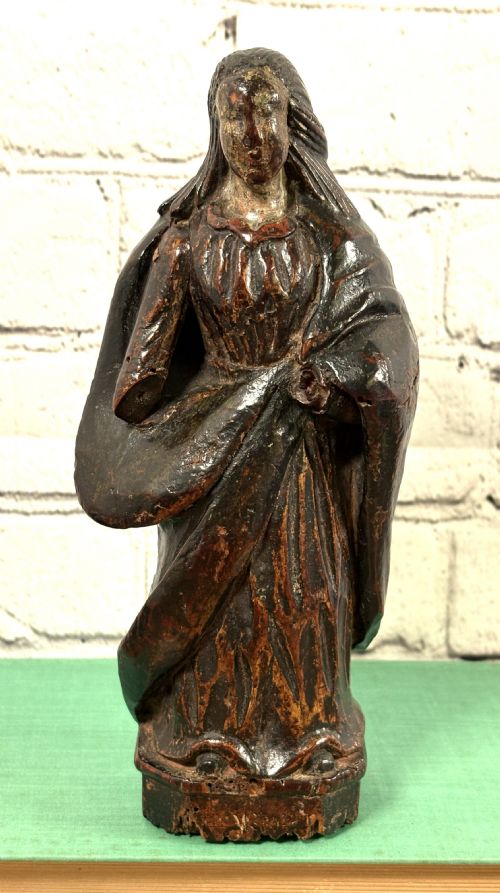
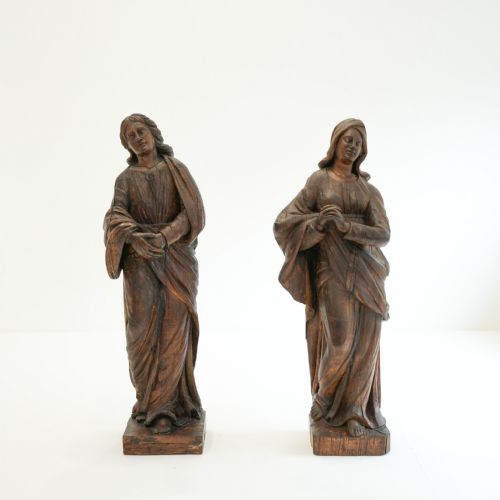
A continental wood sculpture typically portrays religious subjects, saints, or biblical figures carved in solid timber across various European traditions. When exploring continental wood sculpture on this page, buyers encounter figures dating from the pre-sixteenth century through the nineteenth century, including saints, madonnas, and cherubs.
The forms range from small devotional carvings intended for domestic shrines to life-size statues created for ecclesiastical settings. Oak, walnut, and limewood dominate the regional styles, spanning Gothic, Renaissance, and Baroque aesthetics.
How they were made
Carvers utilised hard and soft timbers such as oak, walnut, limewood, pine, and applewood, selecting logs suited to intricate drapery or robust structural forms. Working with chisels and gouges, artisans shaped the timber directly from the block, sometimes hollowing larger figures to prevent splitting as the wood dried.
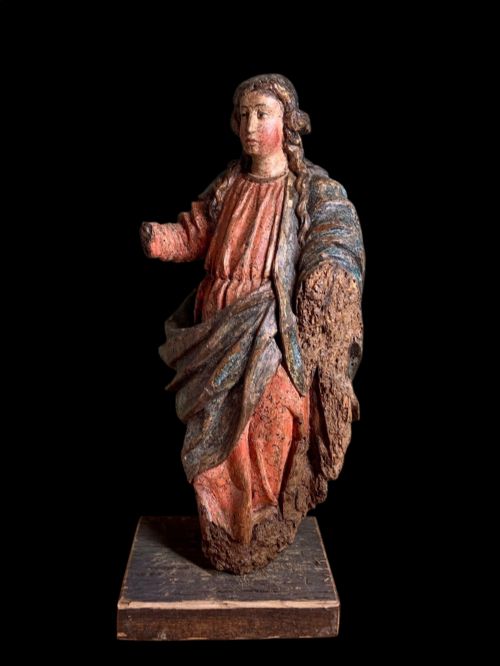
Many surfaces received a preparation layer of gesso before painters applied polychrome pigments, metallic silver, or gold leaf to enhance the visual impact of clothing and flesh tones. These layered finishes protected the organic material while adding vibrant colour and luminosity to the devotional imagery.
An unexpected carousel horse gallops among the solemn saints, proving that continental wood carving found joy outside the church too.
What varies in quality
The preservation of original surface treatments, including early polychrome paint and gilding beneath subsequent layers of time, elevates the historic integrity of a piece. Depth of relief, confident tool work, and the harmonious integration of the figure with its original base or plinth further separate superior examples.
The Continental Wood Sculpture Glossary
- Polychrome
- Painted in several colours. This term describes wooden sculptures adorned with applied pigments to depict garments and flesh.
- Gesso
- A plaster mixture applied to wood as a smooth base for painting or gilding. It provides a stable surface that accepts fine detail.
- Gilding
- The application of gold leaf onto a prepared surface. It creates a luminous metallic finish often found on church figures and altarpieces.
- Socle
- A short plinth or pedestal supporting a statue. Many figural carvings and candlesticks mount directly onto these stable bases.
- Corpus Christi
- An image of Christ on the cross. These anatomical carvings focus on the dramatic representation of the crucifixion.
Continental Wood Sculpture: Frequently Asked Questions
How do I care for antique wood sculptures?
Keep wooden figures away from direct heat sources and dramatic humidity fluctuations to prevent the timber from splitting or warping. Dust gently with a dry, soft brush rather than using liquid polishes or chemical cleaners.
Stable indoor environments help preserve fragile gesso and polychrome paint layers over decades of display. Avoid placing pieces in direct sunlight to protect historic pigments from fading.
Where were these figures originally displayed?
Many of these carved figures originated in European churches, abbeys, and private chapels as focal points for prayer and veneration. Life-size saints and angels once adorned altars, rood screens, and architectural niches.
Smaller devotional sculptures often belonged to domestic shrines or were commissioned for private contemplation in noble households. Over time, surviving examples transitioned into secular collections and historic interiors.
How can I tell the period of a carving?
Stylistic indicators such as the heavy folds of Gothic drapery or the theatrical dynamism of Baroque posture provide clear clues to a piece's era. Tool marks left behind by chisels and gouges also reflect period-specific woodworking techniques.
Comparing the choice of timber, such as early oak versus later limewood, helps narrow down regional origins and production dates. Examining the wear patterns on exposed wood and preparation layers further confirms age.
What is a Santos figure?
A Santos figure is a carved representation of a saint or religious personage, traditionally utilised in religious processions and domestic devotions. These figures often feature articulated limbs or simplified bodies designed to support elaborate fabric vestments.
Originating primarily in Catholic regions, they served as tangible focal points for prayer and ritual observances. Collectors prize them for their distinct devotional character and historic regional craftsmanship.