


17th Century Religious Carving
These pieces of 17th century religious carving bring devotional history into a room through centuries of hand-chiselled timber and layered pigment.
17th Century Religious Carving
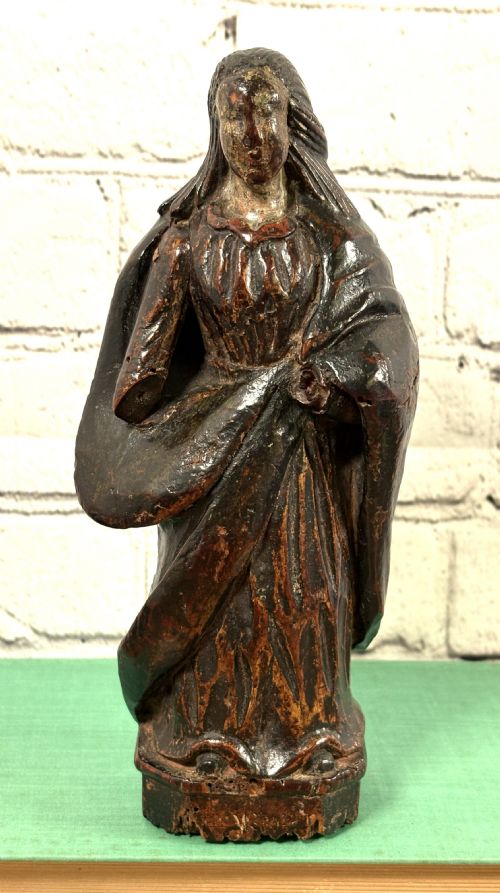
A 17th century religious carving encompasses wooden sculptures, wall reliefs, and architectural panels depicting saints, putti, and biblical narratives. Buyers seeking these works encounter figures of Christ, the Virgin Mary, and various saints shaped by continental European hands during the baroque era.
The objects on this page appear predominantly as freestanding limewood or oak figures, walnut and chestnut wall panels, and polychrome wooden character heads. Spanish, Italian, Flemish, French, and German origins dominate the selection, reflecting distinct regional schools of Catholic and devotional art.
Most pieces derive directly from the seventeen-hundreds, though occasional later nineteenth-century revival interpretations incorporating antique panels also surface. The forms range from monumental architectural reliefs and corpus Christi figures to small devotional icons and fragments of altarpieces.
How they were made
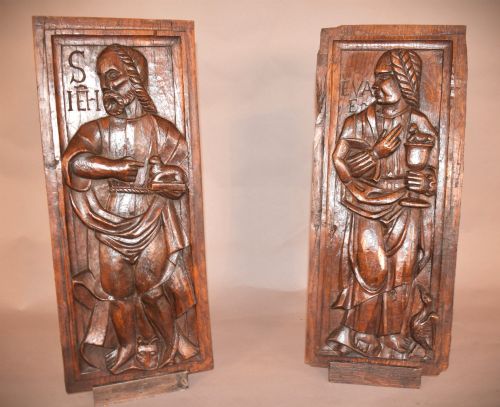
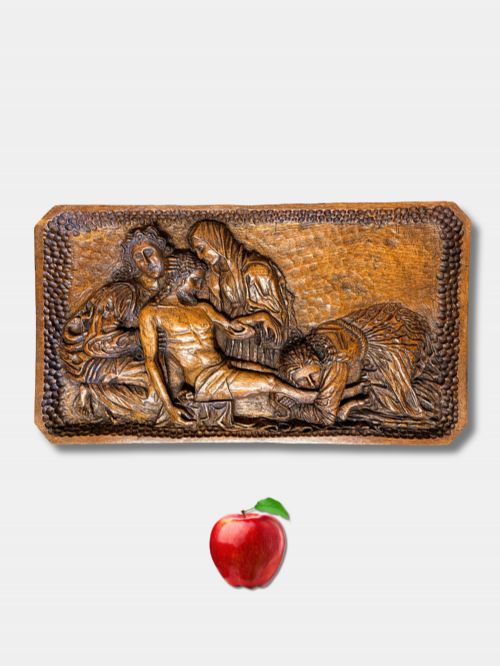
Carvers utilised dense native timbers such as oak, walnut, chestnut, applewood, boxwood, and limewood, selecting specific woods for their grain and stability. Soft limewood and boxwood allowed for intricate undercut details in figures of saints and putti, while sturdy oak and walnut suited larger architectural panels.
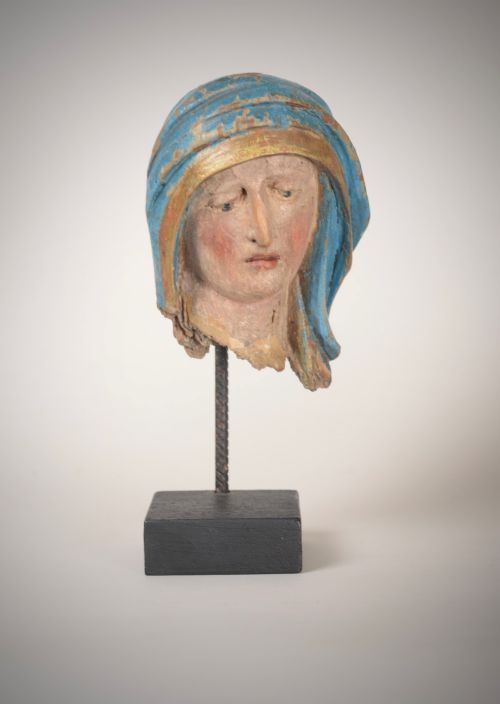
Many surfaces received a preparation of gesso before being finished with gold leaf or polychrome paint schemes. Artisans layered pigments directly onto the carved wood to bring realism to robes, flesh, and hair, often supplementing the sculptural form with giltwood framing.
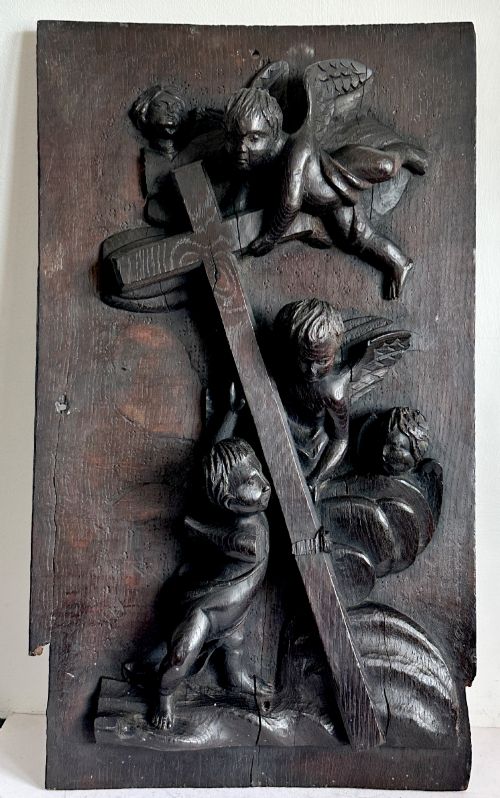
Angels occasionally come in pairs because heaven apparently refused to travel solo.
What varies in quality
The distinction between standard workshop output and superior artistry lies in the anatomical precision and expressive depth of the carving. Master carvers captured fluid drapery folds and lifelike facial expressions in limewood or oak, whereas lesser pieces display stiff proportions and perfunctory tool marks.
The preservation of original surface treatments, including early polychrome pigment and gold leaf, determines the historical integrity of a piece. Works retaining undisturbed gesso and pigment layers demonstrate greater survival than those stripped to bare wood or heavily overpainted in later centuries.
The 17th Century Religious Carving Glossary
- Polychrome
- Decorated in multiple colours. This term describes wooden sculptures and panels painted with pigments to depict realistic skin tones and garments.
- Giltwood
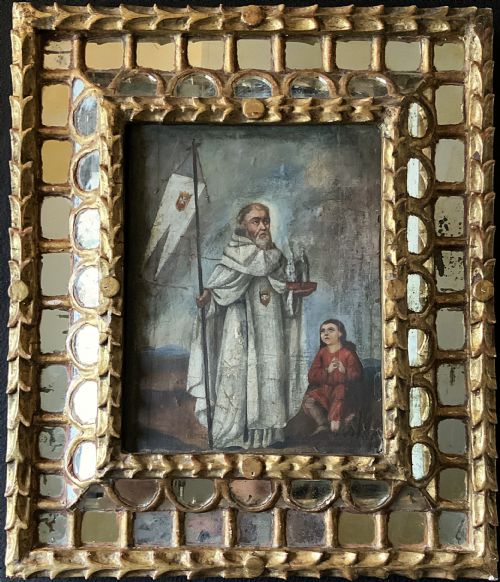
- Wood that has been treated with gold leaf or gold paint. It frequently appears on baroque frames and decorative elements surrounding religious panels.
- Corpus Christi
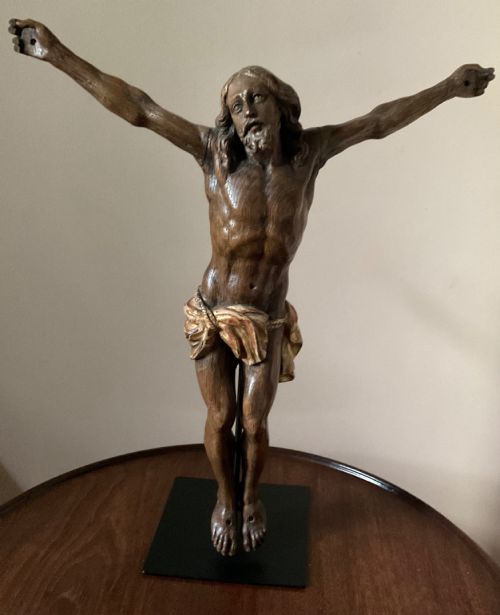
- The body of Jesus depicted on a cross. These figures are carved from woods such as boxwood and olive wood.
- Gesso
- A white paint mixture consisting of a binder mixed with chalk or plaster. It served as a smooth base for gilding and polychrome painting on wood.
- Putto
- A figure of a small chubby infant, often winged. Pairs of these carved figures frequently adorn church furnishings and architectural panels from the period.
17th Century Religious Carving: Frequently Asked Questions
Where did these carvings originate?
The majority stem from continental European workshops across France, Spain, Italy, Flanders, and Germany. Regional styles reflect local ecclesiastical traditions and baroque aesthetics.
Craftsmen in these areas produced devotional art for churches, private chapels, and domestic shrines using native hardwoods.
How do I care for wooden carvings?
Keep wooden sculptures and panels away from direct heat sources and drastic humidity fluctuations. Stable environmental conditions protect fragile gesso and polychrome layers from cracking.
Dust the surfaces gently with a soft, dry cloth without applying modern liquid polishes or chemical cleaners.
Are these pieces from churches?
Many panels and figures originated as parts of larger altarpieces, church screens, or architectural church furnishings. Others were created for private devotional use in domestic settings.
Secularisation and changing liturgical fashions over the centuries led to these items entering private collections.
What is a corpus christi?
A corpus christi is a sculptural representation of Christ on the cross. These pieces focus specifically on the figure rather than the cross itself.
Carvers rendered them in various scales, from small boxwood figures to monumental wall sculptures.