





Wooden Corpus Christi
A wooden corpus christi is a carved figure of Christ on the cross, sought after for devotional depth and historic craftsmanship.
Wooden Corpus Christi
When you search for a wooden corpus christi, you encounter devotional figures spanning several centuries, from small boxwood carvings to life-size sculptures. The examples found here range from sixteenth-century lime wood pieces to later eighteenth-century interpretations.
Most entries originate from continental workshops in France, Spain, and the Low Countries. These pieces take the form of standalone figures, standing crucifixes, and wall-mounted wooden crosses.
How they were made
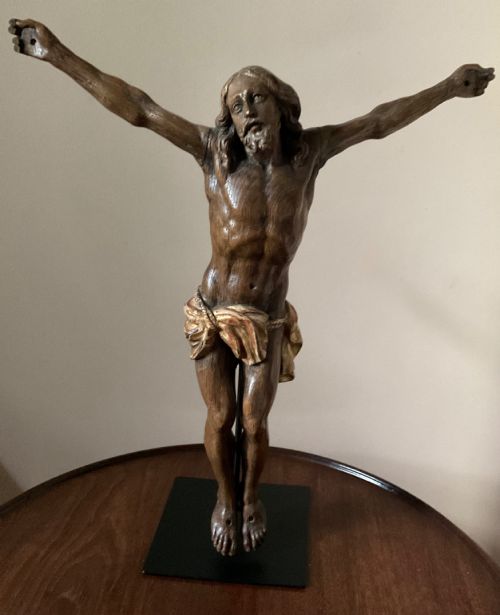
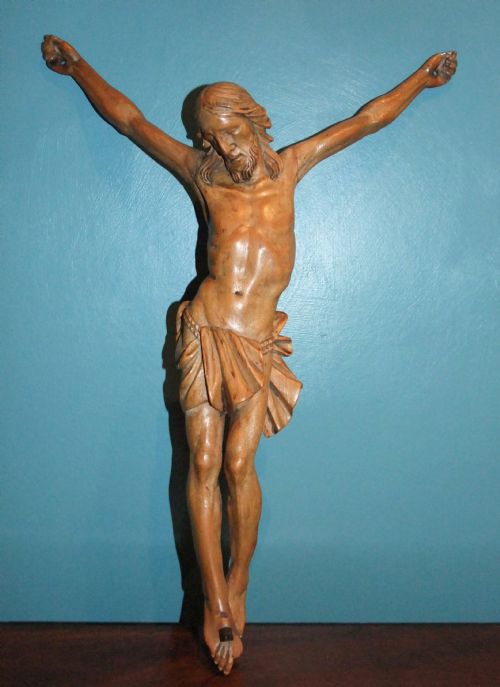
Carvers utilised regional timbers such as boxwood, fruitwood, oak, lime wood, and walnut to fashion the figures. These woods were carved by hand, sometimes paired with parcel gilt and polychrome finishes.
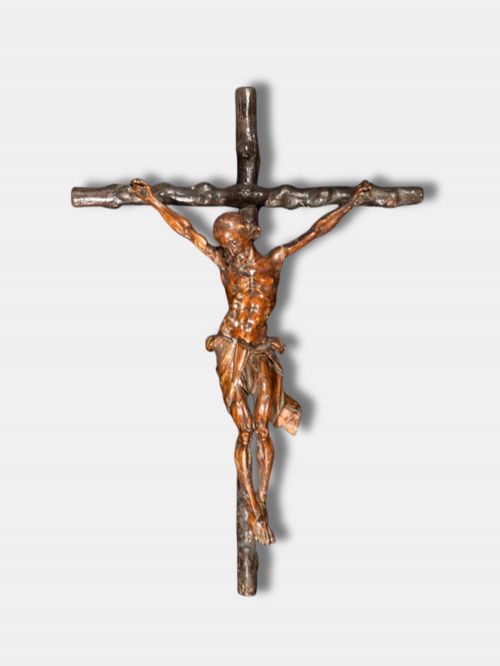
Makers often mounted the carved figures onto contrasting crosses made of olive wood or metal, creating distinct visual hierarchies between the corpus and the cross.
Wooden Corpus Christi Retail Price Guide 2026
Typical asking prices for wooden corpus christi among the pieces listed under this phrase on Sellingantiques today, from the lower quarter to the upper quarter. They describe what is for sale here now, not the wider market.
One notable eighteenth-century listing includes a carved skull detail at the base of the cross, a traditional memento mori.
What varies in quality
Quality rests in the anatomical precision of the carving, particularly in the rendering of the hands, facial expression, and drapery folds. Pieces with sophisticated French or Spanish Baroque styling exhibit superior sculptural fluency compared to simpler village work.
The survival of original surface treatments, such as parcel gilt and polychrome pigments, elevates the distinction of older sixteenth and seventeenth-century items.
The Wooden Corpus Christi Glossary
- Corpus Christi
- Latin for body of Christ, referring specifically to the sculpture of Jesus on the cross. This forms the focal point of the devotional object.
- Polychrome
- Painted in several colours, a traditional finish applied to wood carvings to enhance realism. It often appears on earlier European ecclesiastical figures.
- Fruitwood
- Dense timber derived from fruit-bearing trees like pear or apple, favoured by carvers for its fine grain and ability to hold intricate detail.
Wooden Corpus Christi: Frequently Asked Questions
How do I date a wooden corpus christi?
Dating relies on stylistic markers such as Baroque asymmetry, tool marks left by the carver, and the specific wood species utilised.
Comparison with documented ecclesiastical pieces from regions like Spain or the Low Countries also helps narrow the period of origin.
Were these figures always mounted on crosses?
Many figures were created to be fixed to standing or wall-mounted crosses, though some survive as individual sculptures.
Over the centuries, figures and crosses were occasionally separated and later paired with replacement mounts.
How should I care for antique wood carvings?
Keep wooden sculptures away from direct heat sources and dramatic humidity fluctuations to prevent the timber from splitting.
Dust gently with a dry, soft cloth and avoid applying modern polishes or oils to historic surfaces.
What is the difference between French and Spanish pieces?
Spanish examples often display the dramatic intensity associated with the Spanish Baroque movement, focusing on deep emotional resonance.
French pieces tend to exhibit refined detailing and polished execution, reflecting the dominant aesthetic of their respective workshops.