
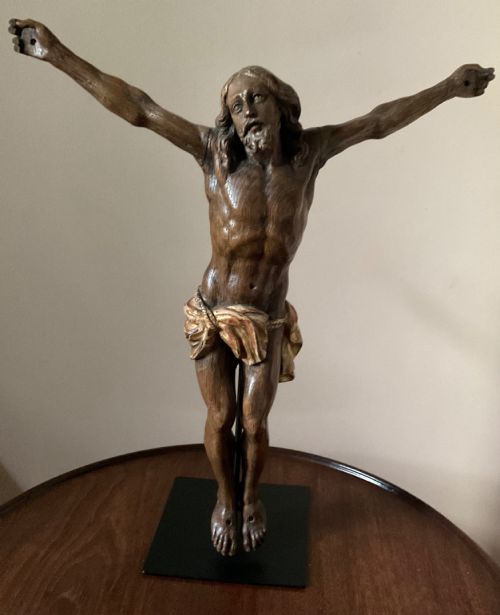


Carved Wood Christ Figure
A carved wood christ figure brings centuries of devotion, handcrafted timber, and continental spiritual history directly into a room.
Carved Wood Christ Figure
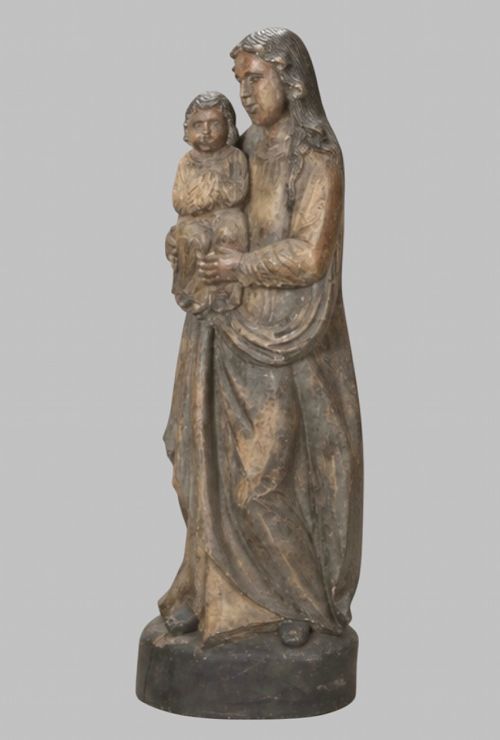
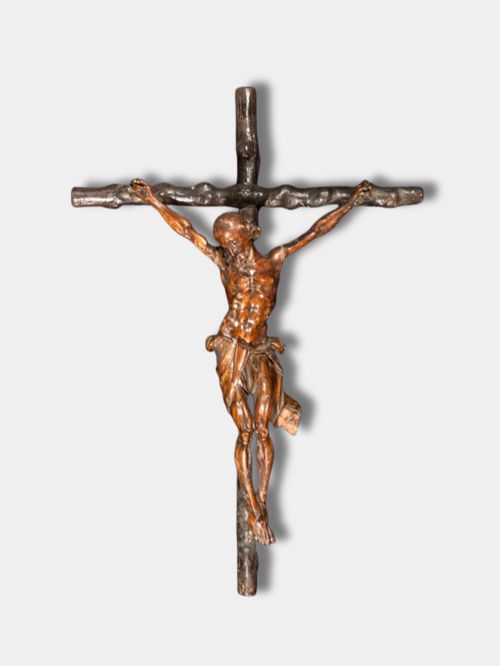
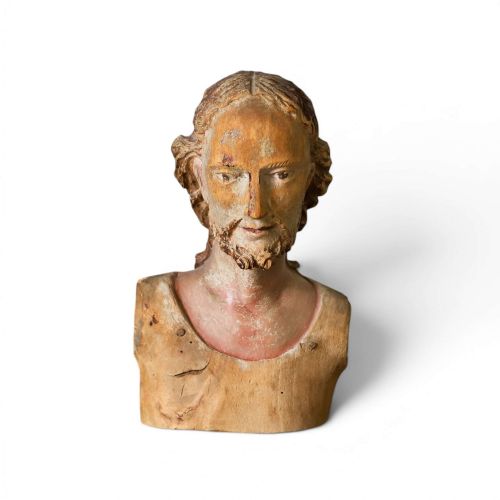
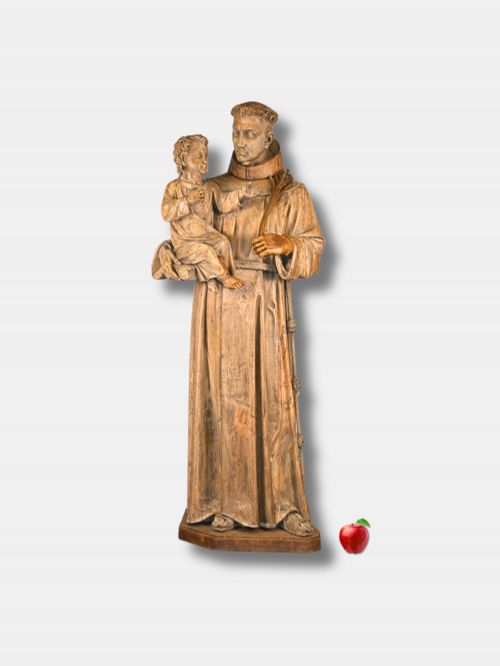
A carved wood christ figure encompasses devotional sculptures, crucifixes, and bust representations originating from various European traditions. These pieces range from substantial life-size corpus Christi carvings to smaller intimate devotional figures depicting the young Christ or the man of sorrows.
The selections available span from the medieval gothic period through the exuberant baroque styles of Spain, Italy, and South Germany. Buyers frequently encounter corpus Christi figures mounted on wooden crosses alongside standalone sculptural heads and full-length representations in oak, pine, and fruitwood.
Materials and construction methods
Many surfaces received layers of gesso and polychrome paint, occasionally enhanced with parcel gilding to highlight garments and nimbuses. Over centuries, these applied finishes weathered naturally, revealing the warm grain of the underlying wood beneath remnants of historical pigment.
Regional styles represented include Spanish Baroque, South German Baroque, and Italian workmanship.
Distinctions in craftsmanship
The survival of original surface treatments, such as polychrome paint or gesso layers, heavily influences the integrity of a piece. Examples retaining genuine historical pigment and minimal structural intervention command greater appreciation among collectors.
L.F. Dapre B.O.W.
The Carved Wood Christ Figure Glossary
- Corpus Christi
- Latin for the body of Christ, specifically denoting a sculptural representation of Jesus on the cross. This form serves as the central focus of Christian altars and devotional crosses.
- Polychrome
- Painted in several colours, a technique historically applied to wood and stone sculptures to render figures lifelike. Pigments were typically mixed with mediums like oil or tempera over a gesso ground.
- Gesso
- A white paint mixture consisting of a binder mixed with chalk, gypsum, or pigment, used to prepare wood surfaces for painting and gilding. It provides a smooth base that accepts fine detail.
- Parcel gilt
- Partially gilded with gold leaf or powder, leaving areas of the underlying wood or paint exposed. This method accentuates specific garments or architectural elements on liturgical art.
- Devotional art
- Religious imagery created specifically to facilitate personal prayer and contemplation. These objects were produced for domestic shrines, chapels, and larger ecclesiastical settings.
Carved Wood Christ Figure: Frequently Asked Questions
What is a corpus Christi figure?
A corpus Christi is a sculptural representation of Jesus Christ specifically shown attached to a cross. These range in scale from small domestic altar pieces to monumental church sculptures.
Historically, they formed the devotional focal point of Christian worship spaces. Artisans carved them to inspire reflection on the Passion narrative.
How do I date a wooden carving?
Dating relies on stylistic indicators such as gothic drapery folds, baroque theatricality, or regional carving characteristics. Tool marks and timber choice also offer clues regarding the period of creation.
Examinations of the underlying gesso and paint layers help verify historical age. Comparing pieces to dated examples in museum archives confirms attribution.
Where were these figures made?
Continental workshops across Spain, Italy, France, and Germany produced the majority of these religious carvings. Each region developed distinct stylistic traits rooted in local woodworking traditions.
South German and Spanish carvers particularly excelled in dramatic, highly expressive devotional sculpture. Italian workshops often utilised olive wood and rich polychrome finishes.
How should I display a sculpture?
Display these figures in stable indoor environments away from direct sunlight and rapid temperature fluctuations. Proper placement preserves delicate wood timbers and fragile historic paint layers.
Wall-mounted corpus pieces require secure fixings suited to their weight. Freestanding busts and statues benefit from dedicated surfaces where their carved details remain visible.