







17th Century Spanish Carving
Seventeenth century Spanish carving brings severe walnut and rich polychrome pigment into a room, offering immediate warmth and historical weight.
17th Century Spanish Carving
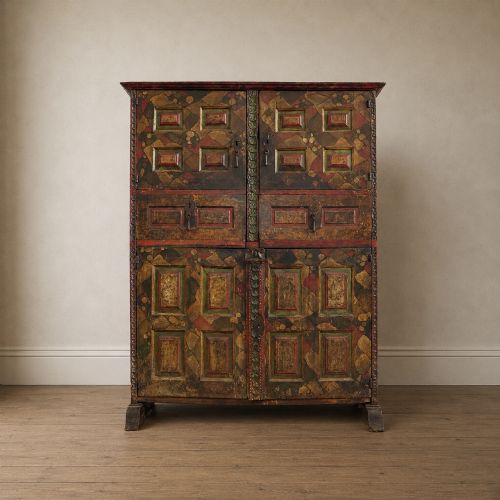
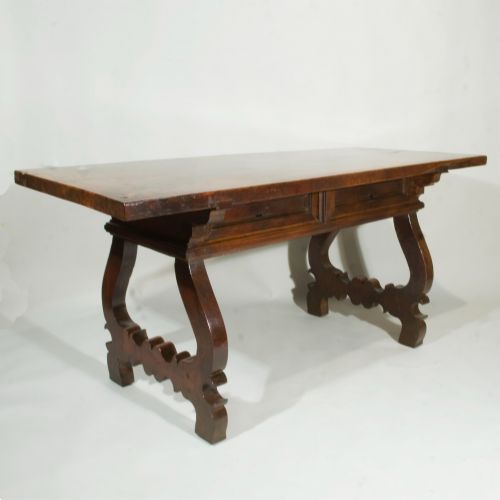
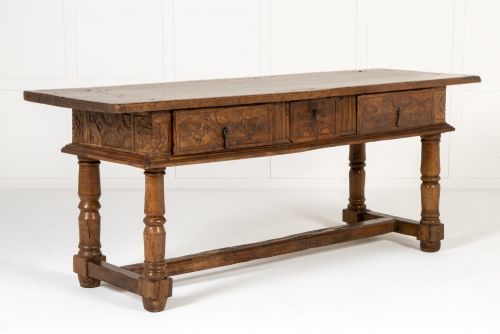
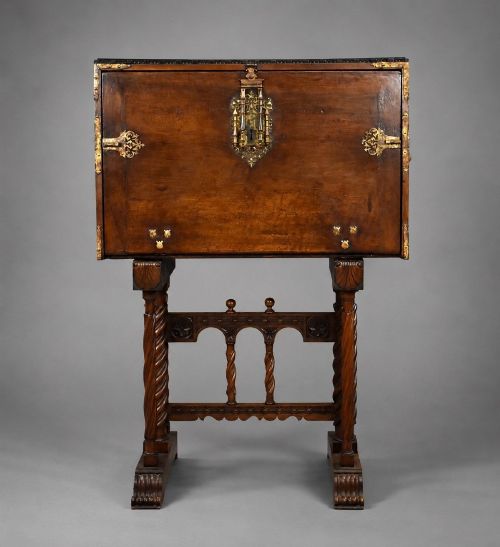
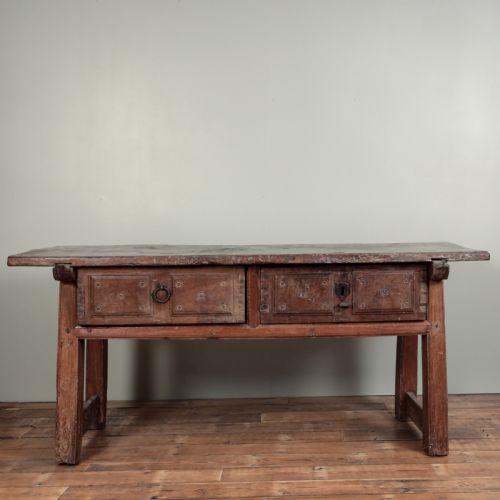
When you search for 17th century Spanish carving, you encounter solid walnut furniture, oak chests, and painted religious figures from the Baroque, Gothic, and Renaissance styles. The pieces on this page lean heavily toward tables, bargaining cabinets, and console tables built for formal domestic interiors.
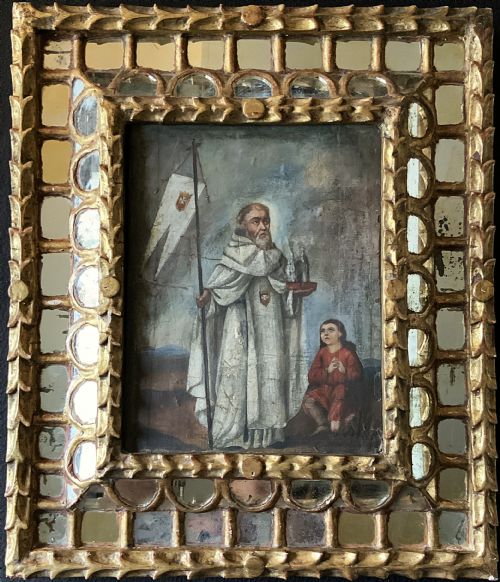
You are most likely to meet walnut tables and heavy storage forms such as press cupboards and bargueño cabinets. Religious works in giltwood frames and polychrome wooden heads of saints also appear alongside wrought iron details.
Materials and construction
Carpenters relied primarily on solid walnut and oak, shaping heavy timbers with iron and wrought iron hardware to build sturdy tables and storage cabinets. Pigment and giltwood were applied to wooden sculptures and frames to achieve rich surface decoration.
Joinery was straightforward and robust, designed to support heavy use while displaying the deep grain of walnut and the intricate detail of carved panels.
17th Century Spanish Carving Retail Price Guide 2026
Typical asking prices for 17th century spanish carving among the pieces listed under this phrase on Sellingantiques today, from the lower quarter to the upper quarter. They describe what is for sale here now, not the wider market.
Listings combine 17th century walnut furniture with 1900 revival pieces, alongside wrought iron, giltwood, and painted religious woodwork.
Judging quality
Quality rests on the depth and crispness of the carving, the integrity of the original wood patina, and the survival of authentic polychrome pigment. Pieces with untouched surfaces and strong architectural proportions stand apart from those with heavy later repairs.
The sophistication of the Spanish Baroque or Renaissance detailing marks the distinction between standard utilitarian carpentry and high-status workshop production.
The 17th Century Spanish Carving Glossary
- Bargueño
- A portable writing cabinet fitted with numerous small drawers, often resting on a decorative stand. It represents one of the most distinctive forms of Spanish furniture from the period.
- Polychrome
- The practice of painting wood sculpture in several colours to achieve a lifelike appearance. It is frequently seen on religious figures and architectural carvings.
- Giltwood
- Wood carved and then treated with a thin layer of gold leaf. This technique was used to enhance frames and sacred objects.
- Console table
- A table designed to stand against a wall, typically supported by ornamental brackets or legs. They often feature heavy walnut tops and carved friezes.
17th Century Spanish Carving: Frequently Asked Questions
How do I identify a genuine 17th century piece?
Look for dense walnut timber with deep, authentic patina and hand-forged iron hardware consistent with the period.
Construction methods should match seventeenth-century workshop practices without modern machine marks or uniform joints.
Where should I place a bargueño cabinet?
A bargueño cabinet suits a study, hallway, or living room where its drop-front writing surface and detailed interior drawers can be viewed up close.
Keep the piece away from direct sunlight and strong heat sources to protect the delicate wood and pigment.
How do I care for polychrome wood?
Dust the surface gently with a dry, soft brush and avoid liquid cleaners that can damage the historical pigment and giltwood layers.
Maintain stable humidity in the room to prevent the underlying timber from expanding or cracking.
What is the difference between Baroque and Renaissance styles here?
Renaissance pieces tend to display restrained geometric symmetry and classical proportions, while Baroque examples feature more dynamic movement and exuberant carving.
Both styles utilise solid walnut and oak but handle surface ornamentation with distinct degrees of theatricality.