




Spanish Baroque Wood Carving
Spanish baroque wood carving comprises sculptures, furniture and devotional pieces defined by dramatic movement and rich surface ornamentation.
Spanish Baroque Wood Carving
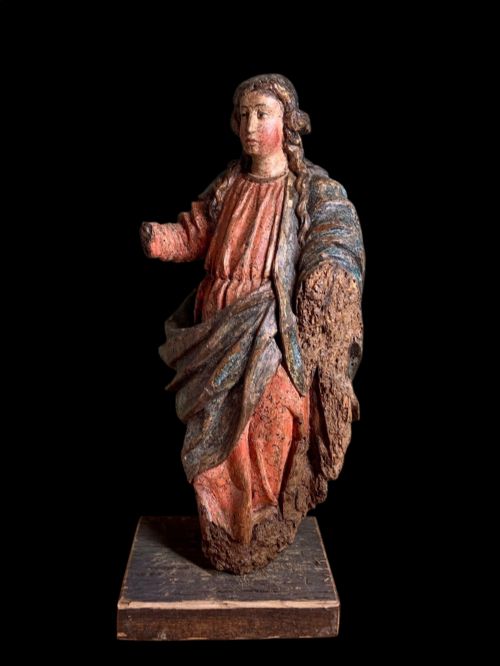
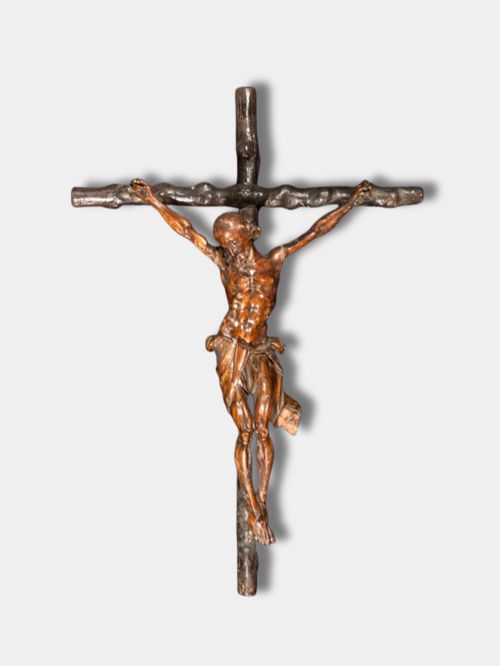
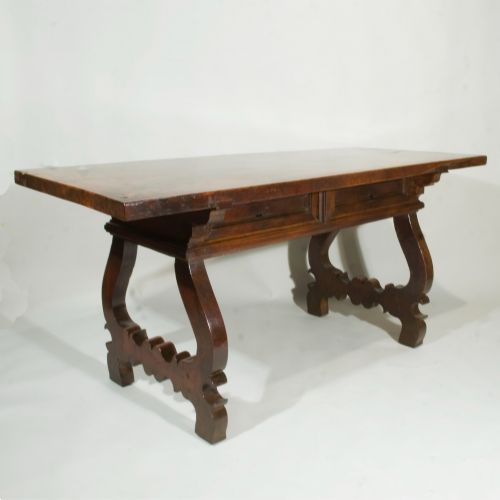
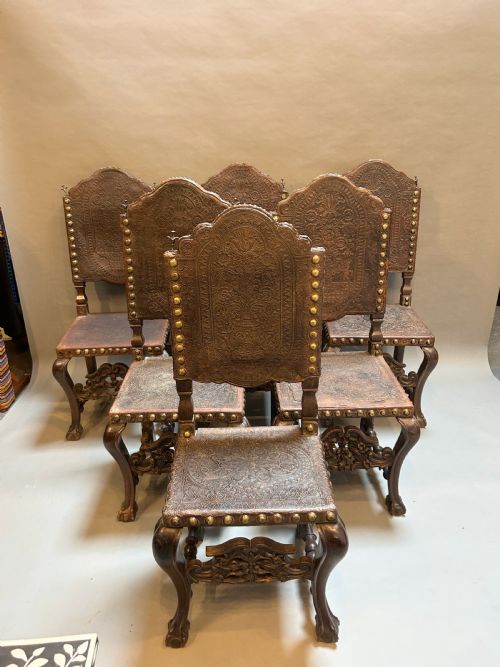
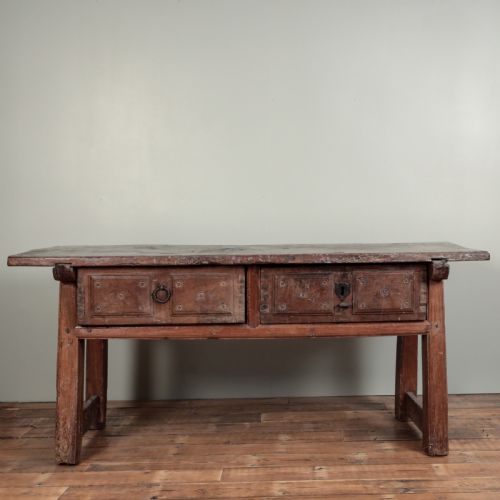
When you search for spanish baroque wood carving, you encounter sacred sculptures, ecclesiastical furnishings and domestic tables spanning the seventeenth and eighteenth centuries. Figures of saints, polychrome character heads and Corpus Christi crucifixes represent the devotional heart of this sculptural tradition. Alongside these figural works, utilitarian and decorative forms emerge through solid walnut console tables, trestle tables and giltwood altar candlesticks.
The domestic selection balances heavy timber tables with carved walnut boxes and giltwood mirrors reflecting later nineteenth-century revivals. Sculptural fragments such as life-size Christ figures and devotional busts demonstrate the expressive intensity characteristic of the Iberian workshop. Architectural elements and lamps adapted from period candlesticks translate liturgical craftsmanship into domestic interiors.
Materials and construction techniques
Solid walnut and mixed fruitwoods form the structural foundation for both tables and figural carvings, providing dense grain capable of holding deep relief. Artisans applied gesso directly to carved timber substrates to prepare surfaces for subsequent gilding with gold leaf or detailed polychrome paint. Wrought iron reinforcement frequently appears in structural tables and stands to support heavy timber tops.
Surface decoration relies on meticulous layering of pigment and metal leaf, creating rich textures that catch ambient light on altar lamps and saint figures. Tool marks left by gouges and chisels remain visible beneath historical patinas on early tables and boxes, recording hand-tool methods of the period.
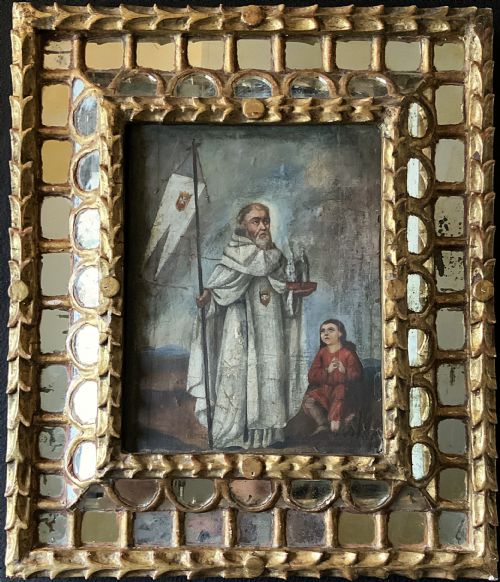
Saint Roche often brings his faithful hound along in wood carvings, proving even sixteenth-century ascetics needed a good dog.
Judging quality and preservation
The distinction between ordinary production and superior execution rests upon the depth of the carving and the survival of original polychrome or gilt surfaces. Finer sculptures display anatomical precision and expressive facial detailing in character heads, whereas lesser examples present generalized forms and later overpainting. Original surface patinas on walnut furniture indicate careful preservation rather than aggressive stripping.
Structural integrity significantly influences the standing of tables and architectural fragments, particularly regarding the retention of original joinery and iron stretchers. The quality of the gilding and the crispness of surviving gesso ornament determine whether a carved element retains its intended theatrical impact.
The Spanish Baroque Wood Carving Glossary
- Polychrome paint
- Decoration applied using multiple colours of pigment, frequently found on wooden figures of saints and religious carvings to create lifelike skin tones and garments.
- Gesso
- A plaster-like mixture applied to wood surfaces as a smooth base for the application of gold leaf or paint.
- Giltwood
- Timber that has been coated with a thin layer of gold leaf, commonly seen on mirrors, candlesticks and altar furnishings.
- Corpus Christi
- A sculptural representation of the body of Jesus Christ on the cross, often carved from wood in Spanish devotional art.
- Brasero
- A traditional Spanish heating vessel or brazier, frequently constructed from metal and housed within a decorative wooden or wrought iron stand.
Spanish Baroque Wood Carving: Frequently Asked Questions
How do I care for antique walnut tables?
Antique walnut furniture requires stable environmental conditions away from direct heat sources and strong sunlight to prevent timber splitting and fading.
Regular dusting with a dry cloth preserves the historical patina without stripping natural oils from the wood surface.
Are these carvings from the seventeenth century?
The selection includes genuine seventeenth- and eighteenth-century examples alongside later nineteenth-century revival pieces influenced by Spanish baroque styles.
Examining the construction methods, tool marks and wear patterns helps distinguish period items from later interpretations.
What is an acolyte candlestick?
An acolyte candlestick is a tall devotional candle holder used in church ceremonies, often carved from wood and finished with giltwood or polychrome decoration.
Many surviving examples from the baroque period are subsequently adapted as table lamps while retaining their original sculptural presence.