

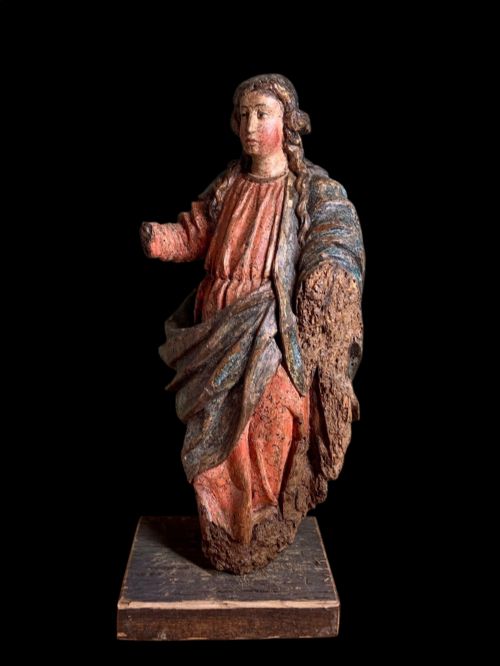


Antique Spanish Saint Sculpture
An antique spanish saint sculpture is a carved wooden devotional figure from the sixteenth to nineteenth centuries, sought for private prayer and church interiors.
Antique Spanish Saint Sculpture
When you search for an antique spanish saint sculpture, you encounter carved wooden figures and busts created for devotional religious art. The selection spans the sixteenth, seventeenth, and eighteenth centuries, alongside nineteenth-century examples and objects dated around eighteen eighty.
Most pieces represent specific figures, including Saint Francis, St. Roche, St. Jude, and the Christ Child holding the orb. You also find character heads of saints, acolyte candlestick figures, and walnut busts intended for ecclesiastical spaces.
How they were made
Carvers shaped these statues from solid wood, applying gesso as a smooth foundation for subsequent decoration. Makers utilised gold leaf to illuminate vestments and halos, adding richness to devotional pieces.
Antique Spanish Saint Sculpture Retail Price Guide 2026
Typical asking prices for spanish saint sculpture among the pieces listed under this phrase on Sellingantiques today, from the lower quarter to the upper quarter. They describe what is for sale here now, not the wider market.
Some wooden figures feature inset glass eyes that catch the flicker of candlelight, startling visitors who meet their gaze in a dim room.
What varies in quality
The survival of the original polychrome paint and gold leaf surface determines the visual impact of each sculpture. Pieces retain varying degrees of their historical coating, which influences how vividly the character is conveyed.
The Antique Spanish Saint Sculpture Glossary
- Polychrome
- Painted in several colours. This surface treatment brings depth to carved wooden vestments and flesh.
- Gesso
- A plaster mixture applied to wood as a base for paint and gilding. It creates a smooth ground for fine detail work.
- Baroque
- An ornate artistic style spanning the seventeenth and eighteenth centuries. It emphasises dramatic movement and theatrical emotion.
- Ecclesiastical
- Relating to the Christian church or clergy. These items were originally commissioned for chapels, monasteries, or altars.
Antique Spanish Saint Sculpture: Frequently Asked Questions
Where were these figures placed originally?
These sculptures stood on church altars, inside private domestic shrines, or within monastic spaces to aid daily devotion.
They served as focal points for prayer and contemplation in religious settings across Spain and continental Europe.
How do I identify the saint?
Attributes provide the primary clues for identification, such as books, symbols, clothing, or specific items held in the hands.
Inscribed labels or traditional iconography often point toward figures like Saint Francis, St. Roche, or St. Jude.
Are these pieces made of solid wood?
Most examples are carved from solid timber sections, occasionally built up with applied gesso layers to shape fine details.
Wood served as the standard material for religious statues across the sixteenth, seventeenth, and eighteenth centuries.
How do I care for polychrome wood?
Keep wooden sculptures away from direct heat sources and dramatic humidity fluctuations to protect the painted and gilded surfaces.
Dust gently with a dry, soft brush and avoid using liquid cleaners on the fragile gesso and paint layers.