

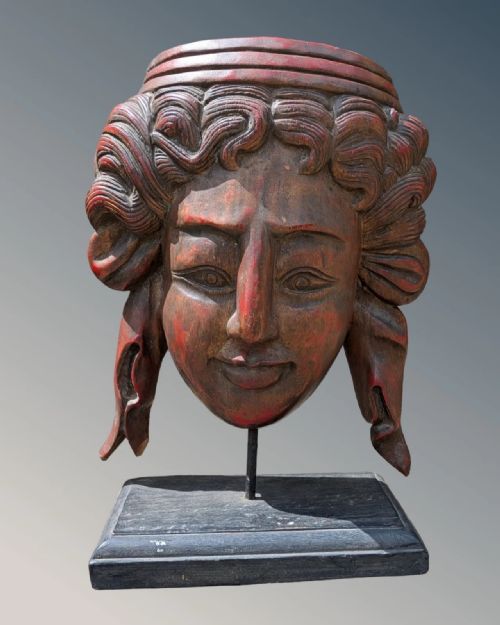


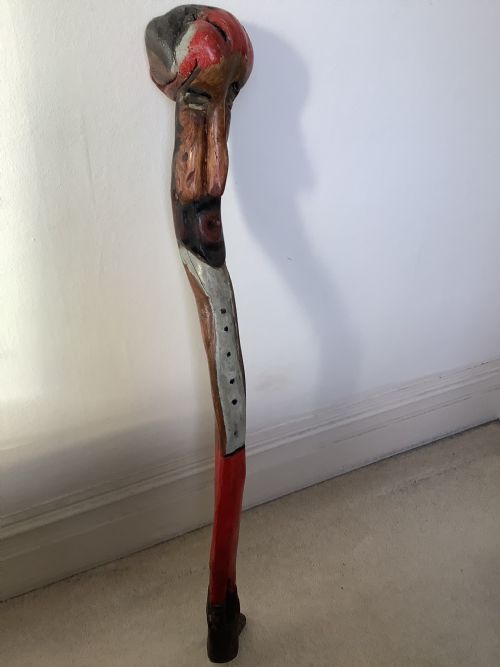


Polychrome Carved Wood Head
A polychrome carved wood head is a sculptural fragment or independent bust carrying centuries of layered pigment, offering an intimate focal point for a room.
Polychrome Carved Wood Head
A polychrome carved wood head brings together figurative sculpture and historic surface decoration, typically originating from religious contexts, folk traditions, or portraiture. When searching for a polychrome carved wood head, collectors encounter pieces ranging from continental religious carvings to vernacular folk art.
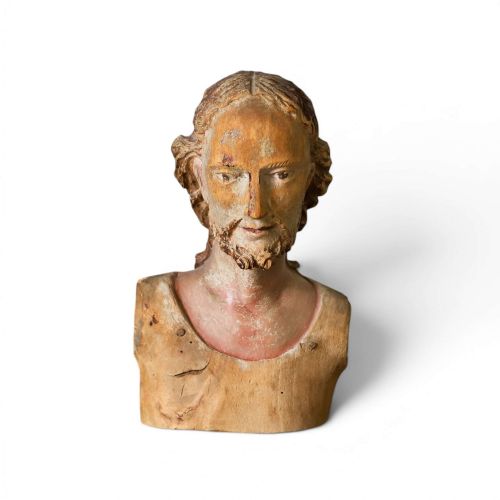
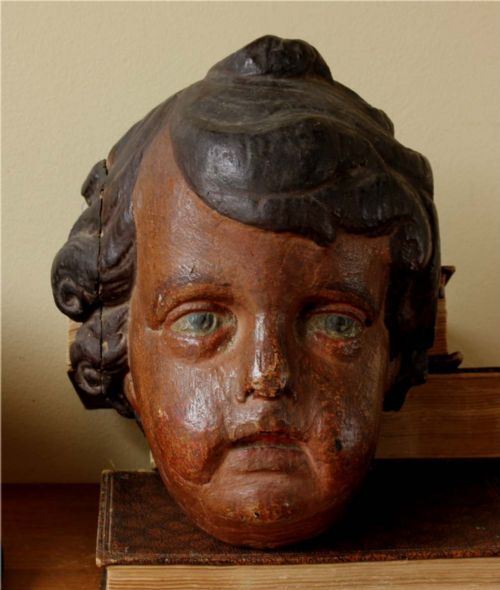
Surviving examples take the form of wall plaques, independent busts, architectural panels, and sculptural fragments. Each iteration reveals the specific devotional or decorative purpose intended by its original maker.
Materials and construction methods
Makers shaped these sculptures from various timbers including olive wood, thorn wood, and general hardwoods, selected for their stability and grain. Carving was executed with chisels and gouges to define facial expressions and hair texture directly in the solid material.
Polychrome Carved Wood Head Retail Price Guide 2026
Typical asking prices for polychrome carved wood head among the pieces listed under this phrase on Sellingantiques today, from the lower quarter to the upper quarter. They describe what is for sale here now, not the wider market.
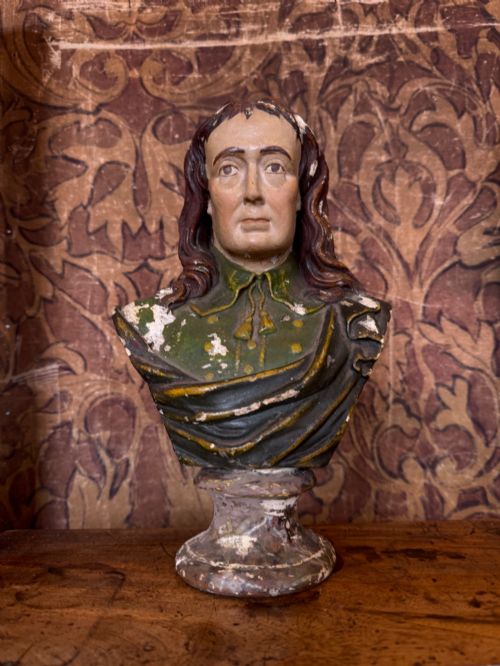
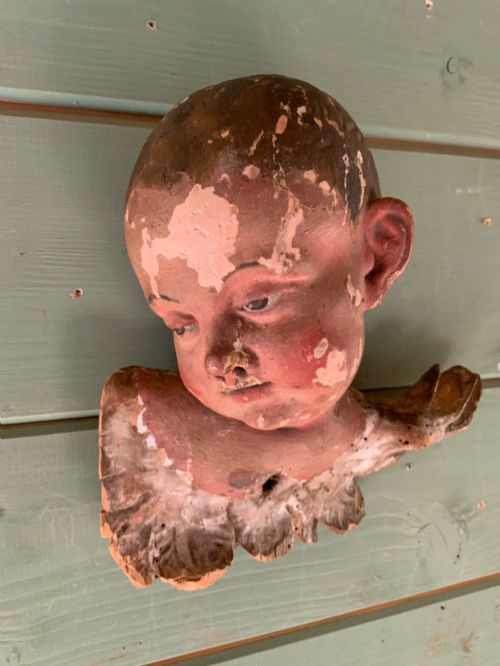
A stoic Russian noble lady carved around seventeen seventy rubs shoulders here with a cheeky eighteenth-century French cherub.
Evaluating sculptural and surface quality
Quality rests upon the confidence of the carving, where anatomical precision and expressive depth distinguish superior masterwork from simpler regional production. The handling of bone structure, hair strands, and facial tension reveals the hand of a skilled sculptor.
The preservation and integrity of the original paint and gesso surface dictate the visual impact of the piece. Traces of early polychrome and gilding that survive without extensive later repainting retain the authentic historic character prized by collectors.
The Polychrome Carved Wood Head Glossary
- Polychrome
- Decorated in multiple colours, usually applied as paint or pigment over a prepared ground on wood or stone. This surface treatment gives historic sculptures their lifelike appearance and decorative richness.
- Gesso
- A plaster mixture applied to wood as a base for paint and gilding. It provides a smooth, bright foundation that enhances the brilliance of overlying colours and gold leaf.
- Giltwood
- Wood that has been coated with thin sheets of gold leaf over a prepared base. It catches ambient light and was frequently used to highlight divine or regal figures.
- Putto
- A representation of a naked cherubic child, commonly found in Renaissance and Baroque art. These figures often appear as carved architectural elements or independent wall plaques.
- Mingei
- Japanese folk art movement valuing utilitarian objects created by unknown craftsmen. Pieces from this tradition emphasise natural materials and unpretentious regional utility.
Polychrome Carved Wood Head: Frequently Asked Questions
How were these carved heads originally used?
Many examples served a devotional function within churches, mounted on walls or incorporated into larger altarpieces as representations of saints, cherubs, or biblical figures. Others formed parts of architectural panels or domestic folk art traditions.
Securer domestic uses emerged later, including decorative wall plaques and portrait busts designed to display craftsmanship and historical taste in private interiors.
How do I distinguish between seventeenth and nineteenth-century pieces?
Dating relies heavily on the tool marks left by the carver, the composition of the gesso, and the chemical composition of the pigments used. Seventeenth and eighteenth-century pieces often display deeper Baroque or Neoclassical modeling alongside dense, oxidized wood.
Later nineteenth-century and turn-of-the-century items frequently exhibit folk art characteristics, broader regional styling, and different wear patterns on the painted surfaces.
Should I clean the painted surface of a wooden head?
Cleaning should be approached with extreme caution to avoid removing historic pigment, gesso, or patination that constitutes the piece's authenticity. Dusting with a soft, dry brush is generally the safest maintenance method.
Any intervention beyond light surface dusting risks damaging fragile layers of old paint, so professional conservation advice is recommended for deeper cleaning.
What does polychrome mean in wood sculpture?
Polychrome simply means that the sculpture is decorated with more than one colour of paint or pigment. Historic carvers utilised this technique to bring realism and vibrant detail to wooden faces and garments.
The survival of these multi-coloured layers provides vital clues about the date and origin of the artwork.