
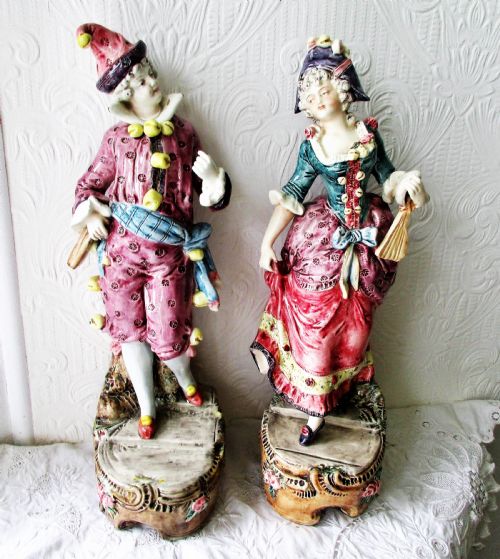


Continental Ceramics Pair
These continental antique ceramics pair selections bring sculptural grace and historic charm to a room, offering matched symmetry from European kilns.
Continental Ceramics Pair
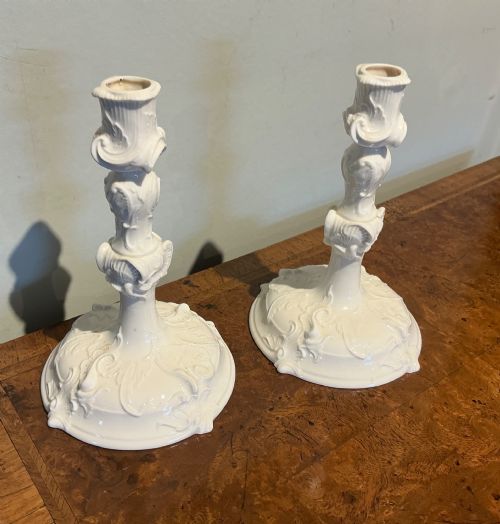
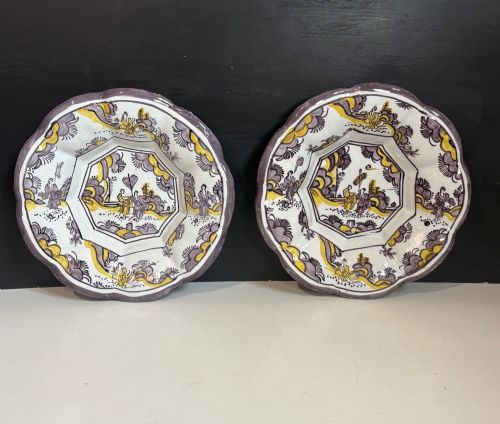
A continental antique ceramics pair comprises matched decorative objects originating from European workshops outside Britain, most frequently taking the form of porcelain figurines, candlesticks, and tin glazed dishes. These dual items offer the balanced symmetry favoured in traditional interior arrangement, designed to sit harmoniously upon mantlepieces, sideboards, or console tables.
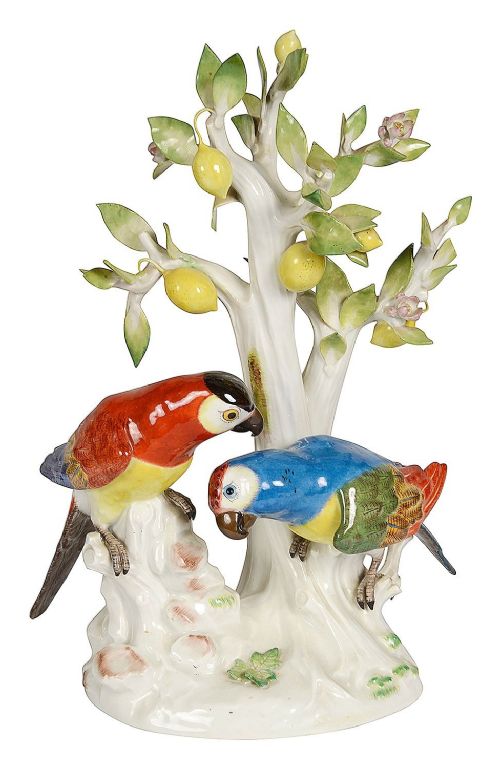
The selection on this page centres heavily on nineteenth-century and eighteenth-century examples, spanning German hard-paste porcelain, French earthenware, and Dutch tin glaze. Buyers routinely encounter figural groups, birds, and apothecary vessels created across continental centres like Meissen, Nymphenburg, and Paris.
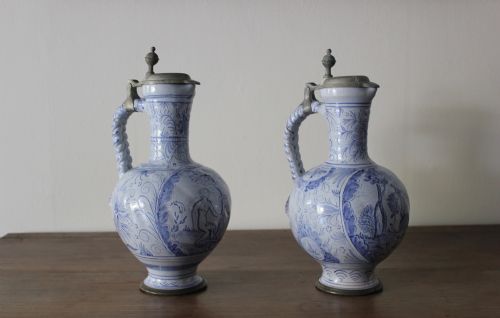
Beyond purely ornamental figures, the grouping extends to functional vessels such as sweetmeat dishes, ewers, and wall plaques. Whether executed in the ornate Rococo Revival taste or simpler earthenware styles, each matched pair preserves the aesthetic priorities of its specific continental origin.
How they were made
Continental workshops relied primarily on porcelain, earthenware, and tin-glazed ceramic bodies shaped through moulding and hand-modelling. Artisans applied coloured enamels, polychrome glazes, and occasional gold leaf to enhance surface detail before firing the pieces in kilns.
Hard-paste porcelain required precise high-temperature firings, allowing factories to achieve crisp modelling in figures and vases. Tin-glazing techniques involved coating earthenware with an opaque white glaze which accepted hand-painted pigments directly on the raw surface.
What varies in quality
Quality in these ceramics rests primarily upon the crispness of the modelling and the finesse of the hand-painting. Superior examples exhibit finely rendered facial expressions, intricate feather or foliage details, and confident brushwork rather than hasty factory production.
The integrity of the matching pair also dictates desirability, as sustained uniformity in glaze colour and kiln survival separates exceptional showroom pieces from lesser matched sets.
Nymphenburg·Meissen·Samson of Paris·Vion et Baury·C. G. Schierholz·Carl Thieme·Volkstedt
The Continental Ceramics Pair Glossary
- Hard-Paste Porcelain
- A dense, vitrified ceramic composed of kaolin and petuntse fired at very high temperatures. It forms the durable body of many fine continental figures and vessels.
- Tin Glaze
- An opaque white glaze containing tin oxide applied to earthenware before painting. It provides a smooth ground for vibrant polychrome pigments.
- Sweetmeat Dish
- A small decorative vessel or bowl designed for serving confectionery or dried fruits at elite tables. These often form elaborate figural centrepieces.
- Bisque Porcelain
- Unglazed ceramic fired once to create a matte, porous finish resembling marble. It highlights fine sculptural detail without the distraction of surface gloss.
- Earthenware
- A porous, lower-fired ceramic body requiring a glaze to achieve impermeability. It underpins much of the decorative folk and provincial pottery.
Continental Ceramics Pair: Frequently Asked Questions
Were these pairs always sold together?
Many continental figures and vessels were modelled as symmetrical pairs from the outset, intended to flank a central mirror or clock on a mantelpiece. Workshops produced them concurrently to ensure matching dimensions and glaze tones.
Some surviving pairs are matched assemblies gathered later by collectors who paired solo vessels of identical period and style to recreate a balanced decorative set.
What is the difference between porcelain and earthenware?
Porcelain is a vitrified ceramic fired at exceptionally high temperatures until the body becomes hard, white, and completely non-porous. It rings when struck and allows for delicate, thin-walled moulding.
Earthenware is fired at lower temperatures, leaving the ceramic body porous and opaque. It requires a surface glaze, such as tin glaze, to hold liquids and provide a smooth decorative ground.
How can I identify the factory origin?
Makers often applied underglaze blue marks, impressed culls, or painted numbers to the unglazed bases of figures and vessels. Cross-referencing these symbols with standard ceramic reference guides reveals the workshop and approximate era.
Stylistic cues such as paste colour, glazing texture, and sculptural hand also point directly to regional centres like Meissen or Parisian revival studios.