


Italian Maiolica Ceramic Vases
Italian maiolica ceramic vases bring tin-glazed earthenware into the room with rich polychrome palettes and spirited revivalist designs.
Italian Maiolica Ceramic Vases
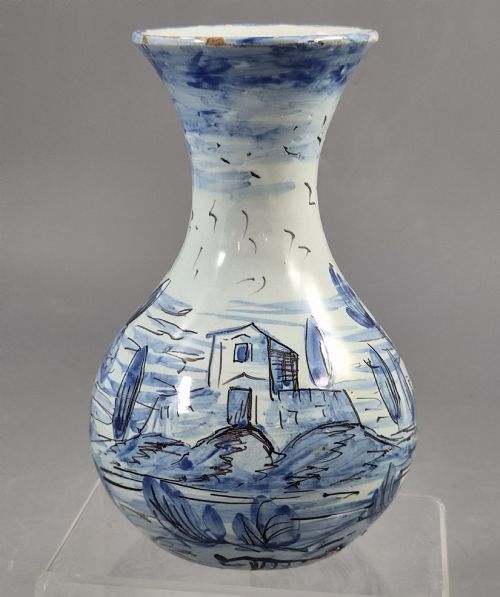
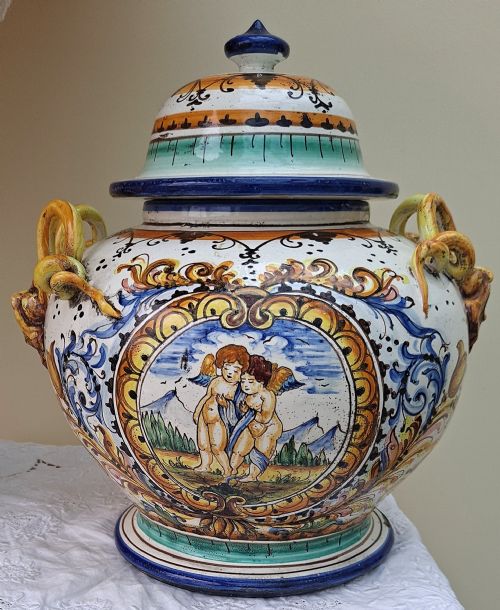
When you search for Italian maiolica ceramic vases, you are looking at tin-glazed earthenware spanning the eighteenth and nineteenth centuries. The selection here leans heavily towards nineteenth-century interpretations, including robust Victorian pieces and Florentine revivals.
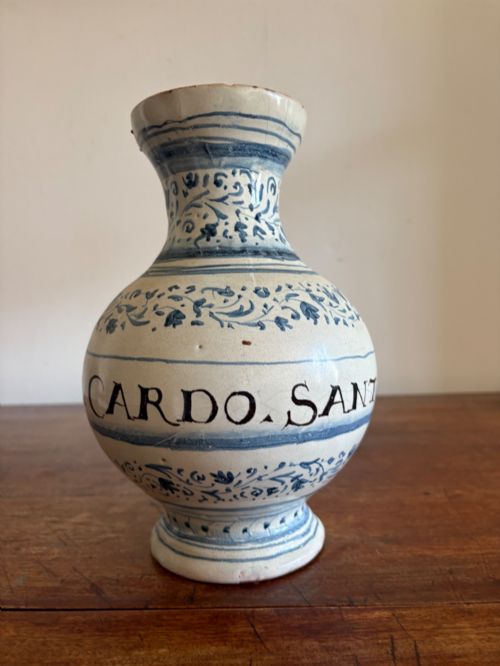
Forms range from traditional apothecary jars and lidded cabinet vases to large pedestal urns and table lamps converted from earlier vessels. Blue and white Savona styles and polychrome Garofano patterns appear frequently across the current listings.
Origins stretch across Italian workshops, with specific pieces carrying the mark of Florentine makers like Cantagalli alongside unmarked regional works. These vessels function primarily as decorative centrepieces rather than utilitarian containers.
How they were made
Potters built these vessels using earthenware and terracotta bodies before applying an opaque white tin glaze to create a smooth surface for painting. Metallic lustre elements sometimes appear, adding reflective sheen to the fired surface.
Painters applied mineral pigments directly onto the porous unfired glaze, absorbing the colours permanently during the kiln firing. Brass fittings are occasionally integrated into later table lamp conversions.
Listings feature earthenware, terracotta, and brass components across eighteenth and nineteenth-century periods.
What varies in quality
Quality rests in the confidence of the brushwork and the depth of the tin glaze, where crisp cobalt details and carefully controlled polychrome shading elevate a piece above standard production. The handling of Renaissance Revival motifs shows whether a maker understood historical precedent or merely copied it.
The weight and presence of the earthenware body also shape the character of the vessel, particularly in larger pedestal urns and lidded jars where structural balance matters.
Cantagalli·Ulisse Cantagalli
The Italian Maiolica Ceramic Vases Glossary
- Maiolica
- Tin-glazed earthenware produced in Italy, typically decorated with colourful historical or floral motifs.
- Tin Glaze
- An opaque white glaze containing tin oxide that provides a clean background for painted ceramic decoration.
- Apothecary Jar
- A cylindrical or waisted vessel originally used by pharmacists to store dry drugs or syrups.
- Polychrome
- Decoration employing multiple distinct colours, contrasting with single-colour blue and white schemes.
- Lustre
- A metallic overglaze technique that produces an iridescent, shimmering sheen on the fired ceramic surface.
Italian Maiolica Ceramic Vases: Frequently Asked Questions
What are Italian maiolica ceramic vases?
These pieces are tin-glazed earthenware vessels decorated with painted historical or floral designs from Italian traditions. They include forms ranging from lidded jars to large decorative urns.
Most examples found here date from the eighteenth and nineteenth centuries, often reflecting revivalist movements of the Victorian era.
How were these vases used?
Many served as ornamental cabinet pieces or pharmacist containers rather than holding water for fresh flowers. Apothecary jars specifically stored dry goods or medicinal preparations in historic dispensaries.
Over time, some vessels found new life as table lamps fitted with brass hardware, adapting historic ceramics for domestic lighting.
How do I identify a Cantagalli piece?
Cantagalli pieces often feature a painted cockerel mark on the base, reflecting the name of the Florentine workshop. Their production leans into the Renaissance Revival style with bright blue and white or polychrome palettes.
Work from this pottery dates predominantly to the late nineteenth century, mimicking earlier Italian maiolica traditions with great technical skill.
How do I care for antique maiolica?
Dust the surface gently with a dry, soft cloth to keep the tin glaze clean. Avoid using water or chemical cleaners, which can seep into microscopic craquelure in the glaze.
Place the vessels away from direct sunlight and sudden temperature shifts to protect both the earthenware body and the painted pigments.