


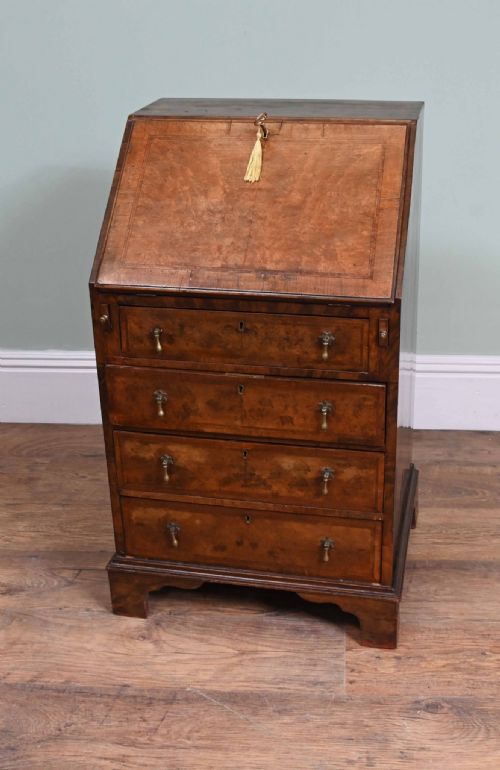

Compact Walnut Writing Bureau
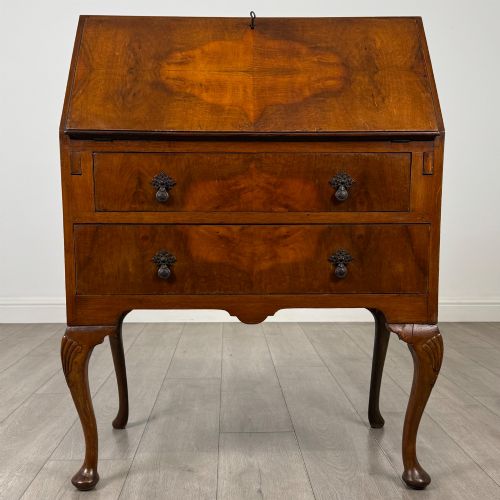
A compact walnut writing bureau offers a dedicated surface for correspondence while taking up minimal floor space.
Compact Walnut Writing Bureau
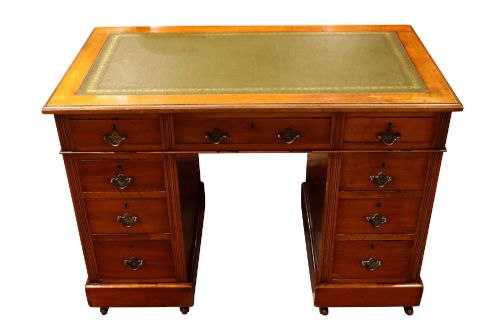
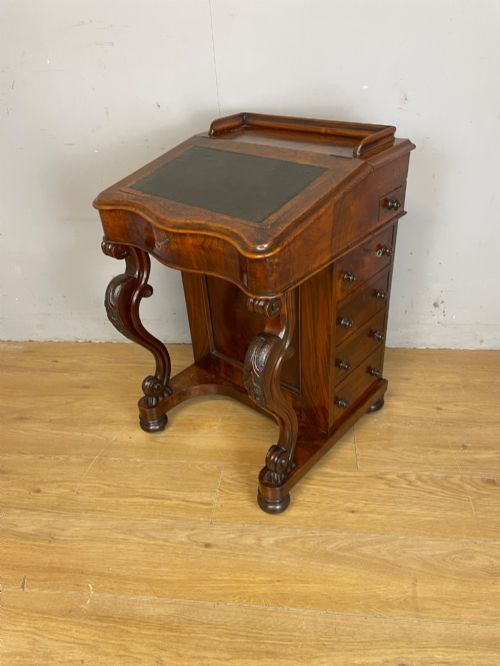
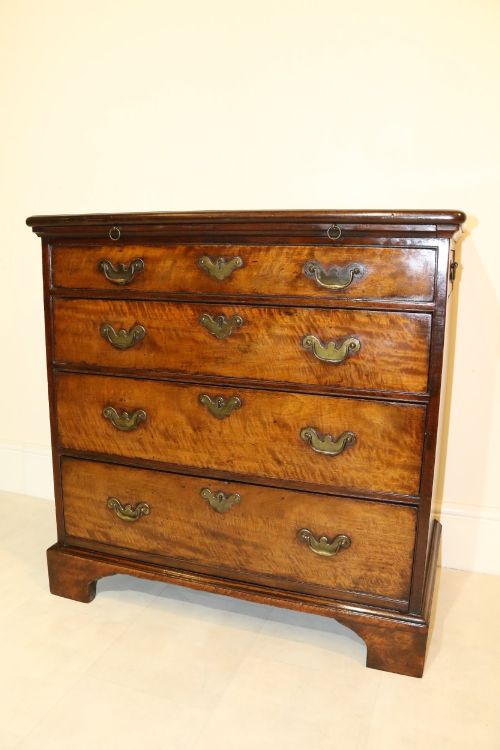
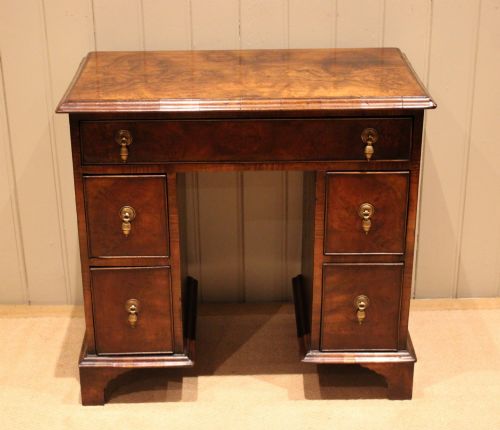
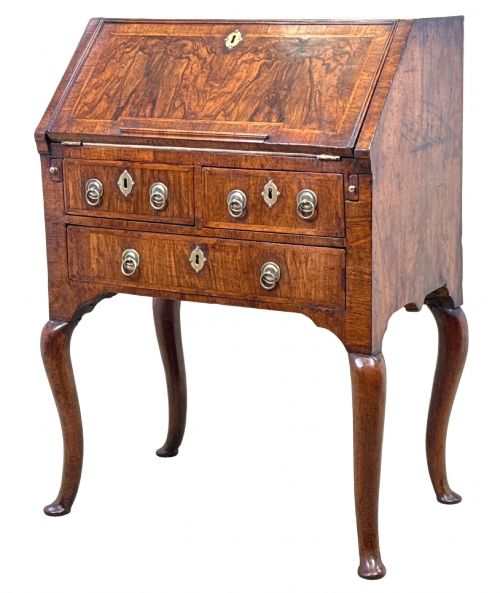
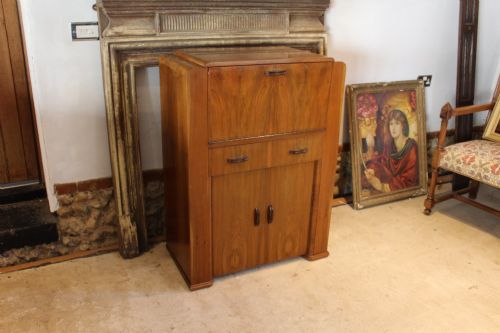
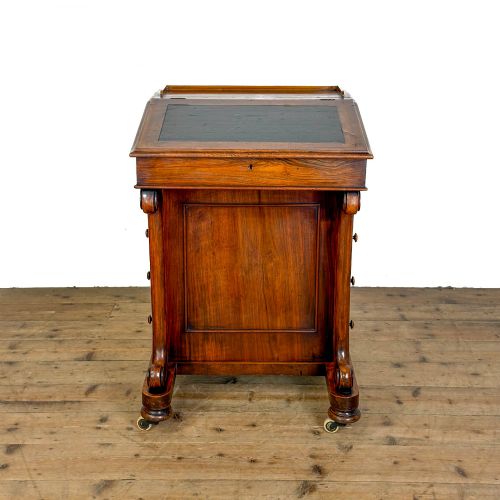
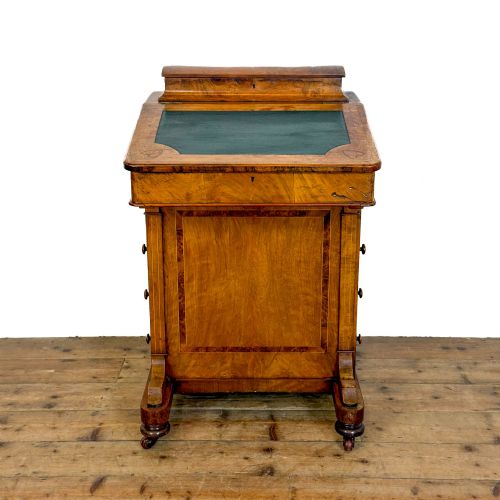
A compact walnut writing bureau provides a functional writing surface alongside storage for papers and stationery, appearing in formats from nineteenth-century Davenport desks to eighteenth-century bureau bookcases and stands.
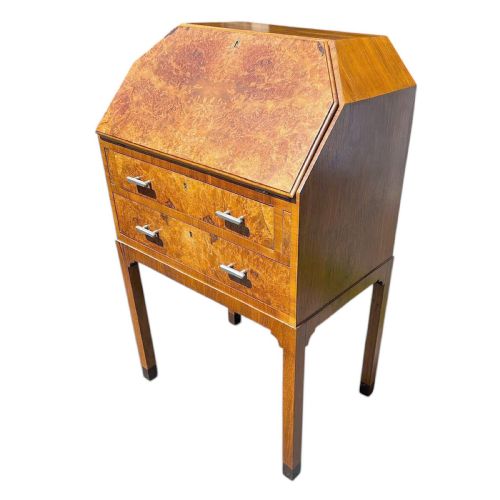
The versions most frequently met on this page range from Victorian and Edwardian examples to Art Deco pieces, often selected for smaller proportions that suit modest domestic interiors.
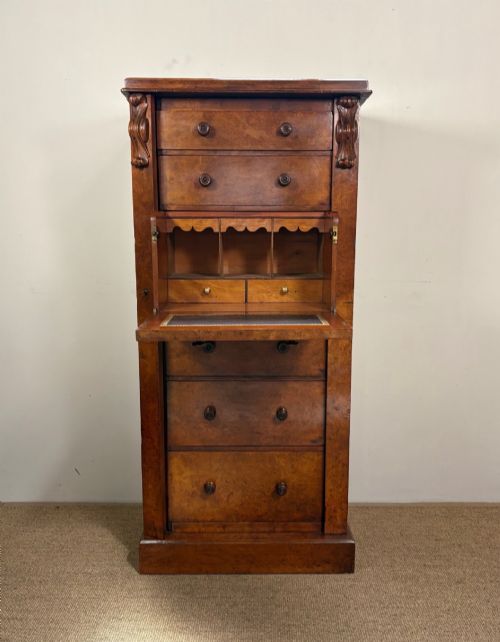
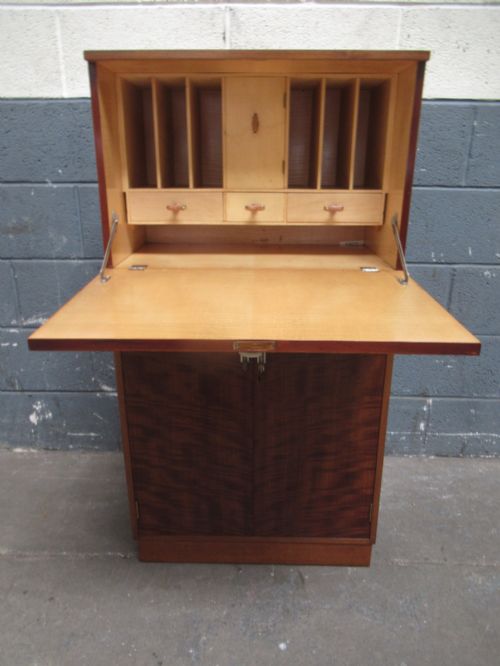
These items bridge the gap between cabinetry and workspace, incorporating fall fronts, sloped lids, and pedestals containing multiple drawers.
Materials and Construction
Cabinet makers utilised solid walnut, burr walnut veneers, and secondary timbers such as oak and elm to construct these desks, often highlighting highly figured grain patterns across the main surfaces.
Brass fittings, leather writing inserts, and marquetry inlay appear frequently as decorative and functional elements, supporting the structural timber work of the writing compartments and drawers.
Listings span periods from the eighteenth century through the Victorian era to the Art Deco movement of the 1930s.
Assessing Quality
Finer examples distinguish themselves through the selection and matching of burr walnut veneers across the fall front and drawers, alongside the complexity of internal satinwood fittings and secret compartments.
The precision of the joinery in the internal pigeonholes, the execution of any marquetry inlay, and the integration of specialised mechanisms for stationery storage separate standard production from superior cabinet work.
F.H. Marshall & Co Glasgow
The Compact Walnut Writing Bureau Glossary
- Bureau
- A desk featuring a sloping lid that opens to reveal a writing surface and small compartments for papers. It usually sits upon a chest of drawers or a frame with legs.
- Davenport desk
- A compact form of small desk featuring a sloped, sloping writing surface hinged to open over a pedestal of drawers. These pieces often incorporate side drawers and stationary compartments.
- Burr walnut
- Timber taken from a tree growth where the grain has grown in a deformed, swirling pattern, producing highly decorative figured surfaces when sliced into veneer.
- Fall front
- A hinged flap on a cabinet or desk that lowers to provide a horizontal surface for writing. It conceals pigeonholes and small drawers when closed.
- Marquetry
- Decorative woodwork where pieces of veneer are fitted into a ground to form ornamental patterns and pictures. This technique adorns the exterior surfaces of select desks.
Compact Walnut Writing Bureau: Frequently Asked Questions
What is a Davenport desk?
A Davenport is a small, compact writing desk with a sloped leather-lined top that lifts to reveal storage. The body typically incorporates a pedestal of drawers opening to one side.
Originating in the nineteenth century, this form provides a complete workspace within a remarkably small footprint.
How do I identify burr walnut?
Burr walnut displays a swirling, mottled grain pattern full of small rings and knot clusters. It is sliced into thin veneers rather than used as solid timber.
Cabinet makers apply these decorative veneers to the primary display surfaces, such as desk lids and drawer fronts.
Where were writing bureaus used?
These desks served primarily in private reception rooms, bedrooms, and studies for managing correspondence and personal accounts. Their enclosed compartments kept private papers secure.
The compact proportions allowed them to fit easily into modest domestic spaces without dominating the room.
How do I care for walnut veneer?
Walnut benefits from stable room environments away from direct sunlight and heat sources, which can dry out the timber and veneer. Regular dusting with a soft, dry cloth preserves the finish.
Applying occasional appropriate wax polish maintains the lustre of the wood without building up heavy residue.