


Commercial Shop Fitting Cabinet
A commercial shop fitting cabinet serves as practical storage and clear display, bringing heavy duty utility and period character into domestic rooms.
Commercial Shop Fitting Cabinet
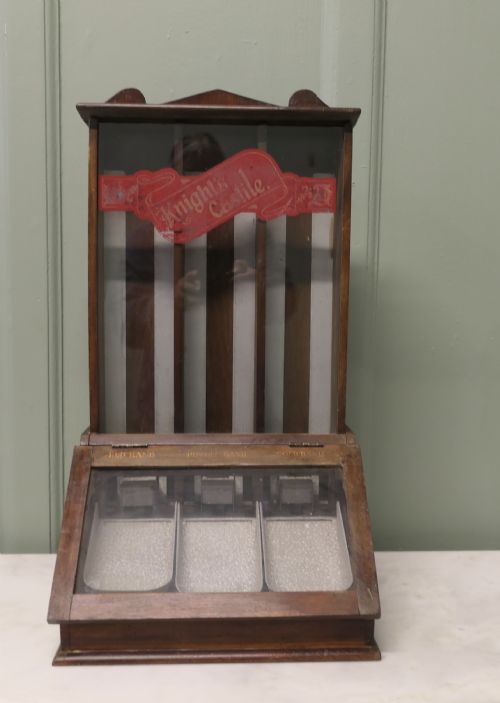
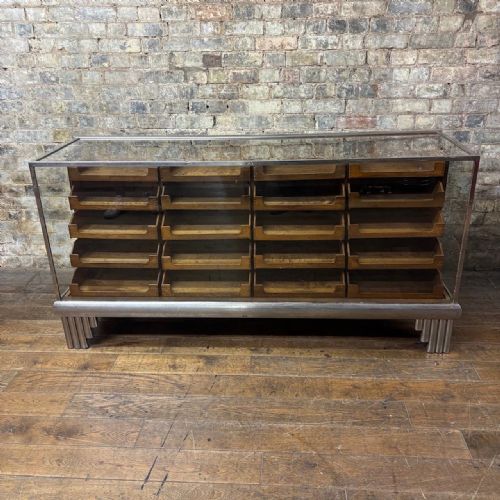
A commercial shop fitting cabinet encompasses tall display units, glazed counters, and banks of drawers designed originally for trading floors and mercantile premises. These items date from the Victorian and Edwardian eras through to the 1930s, spanning styles from rustic country pine to polished commercial mahogany. Buyers most frequently meet large display counters, haberdashery chests, and wall cabinets intended for goods.
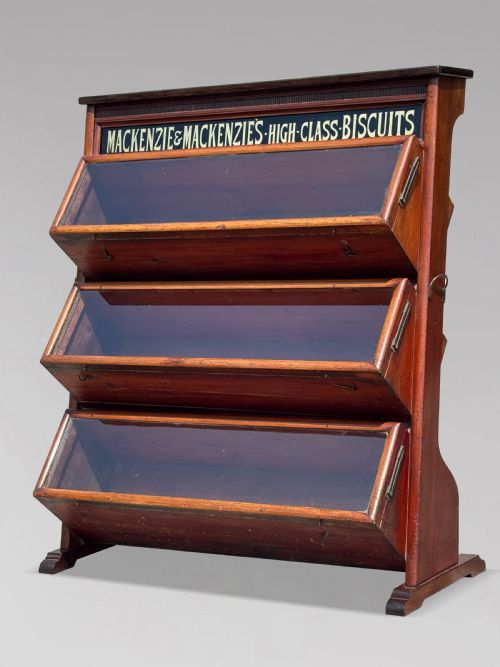
The practical function dictates the shape, leading to deep drawer banks for textiles or glass-fronted vitrines for confectionery and apothecary items. Many examples bear the names of past makers or specific traders on painted signs and brass plaques. The selection ranges from compact table top display cases to room-length retail counters.
Materials and construction
Timber selection leans heavily toward sturdy hardwoods like mahogany, oak, and fruitwood alongside pine carcasses, built to withstand daily commercial use. Workshops integrated large sheets of glass and mirrored interiors to maximise light reflection across the displayed stock.
Metal components such as brass frames, chrome trim, and aluminium sections appear alongside traditional painted finishes and hand sign-written panels. Joinery techniques prioritise robust framing to support heavy glass doors and numerous stacked drawers.
Some cabinets bear surviving hand sign-writing for long-gone gunsmiths and sweet shops, preserving local trade history on the timber.
Judging quality and construction
The distinction between tiers rests upon the choice of solid timbers against secondary woods, and the integration of substantial brass or chrome framing rather than lighter metallic alloys. Superior examples exhibit refined proportions, original bevelled glass, and robust internal drawer construction.
Makers' marks from notable shop-fitting firms distinguish standard utility units from specialised retail commissions. Original painted advertising panels, intact glass sides, and untouched period hardware elevate the status of a piece far above heavily altered specimens.
Dudley & Co·John Stow Ltd of Bradford·Saml. Elliott & Sons·Pollards·E. Pollard & Co. Ltd.
The Commercial Shop Fitting Cabinet Glossary
- Haberdashery cabinet
- A multi-drawer storage unit featuring shallow bays originally used for ribbons, threads, and small drapery goods. These pieces typically combine wooden frames with glass-fronted panels.
- Shop counter
- A long freestanding retail fixture designed with a flat working top for serving customers and a glazed or shelved display front facing the public. They appear in oak, mahogany, and painted pine.
- Vitrine
- A glass-sided display cabinet intended for the prominent presentation of delicate wares or merchandise. They utilise transparent panes to protect contents while maintaining full visibility.
- Bank of drawers
- An extensive run of stacked storage compartments built into a single housing unit. These fixtures served merchants needing organised inventory control.
- Chests of drapers drawers
- Large storage furniture constructed with numerous uniform pull-out trays for textile stock. They form a staple component of historical drapery and clothing establishments.
Commercial Shop Fitting Cabinet: Frequently Asked Questions
What is a commercial shop fitting cabinet?
A commercial shop fitting cabinet is a heavy-duty storage or display unit built for nineteenth and early twentieth-century retail environments. They range from glass counter cases to multi-drawer haberdashery chests.
These pieces were constructed to showcase merchandise securely while withstanding the constant foot traffic and trade of bustling Victorian and Edwardian shops.
How were these cabinets used originally?
Traders utilised these fixtures to organise inventory, protect delicate stock behind glass, and present goods directly to customers across a serving counter. Haberdashery chests held small textiles, while vitrines displayed confectionery and apothecary items.
Commercial premises relied on these robust units for both functional stock control and effective visual advertising.
How do I live with a shop fitting cabinet?
Living with a commercial shop fitting cabinet involves integrating large-scale timber and glass furniture into modern domestic spaces as storage or display furniture. They suit kitchens, living rooms, and studies where deep drawers or glazed shelving provide practical utility.
Their neutral painted or polished wood finishes allow them to sit comfortably alongside contemporary or traditional interior schemes.
How do I date an antique shop cabinet?
Dating relies on identifying stylistic markers, timber types, and construction methods associated with specific decades from the 1870s through the 1930s. Victorian and Edwardian pieces often feature rich mahogany and detailed mouldings, while 1930s examples introduce chrome, aluminium, and Art Deco lines.
Maker signatures, brass plates, and painted advertising scripts further narrow the chronological origin of individual items.