
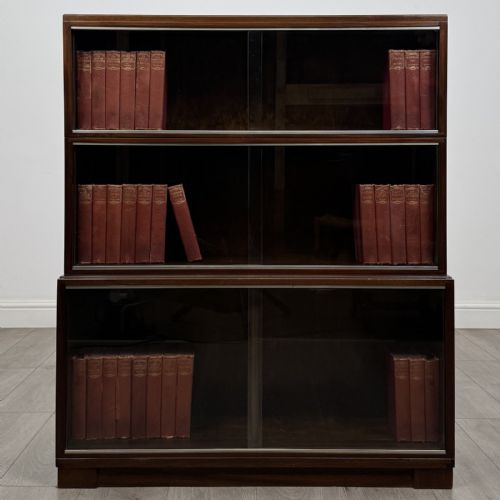
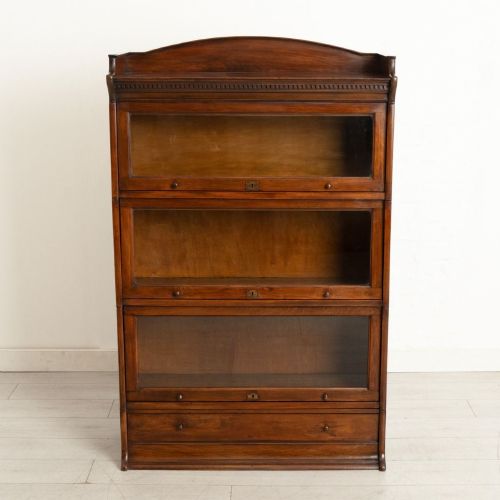
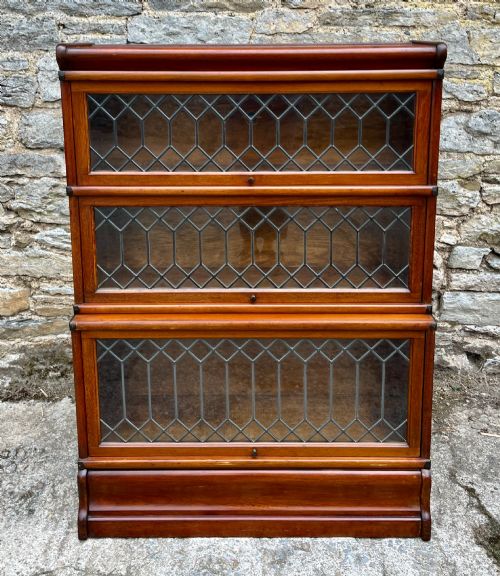
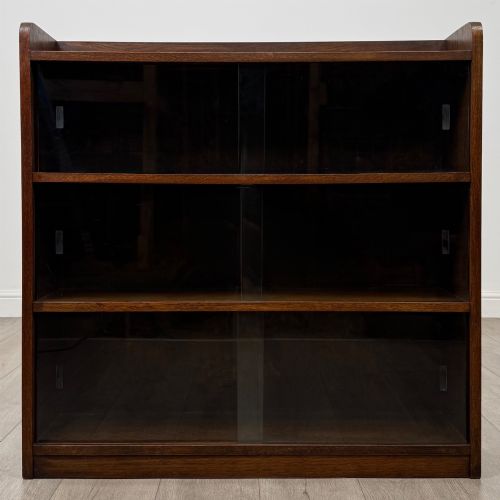
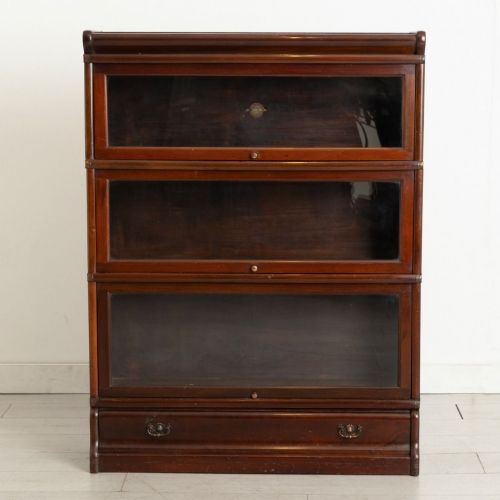
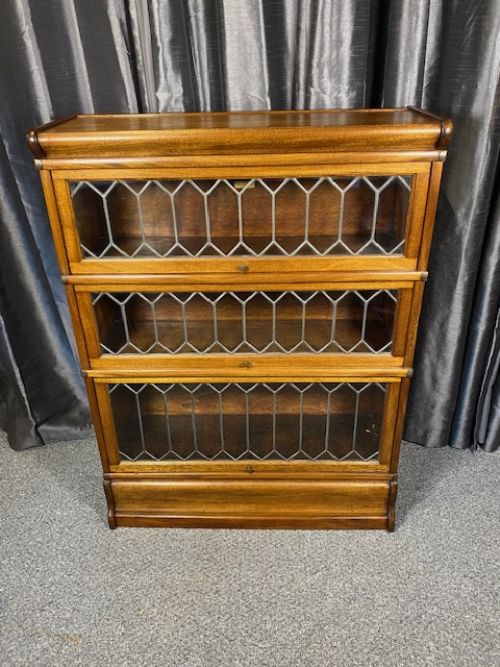


Three Tier Display Cabinet
These three tier display cabinet pieces bring tiered shelving and glazed or open display into rooms through mahogany, oak, and walnut forms.
Three Tier Display Cabinet
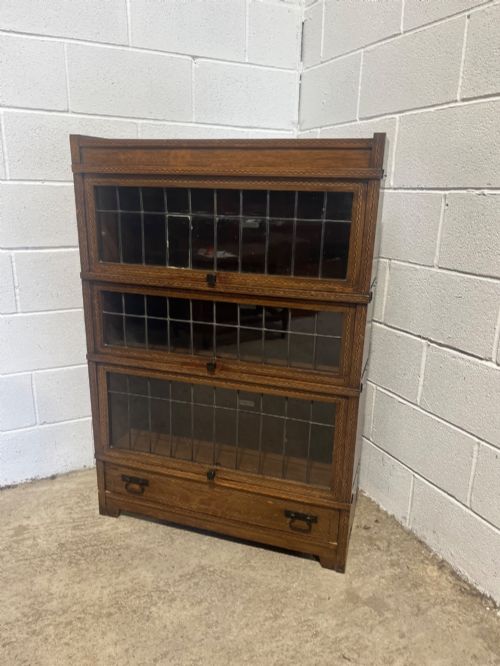
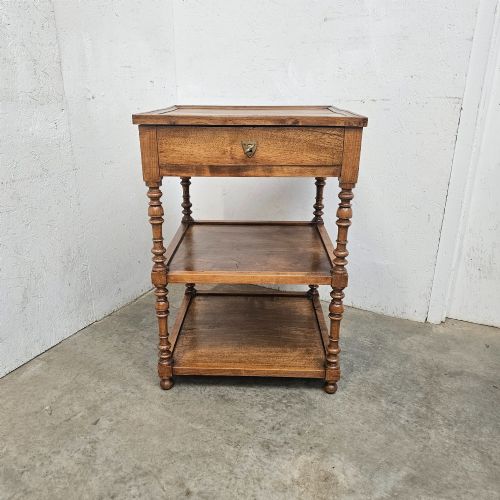
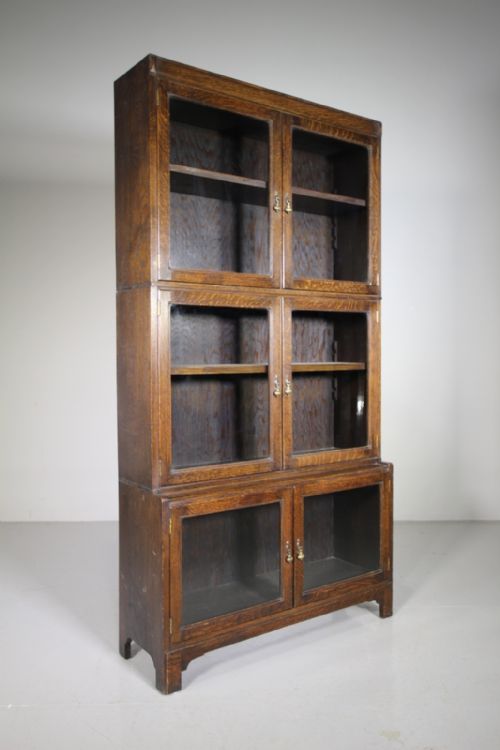
A three tier display cabinet brings multiple levels of shelving into domestic spaces for books, objects, and display. The listings show forms ranging from sectional barrister bookcases and etageres to open whatnots and tiered stands.
Makers and periods span the nineteenth century through the Art Deco era, including Edwardian designs and the 1920s. Buyers encounter oak, mahogany, and walnut construction alongside brass and glass structures.
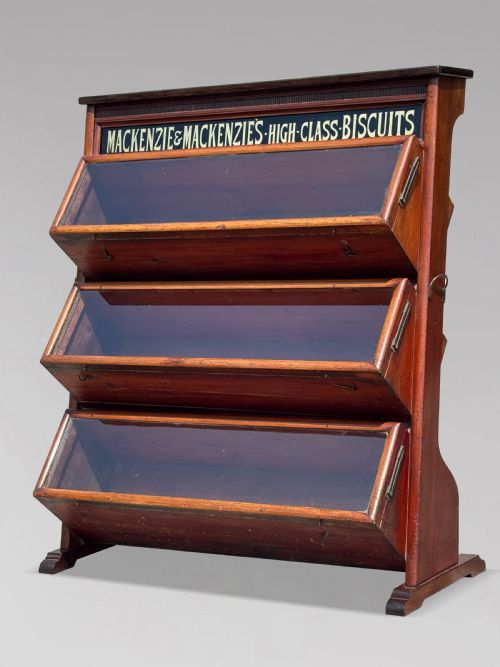
Function varies from commercial biscuit displays and sectional stacking bookcases to bedside shelf units and marble top side tables. Each piece utilises vertical space through tiered construction.
How they were made
Construction relies on timbers such as mahogany, oak, walnut, and limed oak, joined with brass hardware and lead detailing. Sectional stacking bookcases utilise modular boxes while etageres employ turned wooden legs and metal frames.
Glazing protects contents in cabinets while open shelving allows accessible placement for books and decorative objects. Marble tops provide durable surfaces on side tables and dumb waiters.
Inlay work and polished finishes enhance timber surfaces across Edwardian and Art Deco examples. Bronze and polished brass introduce metal elements to tiered display stands and shelving.
Listings feature oak, mahogany, walnut, and brass across nineteenth-century and twentieth-century periods.
What varies in quality
Timber selection and grain figure dictate visual presence, distinguishing plain utility items from finely figured burr walnut or polished mahogany examples. Solid construction in oak and mahogany holds up better than lesser veneers over decades of use.
Joinery execution and hardware integration determine the rigidity of stacking sections and tiered shelves. Original brass fittings and smooth mechanical movement in sectional bookcase doors separate superior workshop output from standard production.
Globe Wernicke·Heals·Hille·Minty
The Three Tier Display Cabinet Glossary
- Etagere
- A piece of furniture with a set of open shelves for small objects and ornaments. These tiered stands often feature turned legs and delicate wooden or metal framing.
- Barrister bookcase
- A sectional bookcase composed of separate stacking shelf units with glass doors. This modular design allows units to be stacked vertically or rearranged independently.
- Whatnot
- A multi-shelved piece of furniture used for displaying ornaments or books. Victorian and Regency examples typically incorporate turned supports and timber construction.
- Dumb waiter
- A tiered set of revolving or stationary shelves used for serving or displaying items. Marble top versions appear in nineteenth-century dining and living spaces.
Three Tier Display Cabinet: Frequently Asked Questions
What is a three tier display cabinet?
A three tier display cabinet is a piece of furniture featuring multiple levels of shelving for organising and showing books, ceramics, or decorative objects. Designs range from sectional stacking bookcases to open etageres and brass stands.
These pieces utilise vertical space efficiently in rooms, combining timber or metal structures with glass panels or open shelving configurations.
How do sectional bookcases work?
Sectional bookcases consist of individual modular shelving units that stack one on top of another to form a tall cabinet. Each tier typically includes a glass door that lifts and slides inwards.
This modular construction allows owners to add or remove sections as needed while maintaining a unified exterior appearance across the stacked units.
Where should I place an etagere?
An etagere suits corners, alcoves, or wall spaces where open tiered shelving can hold books and decorative objects without blocking light. Their open sides make them useful in both compact and spacious rooms.
Placing them away from direct heat sources protects the timber and veneer surfaces from drying out or warping over time.
How do I identify Art Deco cabinets?
Art Deco cabinets from the 1920s and 1930s feature streamlined geometric forms, smooth polished timber surfaces, and minimal ornamentation. Materials often include limed oak and walnut with modernist proportions.
Makers such as Heal's and Hille produced matching tiered tables and glazed cabinets that reflect this functional twentieth-century aesthetic.