




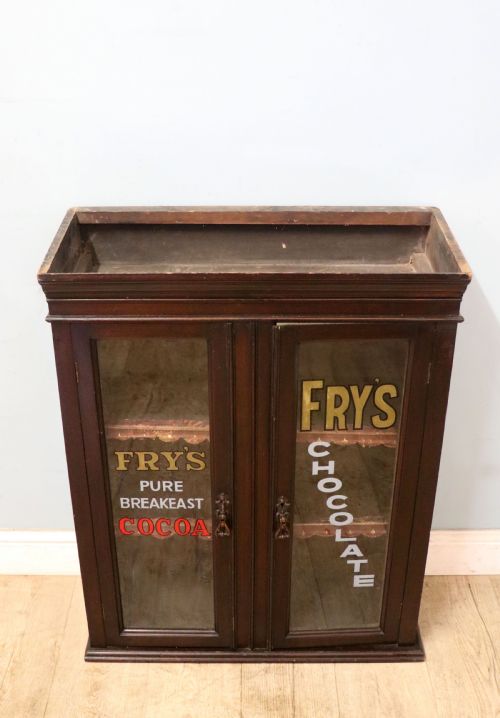

Glass Advertising Display Cabinet
Glass advertising display cabinet choices here bring together counter top shop fittings and brand sign writing from Victorian and twentieth century commerce.
Glass Advertising Display Cabinet
A glass advertising display cabinet is a shopfitting piece designed to showcase confectionery, tobacco, tea or household goods on a counter or floor. These cabinets served commercial spaces from the nineteenth century into the twentieth century, presenting products with brand names painted onto the glass or wood.
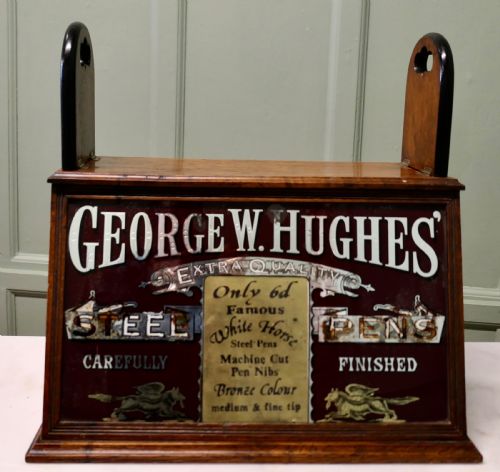
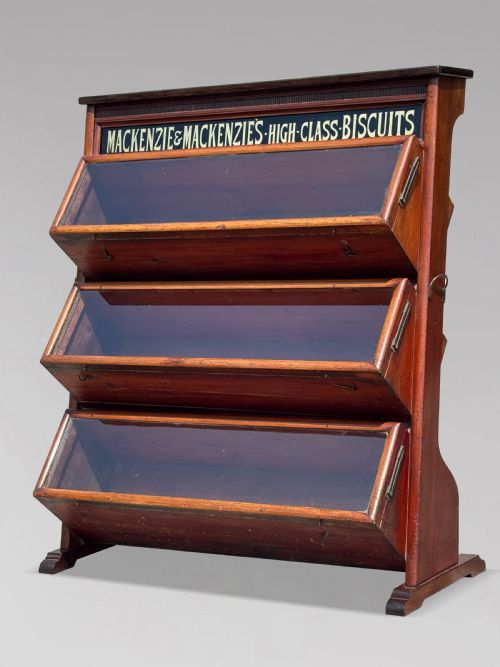
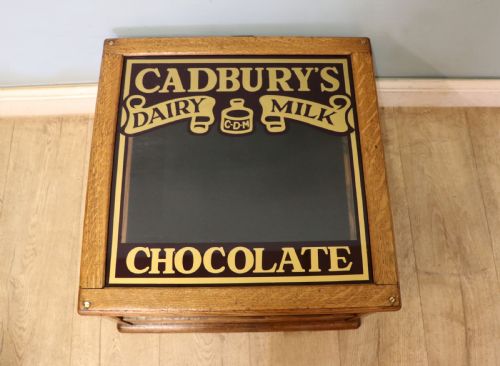
You will most frequently meet Edwardian and 1930s examples framed in mahogany, oak or hardwood with glazed panels. Many pieces on this page combine original shop display forms with later hand sign written decoration naming makers such as Fry's, Cadbury's and Rowntree's.
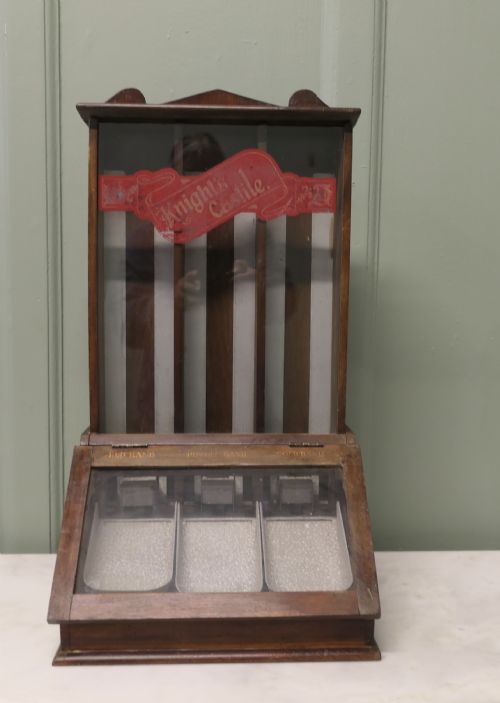
Countertop display cases and taller vitrines make up the main forms seen here, spanning styles from Victorian commercial and Edwardian to Art Deco and industrial commercial. These cabinets offer a direct link to historical retail practice through their glazed structures and product lettering.
How they were made
Makers constructed these cabinets primarily using solid mahogany, walnut, oak or hardwood frames joined to hold large glazed panels for maximum visibility. Brass hardware, nickel-plated metal and mirrors often complemented the woodwork, while gold leaf added detail to lettering.
Commercial workshops applied hand sign writing directly to the glass or wood surfaces, using lettering that identified confectioners, gunsmiths and grocers. Inlays in satinwood and painted floral decoration appeared on domestic-derived retail pieces from the Edwardian period.
One giant advertising sparkling wine bottle stands ready to serve imaginary giants alongside miniature chocolate and pencil dispensers.
What varies in quality
Quality rests in the structural integrity of the timber framing and the clarity of the original or later hand sign written lettering. Cabinets built with dense hardwoods like solid mahogany or American walnut sit at the higher end of the range compared to simpler pine or composite structures.
The precision of the joinery and the condition of the original glazed panels distinguish finer commercial fittings from standard utilitarian cupboards. Surviving brass hardware and untouched surface patination separate superior examples from heavily restored or distressed pieces.
Mackenzie's Biscuits·Fry's Chocolate·Ermen and Roby·Cadbury's Cocoa·Hovis Bread·Venus Pencil
The Glass Advertising Display Cabinet Glossary
- Vitrine
- A glass-fronted cabinet or display case used for showing fine objects or merchandise. These pieces often feature glass on multiple sides to let light enter from different angles.
- Haberdashery cabinet
- A multi-drawer retail storage unit with glass fronts or pulls designed to display small dry goods. They represent a specific category of shopfitting from the Victorian and Edwardian eras.
- Sign writing
- The craft of painting letters and graphics by hand onto shop windows, boards or cabinet glass. In this context, it refers to the brand lettering applied to display cases for chocolate, tea and other goods.
- Countertop display
- A smaller cabinet built to sit on top of a shop counter so customers could view goods at eye level. These pieces relied on glazed doors and sloping fronts to attract attention in retail spaces.
- Inlay
- A decorative technique where pieces of contrasting wood like satinwood are inserted into recesses in the primary timber. This method added visual detail to Edwardian commercial and domestic furniture.
Glass Advertising Display Cabinet: Frequently Asked Questions
Where were these cabinets used?
Merchants placed these glass cases on shop counters, shelves and tea room tables to tempt customers with confectionery, tobacco and sewing supplies. Retailers relied on them to keep stock clean while maintaining clear visibility.
Later adaptations brought similar glazed cupboards into domestic interiors as display spaces for collections, retaining their commercial character through surviving brand lettering.
How do I tell Victorian from later pieces?
Victorian and nineteenth century cabinets typically display heavier timber construction in solid mahogany or American walnut, often with traditional tongue and groove backs. Brass hardware and hand-cut joinery point towards these earlier dates.
Twentieth century and 1930s examples often adopt Art Deco lines or simpler hardwood frames, sometimes incorporating later sign writing on older carcasses. Examining the timber types and construction methods clarifies the period.
Are the advertising inscriptions original?
Many listings feature later hand sign written decoration applied to antique timber cabinets to recreate historic shop displays. This practice repurposes older glazed cupboards for decorative commercial themes.
Collectors look closely at the paint surface and lettering style to determine whether the branding dates to the original working life of the cabinet or represents a subsequent application.
How do I clean the glass panels?
Wash the glass gently using a soft cloth and a mild, non-ammonia cleaner to protect surrounding wood finishes and any painted sign writing. Avoid spraying liquid directly onto painted surfaces or old timber joints.
Dust the wooden frames regularly with a dry cloth and apply a traditional wax sparingly to nourish the hardwood without disturbing the patination.