
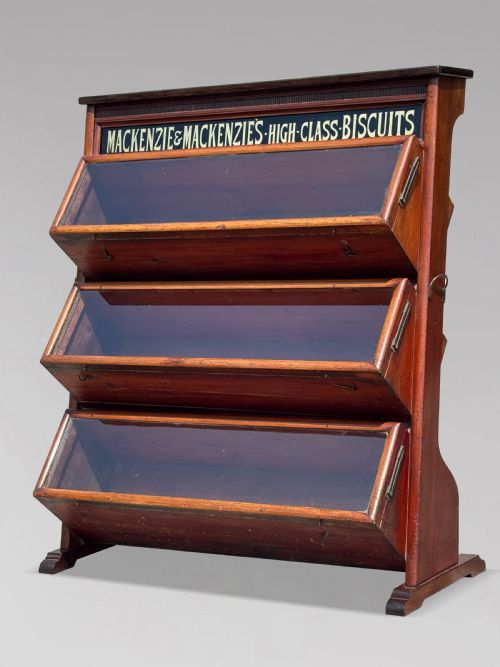
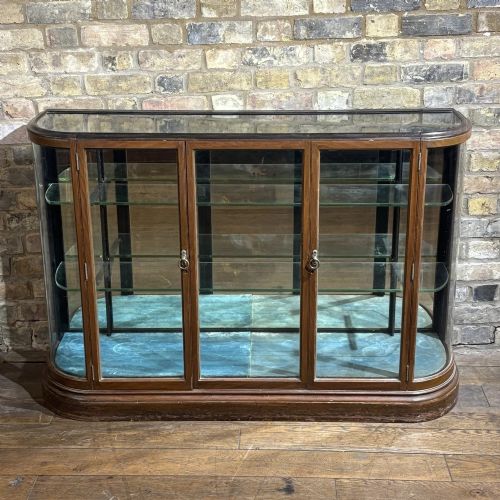


Vintage Haberdashery Display Case
A vintage haberdashery display case brings commercial heritage into a domestic interior, offering glazed protection for curated collections.
Vintage Haberdashery Display Case
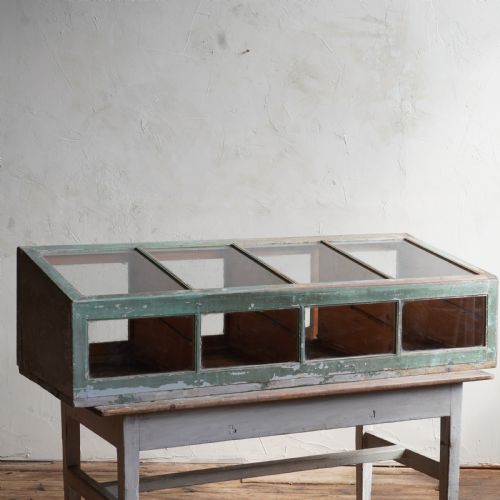
A vintage haberdashery display case is a piece of commercial furniture designed to showcase retail goods in shops and emporiums. These items range from compact countertop display cabinets to large shop display counters utilised in nineteenth and early twentieth century commerce. Buyers searching this phrase meet versatile forms originally built for textiles, confectionery, and general merchandise.
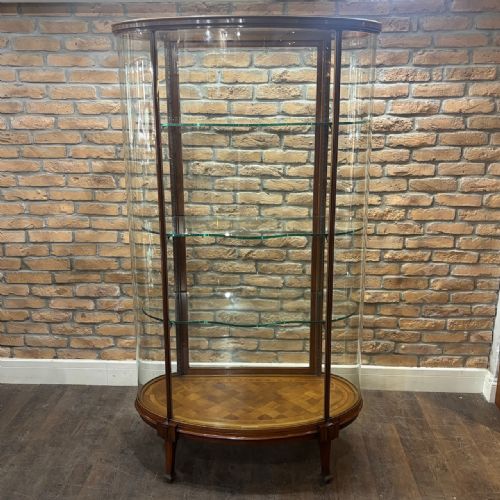
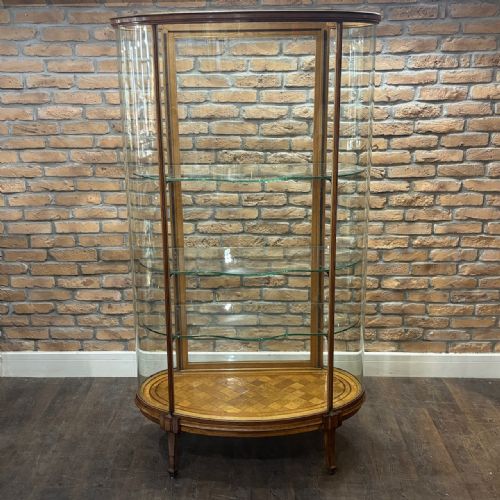
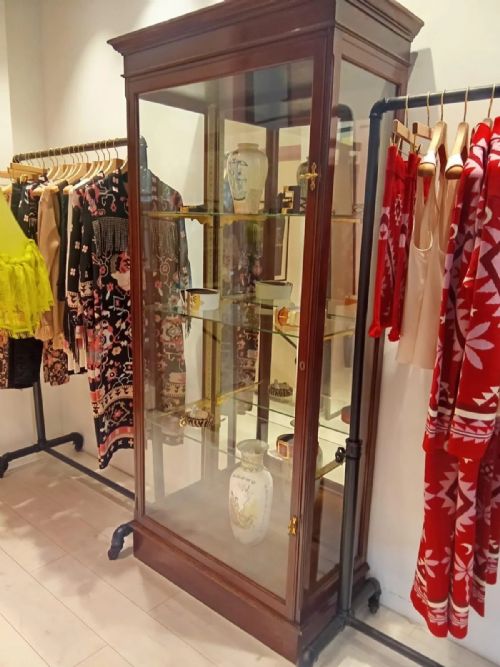
The pieces visible on this page date primarily from the Victorian and Edwardian eras through to the 1920s and 1930s. Common configurations include bow end shop display cabinets, pentagonal display counters, and tall tower cabinets built for maximum visibility. Form follows retail function, providing glazed viewing areas to entice shoppers while protecting delicate stock.
How they were made
Makers constructed these cabinets using sturdy timbers such as mahogany and oak, supplemented by structural metals like brass and aluminium. Glazing panels fitted into timber or metal frames allow light to enter the interior from multiple angles. Interiors frequently feature mirrored glass or fabric linings in velvet to enhance the presentation of the goods housed within.
Commercial workshops employed joinery techniques suited to heavy daily use in busy retail environments. Brass hardware, including hinges and corner brackets, reinforced the joints of high-use counters and tabletops. Sign-written decoration, sometimes applied later for brands like Rowntree's or Frys Chocolate, completed the commercial aesthetic.
Some cases bear the ghosts of sweet shop history, having once tempted children with cocoa, chocolates, and biscuits.
What varies in quality
The distinction between standard commercial joinery and exceptional cabinet-making lies in the refinement of the timber and the complexity of the form. Pieces featuring curved glass bow ends or pentagonal geometry demand higher levels of carpentry skill than simple rectangular boxes. The choice of solid mahogany or detailed brass framing elevates the standing of a counter compared to utilitarian pine or basic painted alternatives.
Originality of components and interior fittings dictates the standing of an individual piece among collectors. Cabinets retaining their mirrored interiors, original brass hardware, and authentic manufacturer branding demonstrate higher integrity. Alterations such as later hand sign-writing or distressed paint treatments change the character of the object away from its original shop floor context.
F. Sage & Co.·Saml. Elliott & Sons·Ermen & Roby
The Vintage Haberdashery Display Case Glossary
- Vitrine
- A glass display cabinet used primarily for showing delicate objects or curiosities. These freestanding or tabletop cases protect contents from dust while maintaining all-round visibility.
- Countertop display cabinet
- A compact shop showcase designed to sit atop a serving counter for close customer inspection. These units placed small merchandise directly at eye level during retail transactions.
- Bow end
- A curved glass end panel on a cabinet or counter that softens the rectangular profile. This shaping requires specialist glass-bending techniques found on higher-tier shop fittings.
- Ebonized
- Timber treated with a chemical finish or stain to imitate costly ebony wood. This dark, polished surface finish was popular on Victorian and early twentieth-century display furniture.
- Haberdashery cabinet
- A specialised multi-drawer or glazed storage unit designed for sewing cottons, ribbons, and small textile accessories. These items formed the central fixtures of drapery and fabric shops.
Vintage Haberdashery Display Case: Frequently Asked Questions
What were haberdashery cases used for?
These cabinets originally held small retail goods such as sewing cottons, ribbons, and textiles in drapery shops. Merchants used them to keep stock visible to customers while protecting delicate fabrics from handling and dust.
Over time, specialised cases were adapted by various trades, from confectioners displaying chocolates to apothecaries organising medical bottles.
How do I date a display case?
Dating relies on observing the materials, construction methods, and stylistic cues present in the woodwork and metal framing. Victorian and Edwardian examples often feature heavy solid mahogany and traditional joinery, while 1930s pieces introduce aluminium framing and Art Deco geometry.
Maker plaques and original brass hardware also provide reliable chronological markers for shop fittings.
Where can I put a countertop cabinet?
Compact countertop units sit well on top of sideboards, desks, or kitchen islands to showcase collections of small objects. Their glazed panels allow items inside to be viewed safely from multiple angles in a domestic setting.
Larger floor-standing counters and tower cabinets require dedicated floor space as statement furniture pieces in living spaces or hallways.
Are these cases suitable for modern homes?
These commercial fittings integrate readily into contemporary interiors by providing practical dust-free storage with historical character. Their glass panels help break up solid wood furniture arrangements in a room.
Collectors frequently utilise them to display ceramics, books, or natural history specimens at home.