
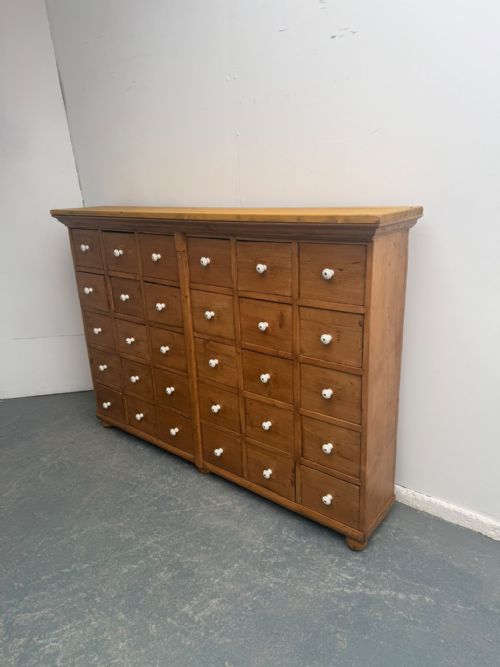


Pine Shop Fitting Cabinet
A pine shop fitting cabinet offers robust commercial storage with distinct period character, making it a functional centrepiece for modern interiors.
Pine Shop Fitting Cabinet
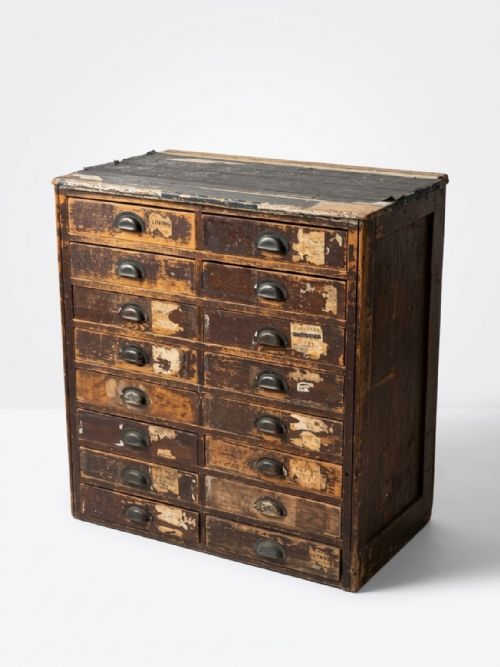
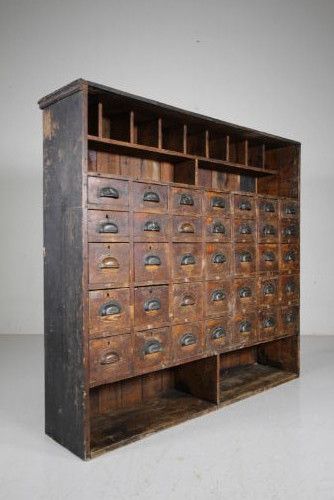
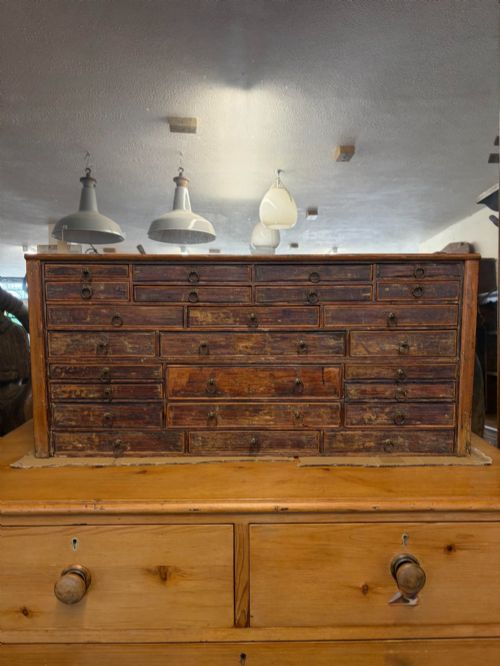
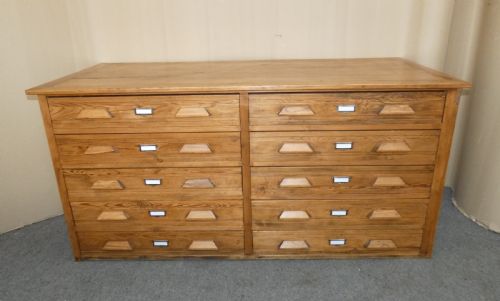
A pine shop fitting cabinet covers heavy-duty commercial storage furniture designed for retail environments during the nineteenth and early twentieth centuries. Buyers seeking a pine shop fitting cabinet typically encounter banks of drawers, drapers counters, and multi-drawer units originating from English, French, and Hungarian trade premises.
The pieces appearing on this page span the Victorian era, the year eighteen ninety, nineteen hundred, and nineteen twenty. Forms range from massive fifty-drawer units and twenty-five drawer banks down to smaller display cabinets and pigeon hole configurations.
Commercial utility defines these items, which served shops, haberdashers, and merchants before retirement into domestic spaces. Their large scale and numerous drawers make them practical solutions for organising modern homes while retaining authentic mercantile history.
Materials and construction
Construction relies primarily on solid pine carcasses built to endure heavy daily use in busy retail settings. Makers incorporated metal and iron hardware, including cast iron pulls and handles, alongside ceramic elements and glass panels for display sections.
Many surfaces carry original paint finishes in white, cream, light green, or other tones applied during their working lives. These painted wood surfaces show genuine wear that reflects decades of commercial service.
The listings show pieces originating from England, France, and Hungary, spanning the Victorian period through to nineteen twenty in pine, iron, and glass.
Assessing quality and character
Quality in these commercial survivors depends on the scale of the piece, the multiplicity of drawers, and the integrity of the original paint finish. Units with large counts of matching drawers command attention for their visual impact and functional capacity.
Original surface treatments, such as untouched historical paint, elevate a piece above standard stripped timber by preserving authentic trade provenance. Robust joinery and intact hardware further distinguish superior examples from heavily altered or later utility items.
Luxmore's of Ilfracombe
The Pine Shop Fitting Cabinet Glossary
- Bank of drawers
- A multi-drawer storage unit designed for commercial stock organisation. These large fixtures formed the backbone of nineteenth-century retail interiors.
- Drapers counter
- A long shop counter incorporating numerous shallow drawers for textiles and haberdashery. They provide substantial surface area alongside dedicated storage.
- Shop fitting
- Fixtures and furniture built specifically for commercial retail premises rather than domestic homes. They prioritize durability and maximum inventory organisation.
- Pigeon hole cabinet
- A storage unit divided into numerous small open compartments for sorting paperwork or small goods. Such units reflect the administrative side of historic trade.
- Victorian
- The period of British history spanning the reign of Queen Victoria from eighteen thirty-seven to nineteen zero one. Furniture from this era often combines utility with robust craftsmanship.
Pine Shop Fitting Cabinet: Frequently Asked Questions
What were pine shop fitting cabinets used for?
These cabinets served merchants, drapers, and shopkeepers as functional storage for inventory, small wares, and textiles. Their numerous drawers allowed businesses to sort and access stock efficiently during the working day.
Today, buyers repurpose them in domestic settings for organising studio supplies, clothing, or kitchen items while adding industrial character to a room.
How do I identify a Victorian shop fitting?
Victorian pieces display characteristic timber construction, heavy pine carcasses, and period hardware such as cast iron handles or ceramic pulls. Look for the scale and robust build typical of nineteenth-century commercial joinery.
Many examples also carry traces of original paint finishes applied during their active service in trade premises.
Are these cabinets suitable for modern homes?
Their substantial dimensions and exceptional storage capacity make them practical additions to large kitchens, hallways, or studios. The multiple drawers provide genuine utility for sorting household items.
Placement requires careful measurement of floor space and ceiling clearance, given the impressive scale of many surviving multi-drawer banks.
What is the difference between a counter and a bank of drawers?
A drapers counter combines a flat working surface on top with numerous shallow drawers beneath, designed for serving customers across the timber surface. A bank of drawers focuses entirely on vertical storage across many tiers.
Both forms share heavy pine construction and commercial origins but serve different spatial layouts within a room.
Why do some cabinets have painted finishes?
Shop owners frequently painted their fixtures to match interior colour schemes or to protect the pine timber during decades of commercial use. Original painted surfaces in white, cream, or green survive on several pieces.
These historic coats of paint contribute significantly to the visual character and authenticity of the furniture.