





Green Painted Pine Chest
A green painted pine chest brings useful storage and country character into a room through honest timber and historic colour.
Green Painted Pine Chest
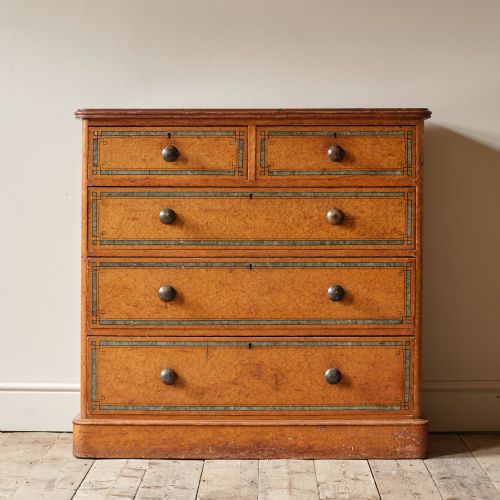
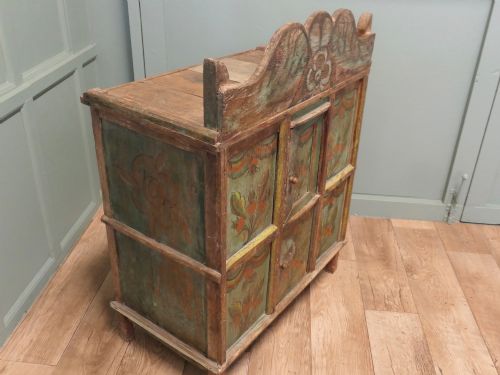
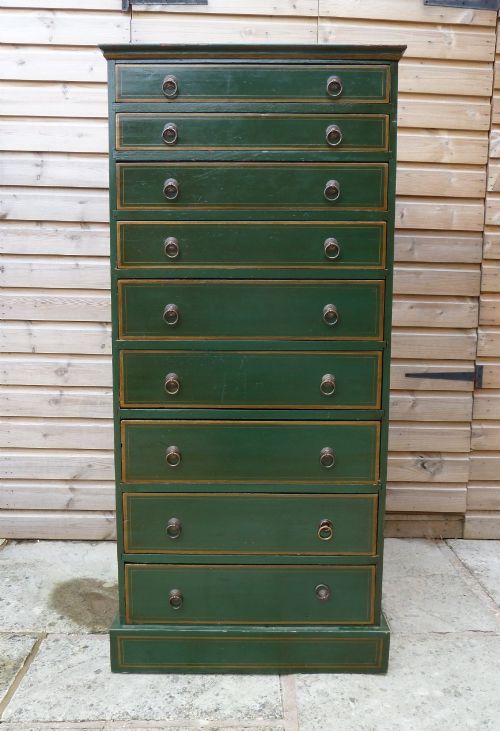
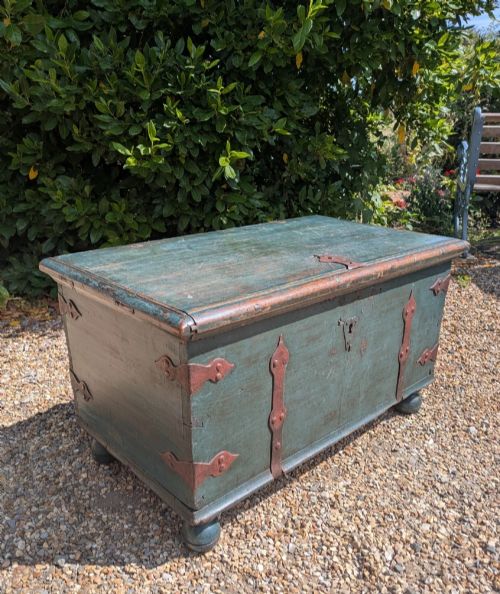
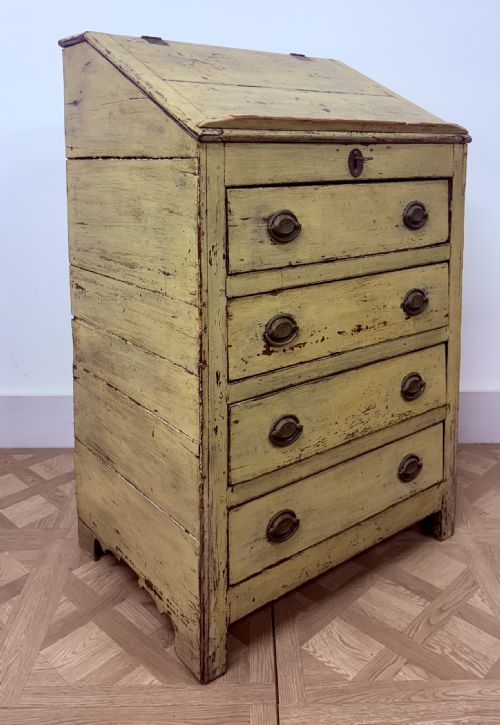
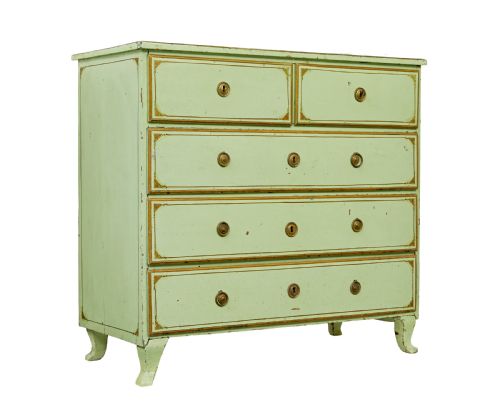
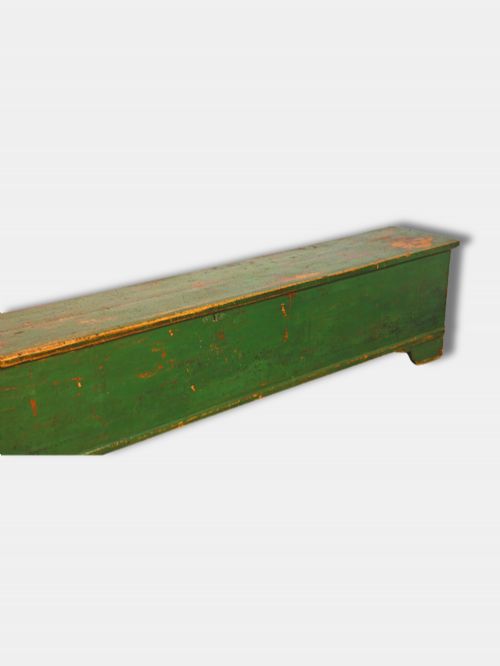
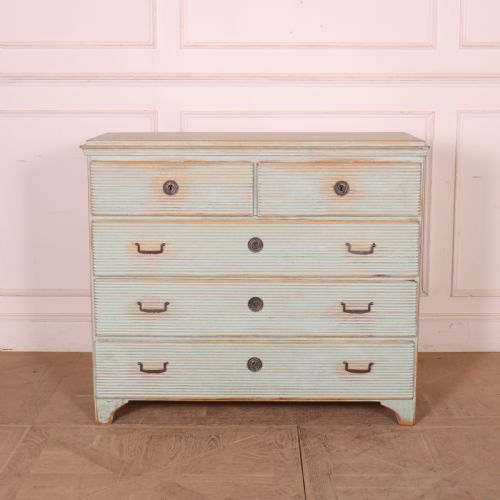
When you search for a green painted pine chest, you encounter a range of functional storage furniture made from softwood and finished in various shades of green paint. The selection includes blanket boxes, marriage chests, drawer units and commodes originating from English, Swedish, Hungarian and Dutch traditions.
The pieces span several periods, reaching from Georgian and nineteenth-century examples to later Victorian utility and twentieth-century workshop fittings. You will regularly find blanket boxes with iron strapwork alongside multi-drawer chests and domed marriage chests.
Regional variations shape these forms, from the serpentine commodes of Sweden to small Welsh artisan chests and Dutch storage boxes. Each piece serves as a practical container that carries the distinct aesthetic of its rural or provincial origin.
How they were made
These items rely on solid pine construction, built using traditional joinery methods suited to utilitarian furniture. Carpeneters and craftsmen shaped the soft timber into boards for boxes, drawers and cabinets, often incorporating hand-forged iron strapwork or brass fittings for reinforcement.
Surfaces received layers of paint, including scumble finishes and original green pigments that have aged over decades. Some items feature hand-painted details or fluted drawer fronts, reflecting the local decorative customs of English, Scandinavian and European makers.
Green Painted Pine Chest Retail Price Guide 2026
Typical asking prices for green painted pine chest among the pieces listed under this phrase on Sellingantiques today, from the lower quarter to the upper quarter. They describe what is for sale here now, not the wider market.
Listings feature pine chests spanning from the eighteenth century through the Victorian era and into the early twentieth century, incorporating iron, brass, and leather.
What varies in quality
The character of the surface finish largely determines the appeal of a piece, particularly the survival of original green paint and natural patina. Examples retaining their untouched early pigment display a depth of colour that later repainting lacks.
Construction details also separate standard storage boxes from finer artisan work, such as hand-forged iron strapwork, dovetailed drawer construction and well-proportioned mouldings. The integrity of the pine timber and the smooth operation of drawers or lids reflect the skill involved in the original making.
The Green Painted Pine Chest Glossary
- Scumble paint
- A decorative technique involving translucent glaze layered over a base colour to imitate grain or create mottled texture. It appears frequently on nineteenth-century storage pieces.
- Marriage chest
- A large storage box traditionally given to mark a wedding, often featuring painted dates, initials or decorative motifs specific to its region of origin.
- Strapwork
- Metal bands or hinges applied across the exterior of a chest to reinforce the wooden structure and protect the corners. These mounts are often hand-forged from iron.
- Serpentine commode
- A chest of drawers featuring a distinctive undulating front curve, commonly associated with eighteenth and nineteenth-century Swedish cabinet making.
- Kist
- A traditional regional term for a heavy wooden storage chest or box used for household linens and personal possessions.
Green Painted Pine Chest: Frequently Asked Questions
How were these chests used historically?
Families used these chests to store household textiles, blankets, clothing and personal valuables away from dust and dampness. Marriage chests held the dowry linens and possessions accumulated for a new household.
Workshop and shop fittings served a different purpose, organising small tools, hardware or merchandise in multiple drawers for daily trade.
How do I care for original painted pine?
Protect original painted pine by keeping the furniture away from direct sunlight and steady heat sources that can dry out the soft timber and cause paint to flake. Maintain a stable indoor humidity level.
Dust the surface gently with a dry, soft cloth and avoid chemical cleaning agents or abrasive polishes that might damage the historic pigment.
How can I tell an older chest from a newer one?
Look closely at the construction methods, tool marks and the composition of the paint layers. Hand-cut dovetails, forged iron hardware and genuine surface wear indicate considerable age.
Older pieces often display natural shrinkage in the pine boards and accumulated layers of historic green paint that modern reproductions struggle to replicate.