


Pine Apothecary Cabinet
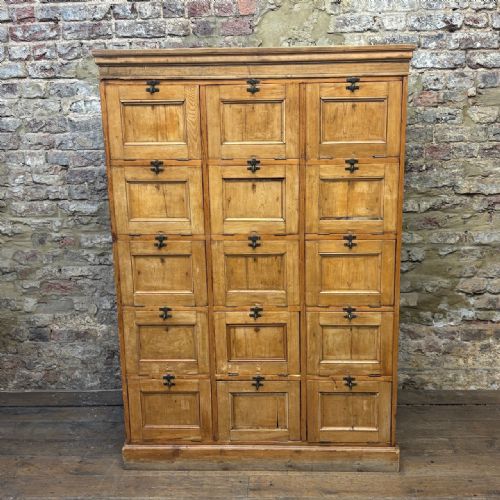
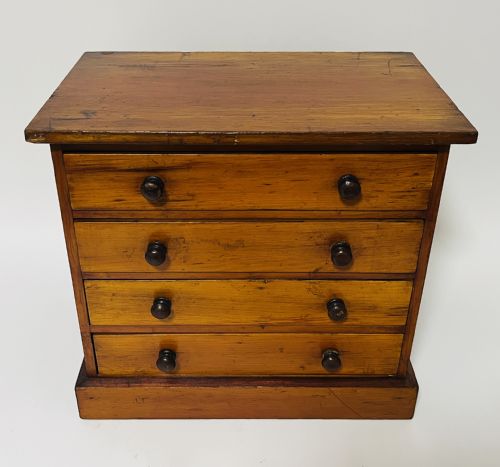
A pine apothecary cabinet brings tactile storage and industrial utility into a room, offering row upon row of small drawers originally designed for remedies and dry goods.
Pine Apothecary Cabinet
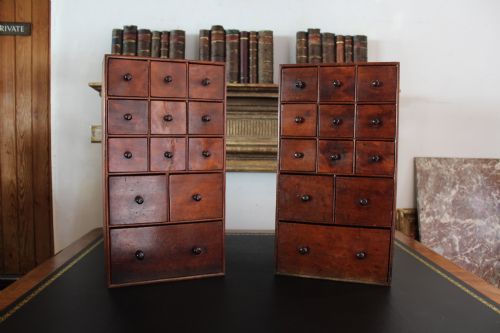
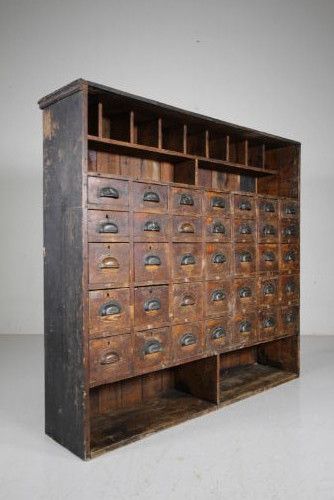
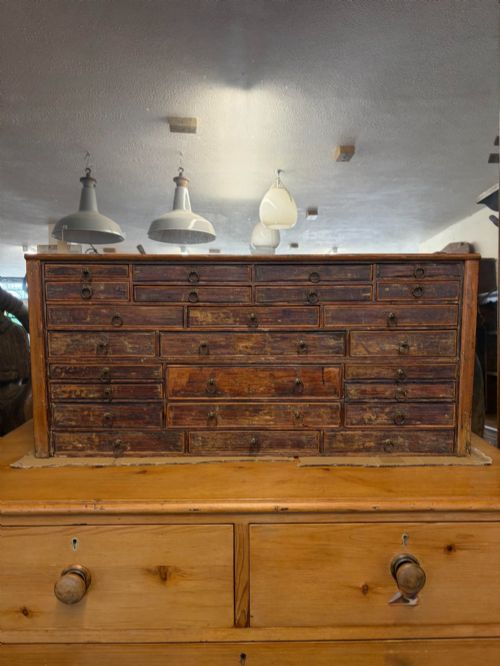
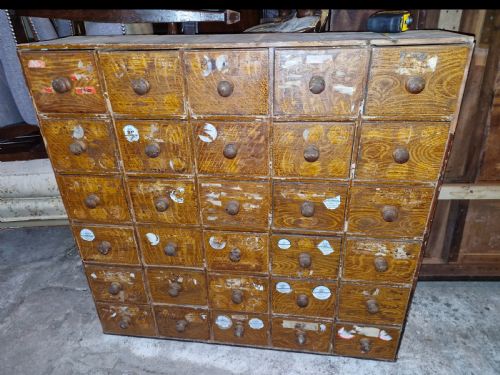
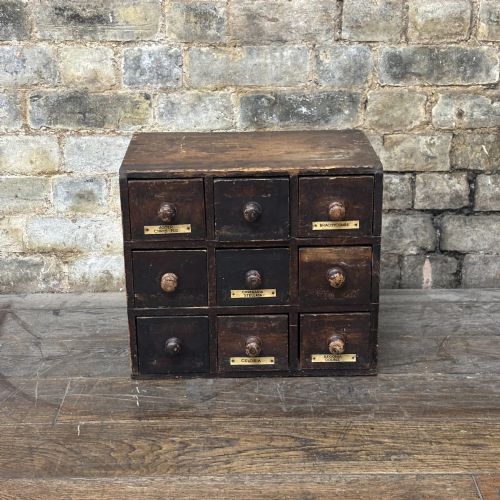
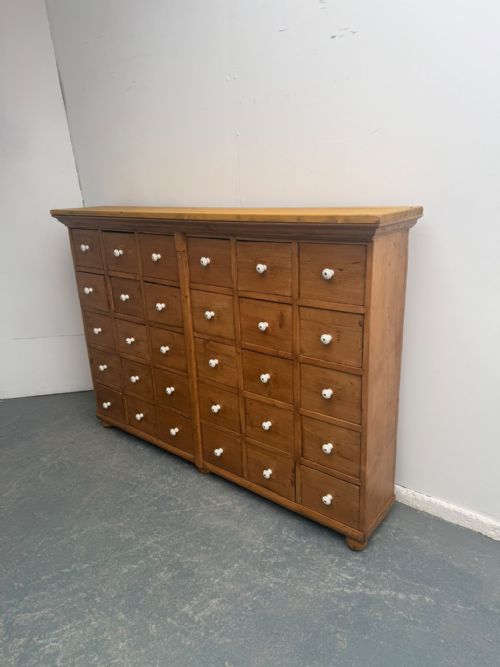
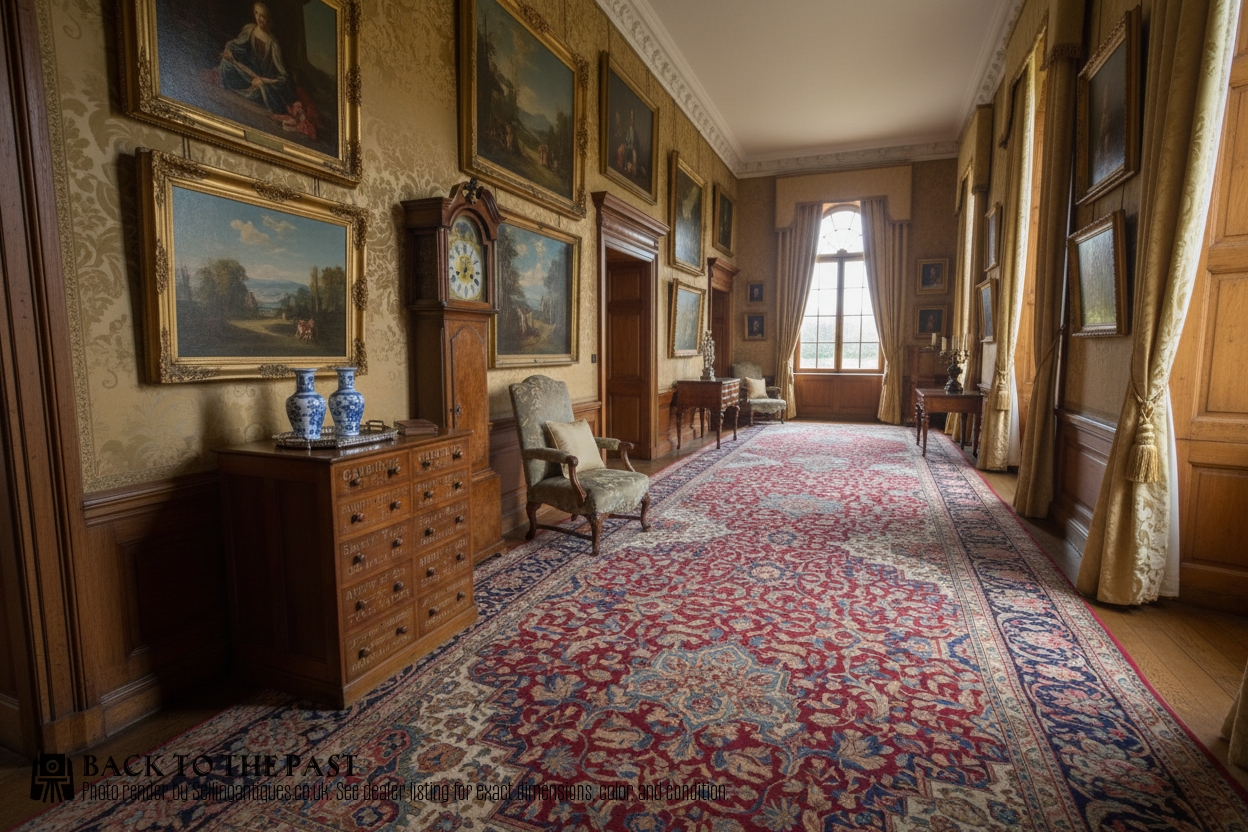
A pine apothecary cabinet functions primarily as a multi-drawer storage unit or bank of drawers, appearing in various configurations from wall-hung spice boxes to large shop fittings. These pieces emerge predominantly from the nineteenth century, including Victorian and Edwardian periods, alongside Scandinavian and French country origins.
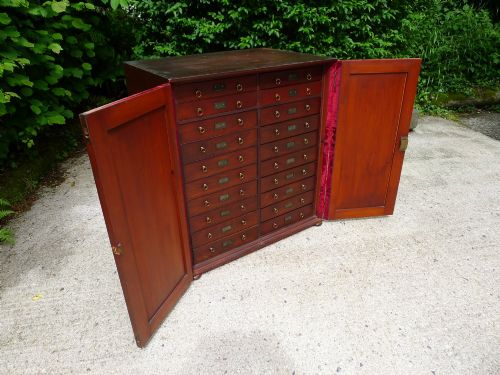
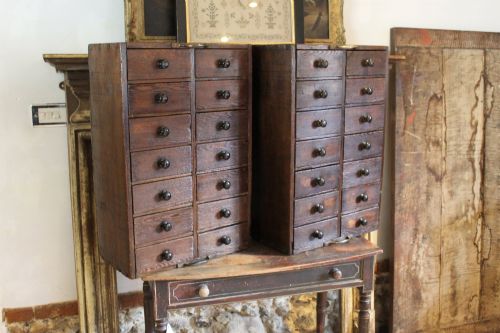
The most common formats on this page include multi-drawer banks, collectors cabinets, and shop counters featuring numerous small compartments. Makers originally constructed these utilitarian pieces for pharmacies, dentists, florists, and ironmongers before they transitioned into domestic interiors for organising small items.
How they were made
Craftsmen built these cabinets predominantly using solid pine and deal, sometimes combining them with oak or mahogany for structural stability. Surfaces frequently display original painted finishes in white, cream, or light green, while others remain polished or stained.
Metal elements such as brass and iron provide hardware and drawer pulls, ensuring durability for heavy daily use in commercial settings. Construction techniques focus on practicality, utilising multiple small drawers fitted snugly into substantial softwood frames.
Listings feature pieces spanning the 18th, 19th, and early 20th centuries, predominantly constructed from pine, deal, and oak with brass and iron hardware.
What varies in quality
Quality in these cabinets hinges on the scale of the drawer formation and the preservation of original factory or shop paint. Pieces with extensive banks of twenty or more drawers demand greater joinery skill than standard domestic chests.
The integrity of the timber and the retention of original metal hardware dictate the overall standard. Untouched painted surfaces or clear periods of utilitarian history elevate an example above heavily altered or stripped pieces.
Luxmore's of Ilfracombe·D Napier & Sons
The Pine Apothecary Cabinet Glossary
- Bank of drawers
- A large furniture carcase containing many small drawers arranged in rows and columns, designed for commercial or institutional storage. These units often served in shops, surgeries, and workshops.
- Shop fitting
- Heavy furniture built specifically for commercial retail environments rather than domestic use. Examples include counters and multi-drawer storage fixtures intended to display and organise goods.
- Collectors cabinet
- A specialist storage piece designed to house geological, botanical, or natural history specimens in shallow drawers. These cabinets protect delicate items from dust and light.
- Deal
- An old trade term for softwood timber, specifically pine or fir. Craftsmen utilised deal extensively for utilitarian nineteenth-century furniture carcases and drawer linings.
- Homeopathic chest
- A portable or fitted box designed to hold small glass vials of medical remedies. These chests feature tight interior compartments to prevent breakage during transport.
Pine Apothecary Cabinet: Frequently Asked Questions
What is a pine apothecary cabinet?
A pine apothecary cabinet is a utilitarian storage unit featuring numerous small drawers, originally built for pharmacies, medical practices, or shops. They were designed to keep powders, herbs, and remedies systematically sorted.
Today, these pieces serve as distinctive storage furniture in homes, offering practical compartments for small household items while adding historical character to a room.
How were these cabinets used originally?
Businesses utilised these multi-drawer units to organise stock, ingredients, and specialised tools efficiently. Chemists, ironmongers, florists, and watchmakers relied on them to keep extensive inventories close at hand.
Over time, many commercial premises discarded or replaced these utilitarian fixtures, leading to their preservation in domestic settings where they now store modern collections and sundries.
How do I date a pine apothecary cabinet?
Dating relies on examining construction methods, timber choice, hardware styles, and any surviving commercial markings. Pieces from the nineteenth century often exhibit hand-cut dovetails and heavy pine or deal construction.
Victorian and Edwardian examples frequently show specific commercial wear patterns, original painted shop finishes, and cast iron or brass pulls characteristic of their production era.
Are painted or bare pine cabinets more authentic?
Both painted and unpainted surfaces appear on authentic period pieces, depending on their original commercial application. Many shop fittings and apothecary units received protective coats of paint or stain during their working lives.
Surviving original paint layers in white, cream, or green indicate a piece retained its commercial finish, while polished or waxed deal highlights the natural softwood grain.