


Antique Merchant Drawers
Antique merchant drawers are multi-compartment storage units built for trade and commerce, offering deep utility and historic character for modern interiors.
Antique Merchant Drawers
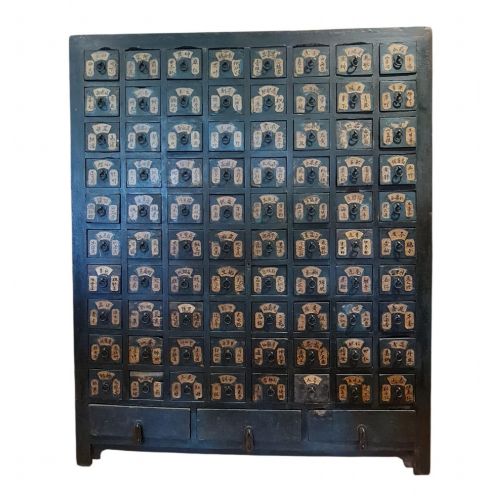
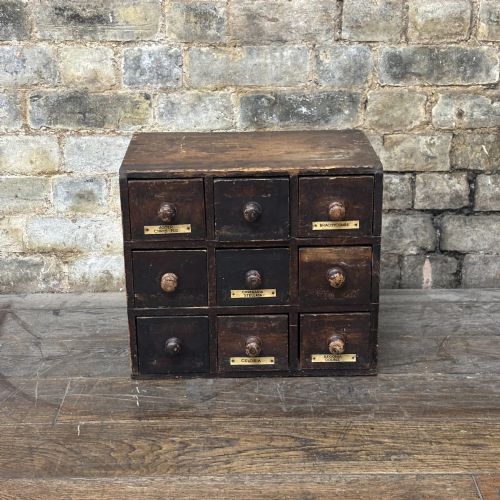
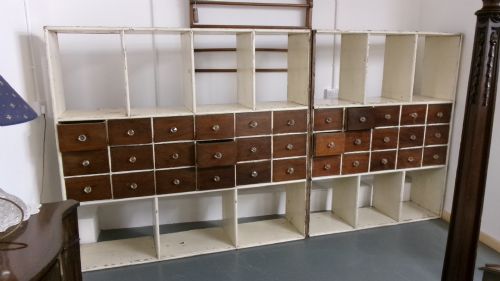
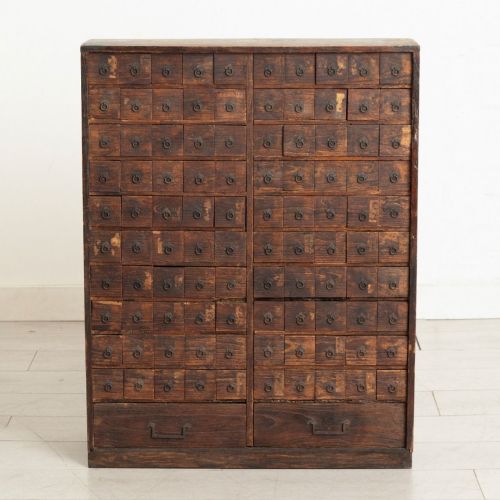
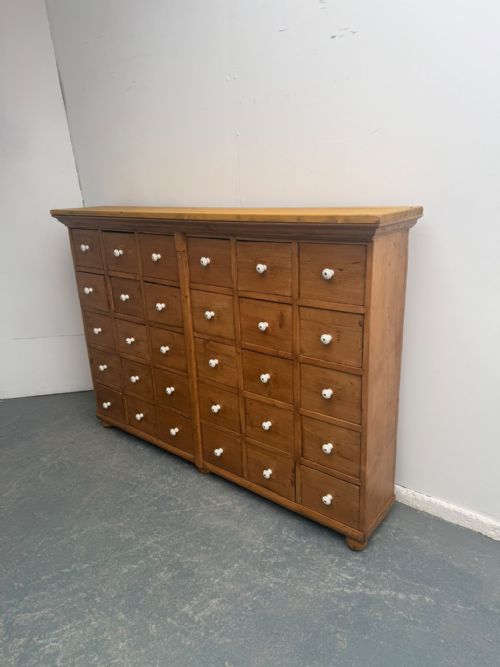
When you search for antique merchant drawers, you encounter a specialised category of multi-drawer units originally built for commercial use rather than domestic storage. These pieces encompass banks of drawers, shop fittings, apothecary cabinets, and drapers' counters designed to organise stock efficiently.
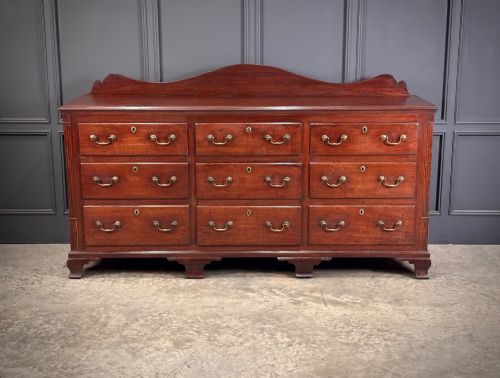
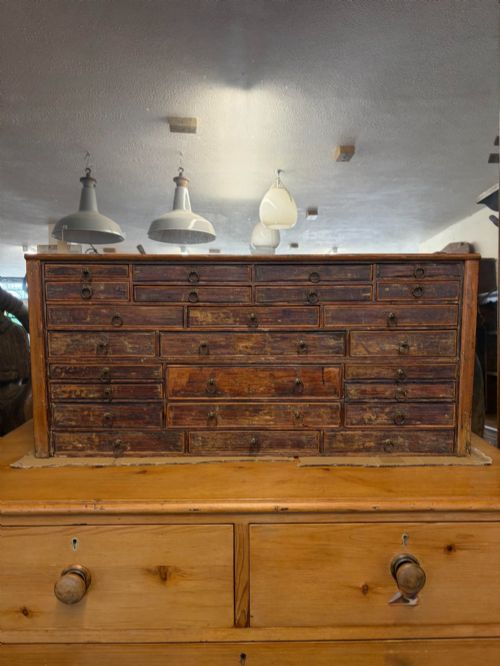
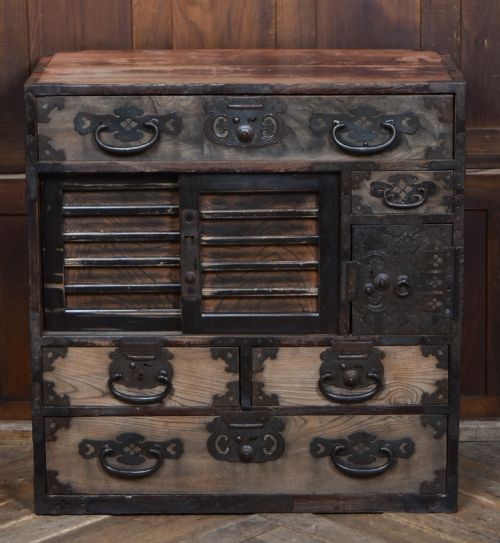
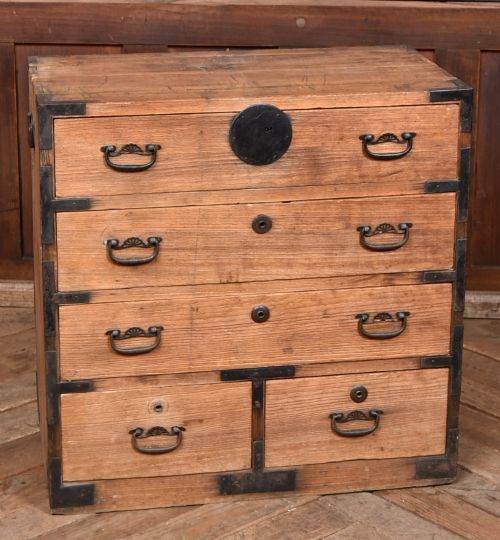
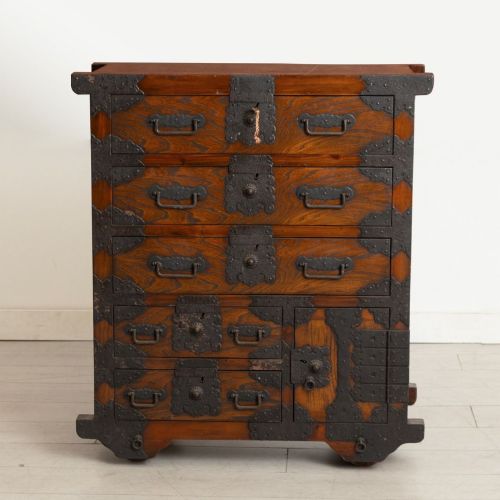
The selections on this page span several centuries and origins, ranging from 18th-century mahogany banks to Victorian shop fittings and Japanese tansu chests. Pine, mahogany, and elm form the backbone of these utilitarian units, often bearing the original paint, glass elements, or trade signwriting from their working lives.
Materials and Construction
Construction relies heavily on durable timbers suited to heavy daily use, with pine, mahogany, and elm frequently employed for frames and drawer carcasses. Secondary woods and solid panels provide the structural integrity required for banks housing dozens of small compartments.
Hardware details typically include brass pulls, iron handles, and occasionally glass fronts, reflecting the practical demands of shopkeepers and apothecaries. Joinery techniques are robust and straightforward, designed to withstand the constant opening and closing inherent in commercial environments.
Materials span traditional hardwoods and softwoods including cedar, teak, brass, iron, and glass.
Distinguishing Quality and Provenance
Quality in merchant drawers rests largely on the intact nature of the original surfaces, whether that is aged mahogany polish, early paint finishes, or authentic trade signwriting. Pieces that retain their original brass or iron hardware and uncompromised internal drawer construction command greater interest.
The scale and complexity of the compartmentalisation also influence a piece, from modest four-drawer shop chests to vast apothecary banks with dozens of small drawers. Origin and timber selection play defining roles, with dense hardwoods like elm and mahogany offering superior longevity compared to later utility replacements.
Luxmore's of Ilfracombe
The Antique Merchant Drawers Glossary
- Bank of drawers
- A large multi-drawer unit originally used in a shop, office, or workshop for storing small items of stock. These units often feature dozens of uniform drawers arranged in a grid.
- Tansu
- A traditional Japanese mobile storage chest built from woods such as cedar, elm, or zelkova. They were designed for domestic or merchant use and frequently incorporate clever locking mechanisms and iron hardware.
- Shop fitting
- Fixtures and furniture built specifically for commercial retail spaces, including counter units and wall-mounted drawer banks. They frequently bear painted signwriting denoting the original merchant business.
- Apothecary cabinet
- A specialised storage unit with numerous small drawers intended for holding medicinal herbs, powders, and remedies. These pieces often originate from traditional chemist shops or Chinese medicine practices.
Antique Merchant Drawers: Frequently Asked Questions
What were merchant drawers originally used for?
Merchant drawers served as functional storage systems in commercial trades, holding items like drapery, hardware, seeds, and apothecary goods.
Shopkeepers relied on these multi-compartment units to keep small stock items organised and accessible behind the counter.
How do I style merchant drawers at home?
These cabinets function exceptionally well as sideboards, kitchen islands, or hallway storage units due to their generous surface area and numerous compartments.
Allow the aged timber or original painted finish to stand out by keeping surrounding decor relatively simple.
How do I tell English pieces apart from Japanese tansu?
English merchant pieces generally utilise pine, mahogany, or oak within Victorian and Edwardian shop formats, often featuring bank layouts for drapery or hardware.
Japanese tansu chests rely on cedar, elm, or zelkova, incorporating distinctive iron straps, flush drawer pulls, and specific regional construction methods.
Are trade signwritten pieces genuine?
Many Victorian and Edwardian shop pieces retain their original painted signwriting naming the mercantile business or trade supplies.
Examining the wear patterns around the lettering helps confirm whether the typography belongs to the period of active commercial use.