


Commercial Glass Showcase
A commercial glass showcase brings the tactile heritage of traditional retail straight into a modern interior.
Commercial Glass Showcase
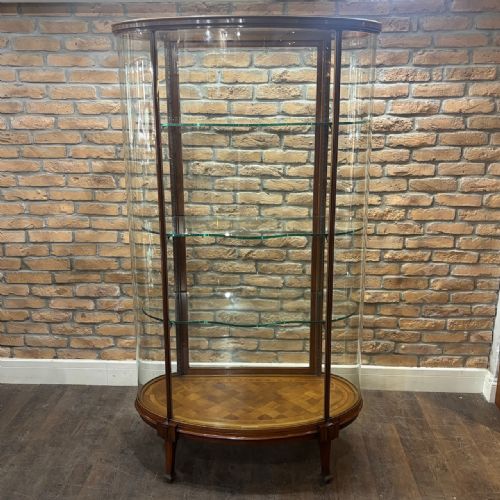
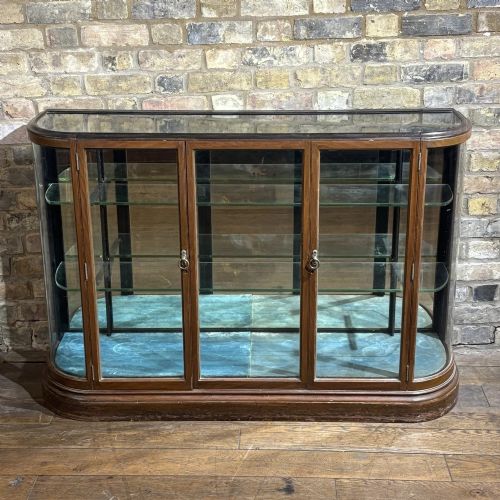
A commercial glass showcase serves to display retail merchandise or personal collections behind clear glazing, drawing primarily from shopfitting origins of the Victorian, Edwardian, and Art Deco eras. Buyers searching for a commercial glass showcase will frequently encounter tall display cabinets, low serving counters, and table top versions designed for historical shop environments.
The inventory on this page spans solid mahogany frames, oak structures, and specialised haberdashery units intended originally for confectionery, tobacco, or general dry goods. Pieces frequently date from the late nineteenth century through to the 1930s, reflecting the architectural shift in retail display methods during those decades.
Materials and Construction
Construction relies heavily on timber framing, predominantly solid mahogany and oak, paired with substantial expanses of glass to maximise visibility for retail merchandise. Metal elements such as brass, bronze, aluminum, and chrome appear alongside mirror glass backs and internal fabric or velvet linings to enhance the presentation of goods.
Joinery methods reflect robust commercial manufacture designed for daily public use, incorporating glazed doors, bow ends, and specialised hardware. Many items retain original manufacturer branding or period hand sign writing associated with confectionery firms and tobacconists.
Listings feature mahogany, oak, bronze, and chrome materials across Victorian, Edwardian, and 1930s commercial styles.
Assessing Quality and Provenance
Quality rests upon the integrity of the original timber frame, the clarity and expanse of the glass panels, and the retention of maker details such as manufacturer badges or stamped brass plates. Superior examples combine generous proportions with sophisticated glazing configurations like bow fronts or pentagonal footprints.
The presence of period commercial advertising, whether through hand sign writing or manufacturer plaques, adds historical depth to particular display counters and cabinets. Alterations to internal shelving or replacement glazing distinguish standard utility shopfittings from higher status architectural showcases.
F. Sage & Co·Dudley & Co·E. Pollard & Co. Ltd·Quincy Showcase Works
The Commercial Glass Showcase Glossary
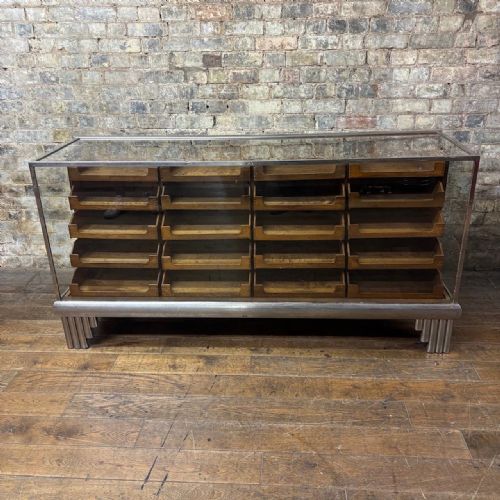
- Haberdashery counter
- A low retail display unit originally utilised for textiles, small wares, or haberdashery items, often featuring multiple drawers or glazed compartments.
- Shop vitrine
- A glazed display cabinet or case designed for shop interiors, derived from the French term for a glass showcase.
- Bow end
- A curved glass or timber termination at the end of a display counter or cabinet, softening the linear geometry of the piece.
- Countertop display cabinet
- A compact showcase designed to sit upon a retail service counter for close customer inspection of small goods such as chocolate or stationery.
Commercial Glass Showcase: Frequently Asked Questions
What were commercial glass showcases used for?
These glass showcases were deployed in nineteenth and early twentieth century shops to present goods securely while allowing customers a clear view of confectionery, tea, and haberdashery.
Retailers utilised countertop units and large floor standing counters to encourage impulse purchases and protect delicate merchandise from handling.
How do I date a commercial showcase?
Dating relies on identifying stylistic markers such as Victorian proportions, Edwardian mahogany framing, or Art Deco hardware and aluminum structures from the 1930s.
Maker stamps, brass plates, and associated commercial advertising painted onto the glass provide further chronological evidence.
Are these showcases suitable for modern homes?
Collectors and interior designers integrate these display cabinets into contemporary spaces to exhibit ceramics, books, and personal collections behind protective glass.
The substantial timber frames and mirrored interiors bring architectural character and reflective light into domestic rooms.
What is a haberdashery counter?
A haberdashery counter is a specific retail showcase featuring glazed panels and numerous drawers designed to organise small sewing items and textiles.
These functional shopfittings offer practical storage alongside display space for modern interiors.