


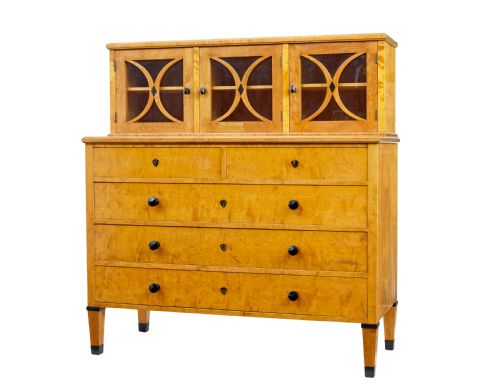

Blonde Wood Display Cabinet
A blonde wood display cabinet brings light and warmth to a room while keeping books and objects safe behind glass.
Blonde Wood Display Cabinet
A blonde wood display cabinet is typically formed as a bookcase cabinet or glazed display piece, drawing on lighter timbers like birch, sycamore, and maple. These pieces range from early nineteenth-century French Charles X examples to Victorian bird's eye maple and nineteen-thirties Art Deco designs.
The version most commonly met on this page is the early twentieth-century Scandinavian bookcase or cabinet, often hailing from Sweden and utilising birch or burr elm. Alongside these stand British and French creations, merging display shelves with lower cupboards or glazed upper compartments.
Makers such as Epstein and Sandberg & Co appear within these styles, bridging functional storage with decorative presence. Buyers seek them to brighten darker interiors while retaining the character of period timber.
How they were made
Cabinet makers utilised pale timbers such as satin birch, sycamore, and bird's eye maple, often accentuating the grain with contrasting walnut or burr elm veneers. These woods were selected for their luminous qualities and figured patterns, which caught the light in high-end domestic interiors.
Construction frequently incorporated glazed doors framed in wood, sometimes accompanied by metal mounts such as ormolu on nineteenth-century pieces. The integration of fabric linings and interior shelving allowed these cabinets to function simultaneously as bookcases and display units.
Blonde Wood Display Cabinet Retail Price Guide 2026
Typical asking prices for blonde wood display cabinet among the pieces listed under this phrase on Sellingantiques today, from the lower quarter to the upper quarter. They describe what is for sale here now, not the wider market.
Materials recorded across the selection include glass, satin birch, sycamore, burr walnut, bird's eye maple, and ormolu.
What varies in quality
Quality rests primarily in the choice and matching of veneers, where skilled selection of burr maple, sycamore, or satin birch creates balanced, symmetrical patterns across the doors and facade. Lesser examples rely on plain timber without the careful grain alignment seen in pieces by notable workshops.
The sophistication of the joinery and the integration of decorative hardware, such as fine metal mounts or custom glazing bars, distinguish standard utility furniture from high-style Art Deco, Swedish Grace, or Empire Revival creations.
Epstein·Sandberg & Co
The Blonde Wood Display Cabinet Glossary
- Satin birch
- A pale, lustrous timber with a fine grain, frequently utilised in Scandinavian and nineteenth-century cabinet making. It provides a bright, reflective surface that defines lighter period furniture.
- Sycamore
- A dense hardwood with a pale, creamy hue, often employed in Art Deco and twentieth-century decorative pieces. Its subtle grain takes a fine polish.
- Bird's eye maple
- A figure in maple wood where the small knots create a pattern resembling tiny eyes, prized in Victorian and nineteenth-century furniture. It is sliced into veneers to cover larger display surfaces.
- Ormolu
- Gilded bronze mounts applied to furniture, seen on nineteenth-century French pieces like Charles X cabinets. They add metallic contrast to the surrounding blonde wood.
- Burr walnut
- A knotted growth timber showing intricate, swirling grain patterns, used alongside pale woods in Art Deco designs. It provides a dark contrast to sycamore and birch.
Blonde Wood Display Cabinet: Frequently Asked Questions
What rooms suit a blonde wood display cabinet?
These cabinets suit living rooms, studies, and dining spaces where their pale timber brightens the interior and adds warmth without overwhelming darker furniture.
The glass doors protect books and collections from dust while keeping them visible, making them practical for both active libraries and display areas.
How do I care for blonde wood furniture?
Keep these cabinets away from direct sunlight and strong heat sources to prevent the pale veneers from drying out or shifting in tone over time.
Dust regularly with a soft, dry cloth and avoid harsh chemical polishes that can damage nineteenth-century or twentieth-century finishes.
How do I tell Art Deco from Victorian cabinets?
Art Deco pieces tend to feature geometric lines, contrasting veneers like sycamore and walnut, and streamlined forms typical of the nineteen-thirties.
Victorian and earlier nineteenth-century pieces, by contrast, rely on figured timbers like bird's eye maple and more traditional architectural proportions.
What is Swedish Grace furniture?
Swedish Grace is a classical-derived style from the early twentieth century that balances simplified traditional forms with refined, light-coloured materials like birch.
It marks a transition towards modernism while retaining fine craftsmanship and careful attention to timber grain.