
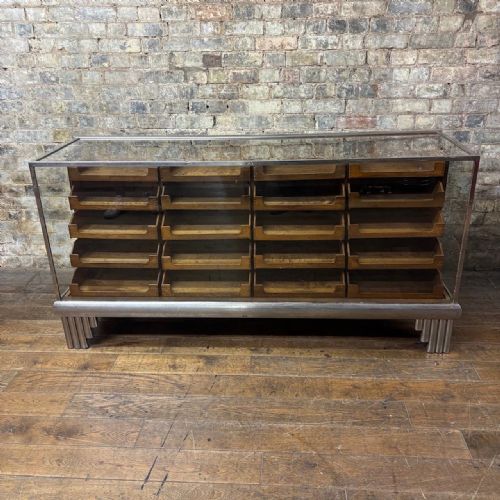


Art Deco Retail Cabinet
An art deco retail cabinet offers commercial display utility with architectural presence, combining glazed panels and metallic frames for striking interior focal points.
Art Deco Retail Cabinet
An art deco retail cabinet brings commercial haberdashery and sweet shop origins into domestic or modern retail spaces. When searching for an art deco retail cabinet, buyers encounter display counters, tower cabinets, and freestanding shelving units built for commerce.
The pieces seen here span the 1920s and 1930s, featuring forms like haberdashery counters and display cases. These heavy-duty shop fixtures were originally designed to showcase merchandise while protecting it behind glass.
Most examples originate from the interwar period, combining architectural styling with utilitarian function. Their sturdy construction ensures they continue to serve as practical display furniture today.
How they were made
Construction relies on structural timbers such as oak, mahogany, birch, and burr walnut, often paired with ebonised finishes. These woods provide a robust carcass capable of supporting heavy glass panels.
Metal components play a central role, utilising chrome, brass, bronze, steel, and aluminium for frames and structural supports. Leather accents also appear alongside glass to define the distinct industrial aesthetic of the era.
Listings feature items from the 1920s and 1930s, constructed using oak, mahogany, burr walnut, chrome, brass, and glass.
What varies in quality
Quality differences lie in the sophistication of the metal framing and timber selection, distinguishing utilitarian shop fittings from bespoke commissioned pieces. Finer examples integrate specialised maker hardware and luxurious veneers like burr walnut.
The integration of materials dictates the overall refinement of the cabinet. Seamless joins between glass, metal, and polished timber separate standard commercial utility items from exceptional design examples.
Dudley & Co·Saml. Elliott & Sons·Pollards
The Art Deco Retail Cabinet Glossary
- Haberdashery counter
- A long display unit traditionally fitted with multiple drawers or glass sections for small wares. These counters offer exceptional visibility and storage.
- Ebonised
- Wood treated to imitate ebony through a dark staining or finishing process. This technique provides a sleek, uniform black surface popular in interwar design.
- Burr walnut
- Timber taken from the burl growth of a walnut tree, exhibiting intricate, swirling grain patterns. It was favoured for high-end decorative surfaces.
- Tower cabinet
- A tall, vertical display enclosure designed to maximise floor space while offering multi-shelf visibility. These units draw the eye upward in a room.
Art Deco Retail Cabinet: Frequently Asked Questions
What is an art deco retail cabinet?
An art deco retail cabinet is a commercial display fixture from the 1920s or 1930s built with glass panels and metal or timber frames.
Originally used in shops to showcase goods, these cabinets now function as statement storage pieces in residential or commercial interiors.
How do I date an art deco retail cabinet?
Dating relies on identifying signature materials like chrome, brass, and ebonised timber alongside architectural interwar styling. Examining the construction methods of the frame helps confirm the manufacturing era.
Pieces typically originate from the 1920s or 1930s, reflecting the transition from traditional woodwork to industrial metal framing.
Where were these cabinets used?
These cabinets served in various retail environments, including haberdasheries, sweet shops, and general department stores. They were positioned to give customers a clear view of merchandise while keeping items secure.
Today, their generous glazing and sturdy frames make them ideal for displaying collections in homes or modern retail settings.
Are these cabinets freestanding?
Most examples are built as freestanding units, ranging from long counters to tall tower display cases. Their robust timber and metal frames provide the structural support needed without wall mounting.
This makes them versatile furniture items that can be repositioned within a room as needed.