


Curved Glass Counter Display
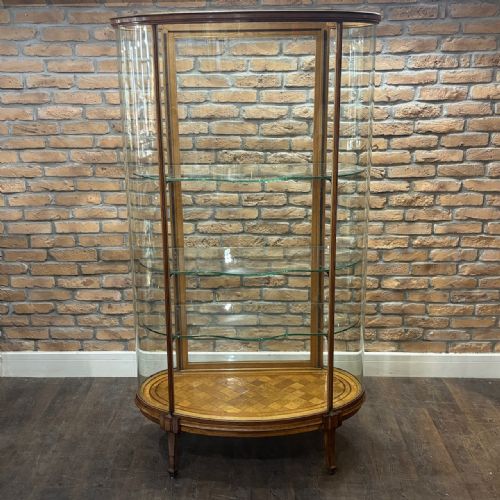
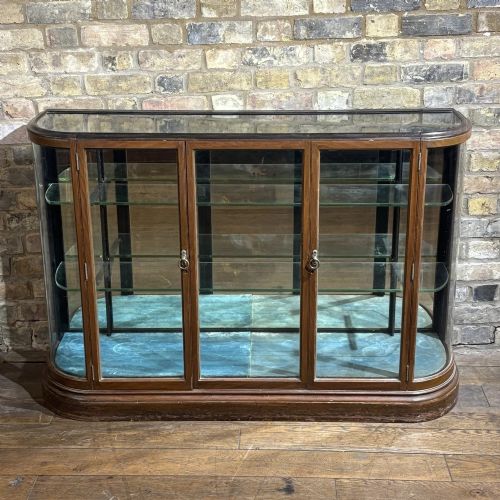
These curved glass counter display cabinets are commercial fixtures built to showcase merchandise, prized for their generous glazing and period timber frames.
Curved Glass Counter Display
A curved glass counter display functions as a retail showcase, uniting clear curved glazing with robust timber construction. These pieces range from Victorian commercial examples to Edwardian and Art Deco designs.
The version most commonly met on this page is the bow end shop display cabinet or counter. These items utilise mahogany or oak frames, paired with curved glass to give customers an unobstructed view of goods from multiple angles.
Makers such as F. Sage & Co produced these cabinets during the early twentieth century. Retailers utilised them to present small wares securely while maintaining an open, elegant appearance on the shop floor.
How they were made
Makers constructed the primary frames of these display counters using solid mahogany or oak, often incorporating brass hardware and wood or gilded wood details. Interior shelves were sometimes lined with fabric or velvet to cushion delicate items.
The defining feature is the bent glass pane, which required specialist glass-bending techniques to achieve the smooth, curved front profile. Glaziers secured these large panes within rebated timber frames using wooden beads or putty.
Some cabinets hide velvet-lined shelves designed to make tiny trinkets look like crown jewels.
What varies in quality
The standard of timber selection and the complexity of the cabinetry define the upper tier of these pieces. Cabinets featuring dense mahogany or quarter-sawn oak demonstrate superior initial construction compared to simpler utility builds.
The integrity and clarity of the bent glass panes dictate value, as large curved glass sections required advanced manufacturing. Original brass fittings and intact interior fabric linings also elevate the finish of a commercial display counter.
F. Sage & Co
The Curved Glass Counter Display Glossary
- Bow end
- A cabinet design featuring a rounded, convex front glass panel and matching curved frame. This shape softens the profile of a linear shop counter and increases visibility.
- Glazed
- Fitted with glass panels to enclose the display space while permitting light to enter. In these commercial pieces, extensive glazing defines the walls and doors.
- Mahogany
- A durable, reddish-brown tropical hardwood favoured by cabinetmakers for fine commercial fixtures. It takes a high polish and provides structural strength for heavy glass panels.
- Edwardian
- A stylistic period spanning the early twentieth century, noted for refined proportions in commercial furniture. Pieces from this era often blend practicality with lighter decorative touches.
Curved Glass Counter Display: Frequently Asked Questions
What were curved glass counters used for?
Shopkeepers utilised these glazed cabinets to display small, valuable merchandise such as jewellery, silver, or fine accessories. The curved glass design eliminated harsh corner reflections and allowed customers to view goods clearly from various angles across the store.
The enclosed structure also protected delicate stock from dust and handling while keeping items within the direct line of sight atop a sales counter or dedicated floor stand.
How do I date a display cabinet?
Dating relies on examining the timber species, construction methods, and hardware styles present in the piece. Victorian examples often feature rich mahogany and heavier framing, whereas later 1930s pieces might incorporate aluminium frames or simpler Art Deco lines.
Maker marks, where present on the timber base or brass plaques, offer definitive proof of origin. Stylistic cues such as Edwardian bow ends also narrow the manufacturing window to specific decades.
Are these counters suitable for home interiors?
These commercial display fixtures adapt well to domestic settings as freestanding cabinets or tabletop showcases for collections. Their large glass surfaces and timber frames bring a distinct period character to modern living rooms or studies.
Placing them away from direct heat sources helps preserve the historic timber and original joinery. Interior shelves accommodate books, ceramics, or curiosities securely.
How do I care for the glass and wood?
Routine maintenance involves dusting the timber frames with a dry cloth and cleaning the curved glass panes with a mild glass cleaner. Avoiding abrasive materials protects both the antique wood polish and the delicate glass surface.
Checking that the cabinet sits level on the floor prevents the large glass doors and bent panes from binding in their frames. Conditioning the wood periodically maintains the finish of the mahogany or oak.