
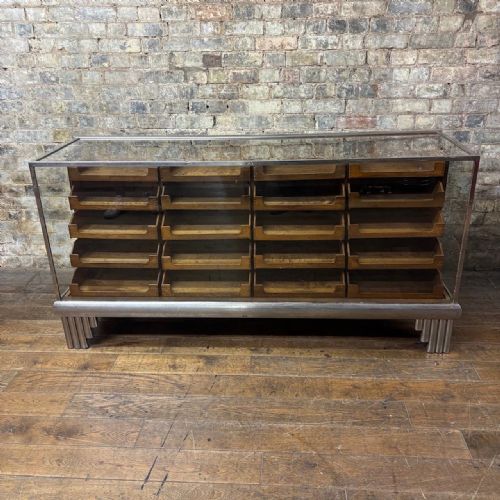


Art Deco Shop Fittings
Art deco shop fittings bring striking geometric lines and commercial history straight into modern interiors through authentic counters, cabinets and stands.
Art Deco Shop Fittings
These pieces comprise commercial furnishings and display items from the early twentieth century, spanning haberdashery cabinets, display counters and advertising figures. When searching for art deco shop fittings, buyers encounter genuine retail furniture designed to showcase goods with architectural flair.
The selection centres heavily on items from the 1930s, alongside examples from the 1920s and earlier 1900 styles. Common forms include large haberdashery counters, glass display cabinets, wall mirrors, and specialised stands for hats and jewellery.
Origin variations include specialised pieces such as confectionery cabinets and vending machine mirrors alongside standard retail shelving. These survivors of commercial premises offer functional storage combined with distinct period design.
Materials and construction
Construction relies heavily on a combination of robust timber frames and metal detailing, utilising oak, mahogany, and burr walnut alongside brass, bronze, aluminium, and chrome. Glass panels feature prominently in display cabinets and counter tops to allow maximum visibility for merchandise.
Surfaces often combine polished woods with painted plaster or fabric elements, particularly in advertising mannequins and bust displays. Metal framing elements provide structural support while contributing the characteristic linear aesthetic of the period.
Recorded object types include display cabinets, counters, stands, haberdashery units, mirrors, and mannequin busts.
Assessing quality
Quality differentiates through the integrity of original materials and the sophistication of the metal framing. Pieces incorporating substantial hardwoods like burr walnut or mahogany alongside cast bronze and chrome sit at the upper end of the scale.
The presence of maker attribution, such as work by Dudley & Co, Saml. Elliott & Sons, or Pollards, elevates a piece significantly. Retaining original glass, fabric linings, and functional mechanical elements like vending mirror surrounds determines the desirability of individual items.
Dudley & Co·Saml. Elliott & Sons·Pollards
The Art Deco Shop Fittings Glossary
- Haberdashery cabinet
- A multi-drawer retail unit traditionally used for storing sewing accessories and small items. These usually feature glass-fronted drawers or doors to display contents.
- Display counter
- A shop fixture featuring a glazed upper section for merchandise inspection above a wooden or metal base. They formed the central serving and selling surfaces in period shops.
- Display stand
- A specialised holder designed for specific retail items such as hats or jewellery. These elevate products to catch the eye of the customer.
- Mannequin bust
- A three-dimensional representation of the head or torso used in shop windows to model garments and accessories. They are often modelled in painted plaster or fabric.
- Bronze shelving
- Retail display tiers constructed with bronze metal components. This material offered strength and a polished finish suitable for high-end shop interiors.
Art Deco Shop Fittings: Frequently Asked Questions
What were haberdashery counters used for?
Haberdashery counters served in retail shops to store and display small sewing goods, ribbons, and fastenings. Their multiple shallow drawers kept small stock organised while glass panels allowed customers to view options easily.
Today, these counters find new life in domestic interiors as kitchen islands, storage consoles, or hallway furniture. Their compartmentalised design makes them practical for organising modern collections.
How do I identify a nineteen thirties shop cabinet?
Nineteen thirties shop cabinets typically display geometric lines, streamlined metal framing in chrome or brass, and extensive use of glass. They reflect the shift towards modern industrial design in retail spaces.
Construction often pairs oak or mahogany with modern metal alloys. Examining the hardware, joints, and framing helps confirm the period of manufacture.
Can I use shop display stands at home?
Shop display stands work well in domestic settings for organising accessories such as hats, jewellery, and scarves. They bring vertical height and architectural interest to mantlepieces, dressing tables, and hallways.
Using these stands keeps everyday items visible and accessible while adding a distinct retail heritage to room decor.
What is the difference between brass and chrome fittings?
Brass fittings offer a warmer, golden tone associated with earlier twentieth-century styling and traditional shop interiors. Chrome provides a brighter, silver finish that became prominent in later art deco design.
Both metals were selected for durability in busy retail environments, but they create distinct visual moods within a room scheme.