
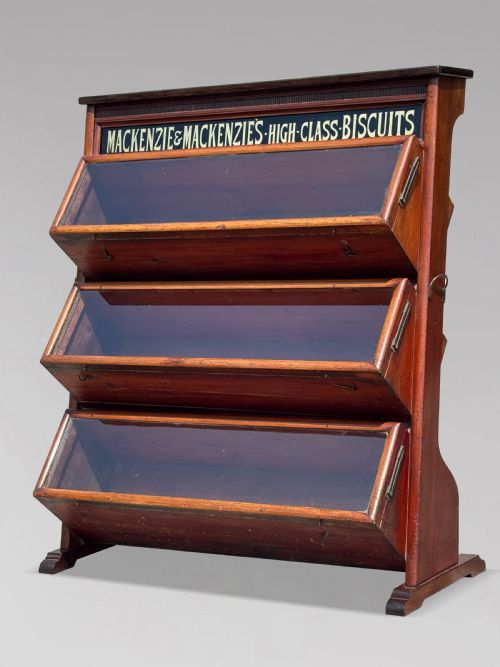
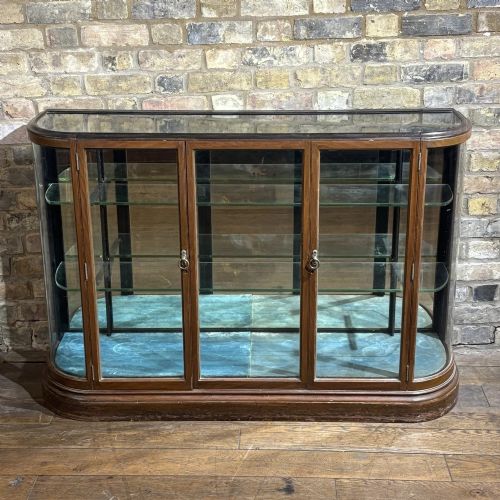


Commercial Counter Display Case
A commercial counter display case brings the tactile history of the Victorian and Edwardian high street straight into a modern interior.
Commercial Counter Display Case
A commercial counter display case is designed to present retail goods directly to customers across a shop floor or serving counter. These pieces span from the late nineteenth century through the 1930s, encompassing specialised haberdashery cabinets, pharmacy fittings and confectionery display units.
Buyers will most frequently encounter mahogany and glazed tabletops or full-length serving counters originating from the Edwardian period and the 1920s. These range from bow-end shapes to pentagonal and brass-framed structures built for specific trade names.
The form exists to protect and highlight wares, utilising mirrored interiors, glass panels and fabric or velvet linings to catch the ambient light of a shop or interior space.
Materials and construction
Makers built the primary framework of a commercial counter display case using dense timbers such as mahogany and oak, supplemented by structural metal or aluminium frames in later 1930s iterations. Glazing forms the dominant surface area, allowing maximum visibility from multiple angles.
Interiors often integrate mirrored glass to amplify light within the display cavity, alongside velvet or fabric linings designed to cushion delicate goods like chocolates, sewing cottons and writing equipment.
Brass fittings, hinges and handles provide robust mechanical function for daily retail use, securing glazed doors and lift-up lids while enduring constant handling.
Some nineteenth-century shop counters managed to survive decades of bustling retail service simply by being repurposed to sell pencils and sewing cottons.
Distinctions in quality
Quality rests upon the architectural ambition of the woodwork and the integrity of the original glazing, distinguishing standard utility shop fittings from bespoke retail furniture. Pieces featuring curved bow ends or complex pentagonal geometries require superior cabinet-making skill compared to simple rectangular boxes.
The presence of intact manufacturer branding, specialised advertising lettering for firms such as Fry or Cadbury, and original hardware elevates the historical interest of a commercial counter display case. Structural joinery that accommodates heavy glass without sagging defines the upper tier of surviving examples.
John Stow Ltd of Bradford·F. Sage & Co. London·Saml. Elliott & Sons·E. Pollard & Co. Ltd.·Quincy Showcase Works Illinois
The Commercial Counter Display Case Glossary
- Bow end
- A curved glass or timber end panel on a cabinet or counter that softens the rectangular geometry and improves visibility from the side. This feature is frequently seen on Edwardian and 1920s examples.
- Haberdashery cabinet
- A specialised shop fitting originally intended for storing and displaying small sewing items, ribbons and fasteners. They typically comprise numerous small drawers with glass fronts.
- Countertop display
- A smaller scale cabinet designed to sit directly on top of a retail serving counter rather than forming the base structure itself. These often housed confectionery, pencils or small apothecary goods.
- Mirrored interior
- A backing of silvered glass placed inside the display chamber to reflect light and make contained merchandise appear more prominent. It serves both a functional and decorative purpose in retail settings.
Commercial Counter Display Case: Frequently Asked Questions
What were commercial counter display cases used for?
Retailers used these glass-fronted fixtures to showcase high-value or delicate goods directly to customers while keeping merchandise clean and secure. Common contents included chocolates, tea, stationery, pharmacy items and sewing cottons.
Positioned on top of counters or serving as the main sales desk, they acted as silent salespeople by drawing the eye of the buyer towards branded confectionary and luxury items.
How do I date a display case?
Dating relies on stylistic shifts from the heavy Victorian mahogany timbers of the late nineteenth century to the lighter Edwardian framing and the streamlined aluminium or brass structures of the 1930s. Advertising scripts and maker's plaques also help pinpoint the era.
Art Deco geometric influences and simpler, unadorned hardwood frames typically point towards the interwar period, whereas ornate mouldings and richer patinas align with earlier Victorian and Edwardian production.
How can I incorporate one into my home?
These cabinets work effectively in living spaces, kitchens or studies to display collections, glassware or books away from dust while keeping them fully visible. Tabletop versions sit well on sideboards, while larger counters function as freestanding display islands.
Internal mirrored panels and glass sides allow natural light to pass through, making them suitable for brightening dark corners without overwhelming a room's floor plan.
What is the difference between a cabinet and a counter?
A display cabinet generally stands independently against a wall or sits upon another surface, whereas a display counter is built to double as a functional serving desk with a customer-facing display glass on top or front.
Counters tend to be deeper and heavier, designed to withstand the physical weight of retail transactions taking place on their upper wooden work surfaces.