

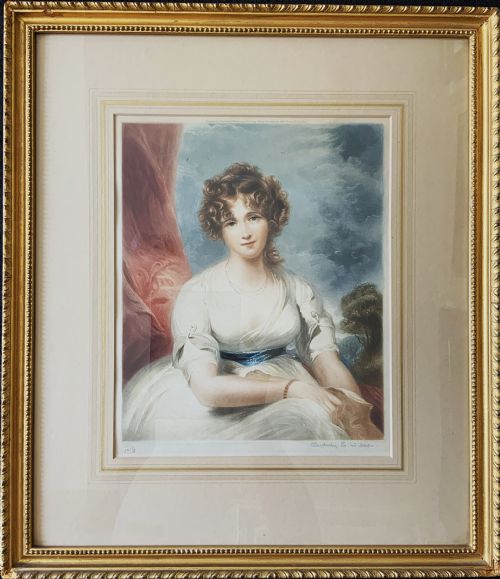


Coloured Mezzotint Engravings
These coloured mezzotint engravings are rich tonal prints finished by hand, bringing depth and warm domestic scenes to any room.
Coloured Mezzotint Engravings
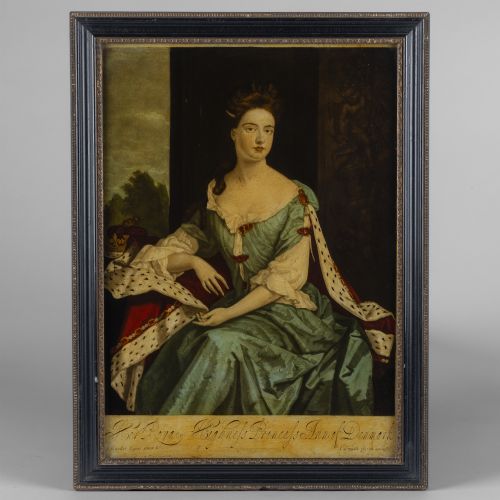
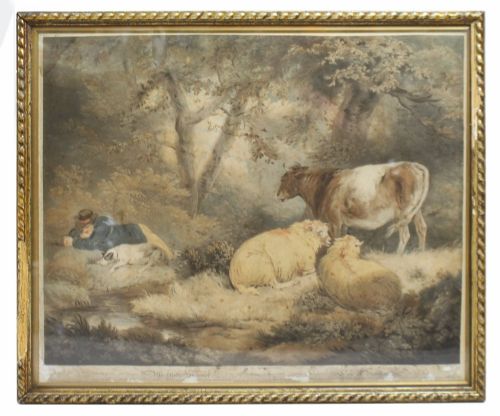
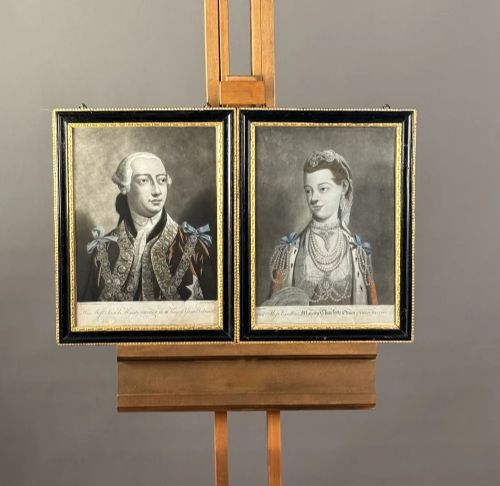
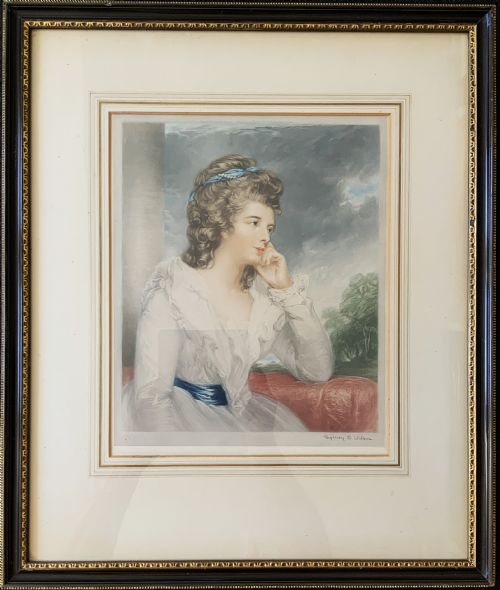
When you search for coloured mezzotint engravings, you find works spanning the Regency, Victorian, and Edwardian periods, alongside pieces dated around eighteen hundred. These items appear as framed prints, wall art, and antique engravings, often presenting portraits or pastoral subjects.
The versions most commonly met on this page include signed artist proofs, eighteenth-century pairs, and decorative Victorian impressions. Makers such as Sydney Wilson, Robert Sayer, W Ward, I R Smith, and F. Petitjean shape the selection of framed pieces seen here.
How they were made
Maker plates were worked in copper using rocker tools to create a burred surface that held deep ink tones, producing velvety dark areas. Hand colouring was then applied over the printed ink on paper to bring warmth to the composition.
Finished plates were housed behind glass within timber frames finished in gold leaf, gilt, or dark Hogarth moulding. These traditional framing materials protect the delicate paper and ink from environmental damage.
Coloured Mezzotint Engravings Retail Price Guide 2026
Typical asking prices for coloured mezzotint engravings among the pieces listed under this phrase on Sellingantiques today, from the lower quarter to the upper quarter. They describe what is for sale here now, not the wider market.
Several plates capture eighteenth-century rural life, preserving the exact moment someone found a bird's nest in the hedgerows.
What varies in quality
Quality rests in the richness of the plate impression and the subtlety of the hand application of colour across the paper. Finer prints retain deep velvety blacks and clear tonal gradations that softer, worn plates lose over repeated printings.
The integrity of the framing materials also marks the difference between standard decorative pieces and finer works. Original gilt wood and Hogarth frames with period glass elevate the overall presence of an engraving.
Sydney Wilson·Robert Sayer·W Ward·I R Smith·F. Petitjean
The Coloured Mezzotint Engravings Glossary
- Mezzotint
- A printmaking process where the copper plate is roughened to produce rich dark tones and smooth gradations of light. This method allows for subtle shadows and atmospheric depth.
- Artist proof
- An impression printed before the main edition, typically retained by the maker or signed by the artist. These proofs often show exceptional clarity and detail.
- Hogarth frame
- A narrow, dark wooden picture frame with a stepped or rounded profile popular in the eighteenth and nineteenth centuries. It complements traditional engravings without overwhelming the artwork.
- Giltwood
- Wood carved and covered with a thin layer of gold leaf or metallic gilt. This finish adds bright reflective highlights to the framing of period art.
- Plate
- The copper or metal sheet into which the design is worked before ink is applied for printing. The condition of the plate directly affects the crispness of the resulting impression.
Coloured Mezzotint Engravings: Frequently Asked Questions
What are coloured mezzotint engravings?
These are printed artworks created from roughened copper plates that produce velvety tones, finished with hand-applied colour. They capture portraits and pastoral scenes from the Georgian era through to the early twentieth century.
Such works combine intaglio printing techniques with delicate watercolour washes to achieve a rich painterly effect. They offer a window into historic printmaking methods and domestic taste.
How should I hang framed prints?
Framed prints should be hung away from direct sunlight and damp walls to protect the paper and hand colouring. Using stable wall fixings suited to the weight of the timber and glass frame ensures safe display.
Keep them at eye level in rooms with stable humidity to preserve the paper and gilt frames. Traditional frames benefit from gentle dusting with a dry cloth rather than liquid cleaners.
How do I date an engraving?
Dating relies on the style of the imagery, the framing materials, and any signatures or inscriptions on the paper. Regency and Victorian examples often feature distinct moulding styles and specific paper textures.
Examining the back of the frame and any visible maker marks provides further clues to the period. Comparing the plate style with known works by engravers helps narrow down the decade of production.
Are these prints hand coloured?
Many examples feature washes of colour applied by hand over the ink impression after printing. This technique enhances details like clothing, foliage, and skin tones.
Hand colouring varied in execution from simple washes to detailed tinting that mimics oil paintings. Close inspection under magnification reveals the delicate pigment resting on top of the printed lines.