



18th Century Genre Scene
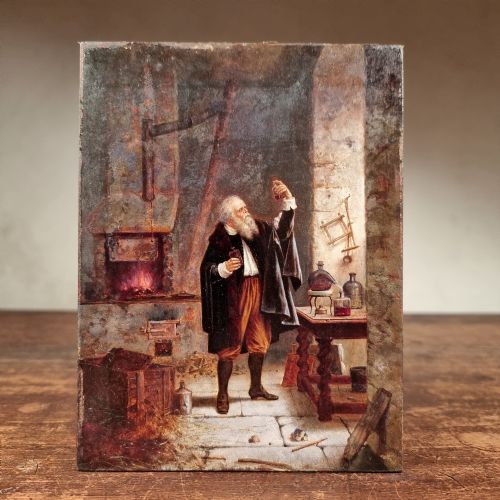
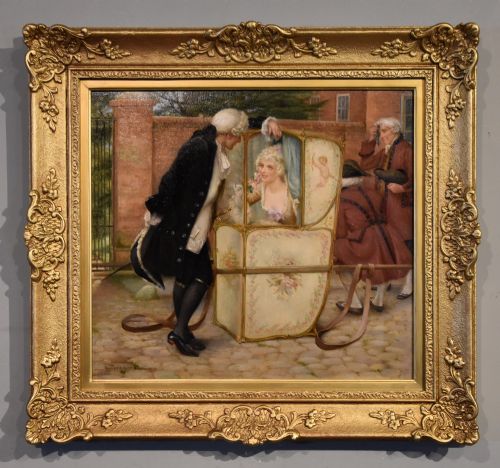
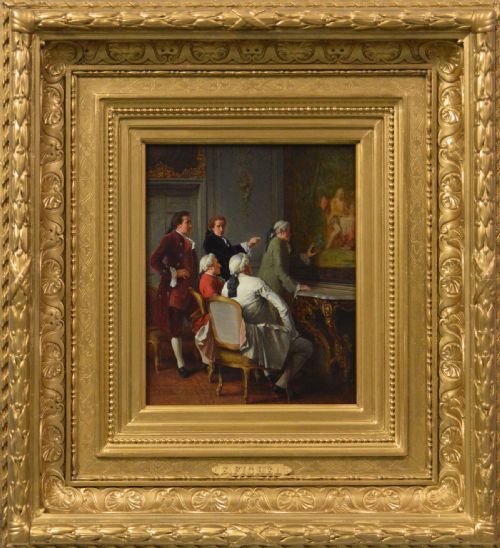
An 18th century genre scene captures everyday life in oil on panel, canvas, or through prints, bringing historical interiors and figures into a room.
18th Century Genre Scene
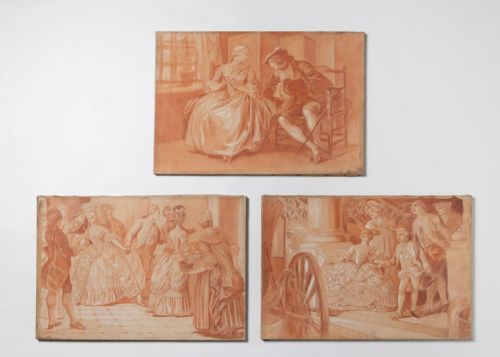
An 18th century genre scene depicts daily life, from tavern interiors and card games to outdoor pursuits and quiet domestic moments. These works range from original oil paintings on wood panel and canvas to coloured stipple engravings and mezzotints produced across several centuries.
Buyers on this page meet a diverse selection spanning actual 18th-century works alongside later 19th- and 20th-century interpretations in Dutch, French, and Georgian styles. The subjects focus on human figures engaged in ordinary or social activities, rendered through painting and printmaking techniques.
How they were made
Artists painted these scenes using oil paint on stretched canvas, wooden panels, or paper supports, often building rich layers of colour and detail. Engravers and printmakers utilised copper plates to create stipple engravings and mezzotints, which were sometimes printed in colours or hand-tinted afterwards.
Frames incorporated materials such as giltwood and wood, frequently enhanced with gold leaf to finish the presentation of the oil paintings and framed prints.
Gentlemen playing cards, arranging game in larders, and taking afternoon tea demonstrate that historical figures spent a surprising amount of time indoors.
What varies in quality
The refinement of the brushwork and the expressive handling of the figures dictate the visual strength of an oil painting. Finer works display confident rendering of light within interiors and detailed textures in clothing and furnishings.
For printed works, the crispness of the impression from the engraved plate and the subtlety of the applied colour separate standard decorative prints from finer collector examples.
David Teniers The Younger·Delapoer Downing·Benjamin Eugene Fichel·John Sanderson Wells·E. Jackson Stodart·Quirijn Van Brekelenkamp·Frank Moss Bennett·Ludolf de Jongh·Arturo Orselli·G Morland·Joaquín Luque y Roselló·W Ward·Marcel Brunery·Edmund Alphonse Andre·George Morland·F. Petitjean
The 18th Century Genre Scene Glossary
- Genre painting
- A pictorial representation of scenes from everyday life, typically depicting ordinary people in domestic interiors or public settings. This style focuses on narrative and human activity rather than formal portraiture or landscape.
- Mezzotint
- A printmaking process of the intaglio family where the copper plate is roughened uniformly to hold ink and produce rich, dark tones. Areas are scraped back to create lighter passages and gradients.
- Stipple engraving
- A method of engraving that uses a pattern of dots to create tonal gradations and figures. Publishers often combined this technique with hand colouring to produce decorative prints.
- Oil on panel
- A painting executed on a wooden support rather than canvas. Artists frequently utilised oak or other stable woods during earlier centuries.
- Dutch School
- A tradition of painting originating in the Netherlands noted for domestic interiors and observational realism. Artists in this grouping often depicted tavern scenes and everyday human interactions.
18th Century Genre Scene: Frequently Asked Questions
What is an 18th century genre scene?
These works depict everyday people in domestic rooms, taverns, or gardens, capturing historical moments of daily life. They include original oil paintings on canvas and panel as well as period engravings.
Subjects range from card games and tea parties to tavern interiors and countryside gatherings, reflecting social habits of past centuries.
How do I tell an original painting from a print?
Original paintings show brush texture, layered oil paint, and visible canvas weave or wood grain under close inspection. Prints present a flat surface with ink set into paper via engraving or printing lines.
Examining the work under magnification reveals whether the surface consists of dried paint strokes or printed dot and line patterns.
How were these artworks framed originally?
Many oil paintings and prints use wooden frames finished with giltwood or gold leaf to complement the imagery. These surrounds range from simple wooden mouldings to ornate decorative styles.
Frames often reflect the aesthetic of the period when the piece was created or when it was subsequently mounted.
Where should I hang a genre painting?
These domestic scenes suit traditional living spaces, studies, or dining rooms where detailed figurative work can be viewed closely. Keeping them away from direct sunlight protects the oil pigments and paper prints from fading.
Matching the scale of the painting to wall space ensures the interior scene commands the room without crowding adjacent furniture.