



British Genre Oil Painting
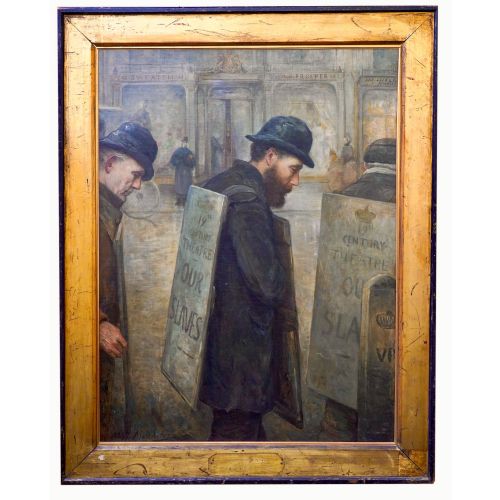
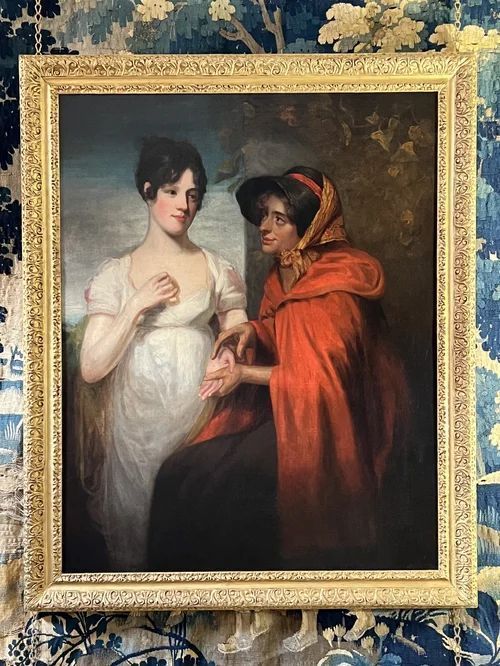
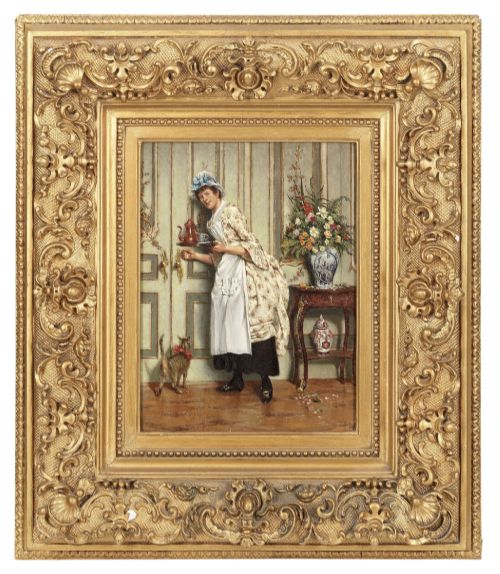
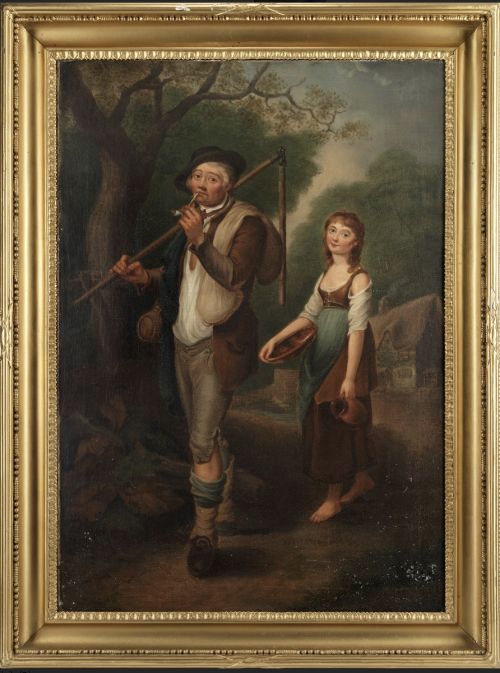
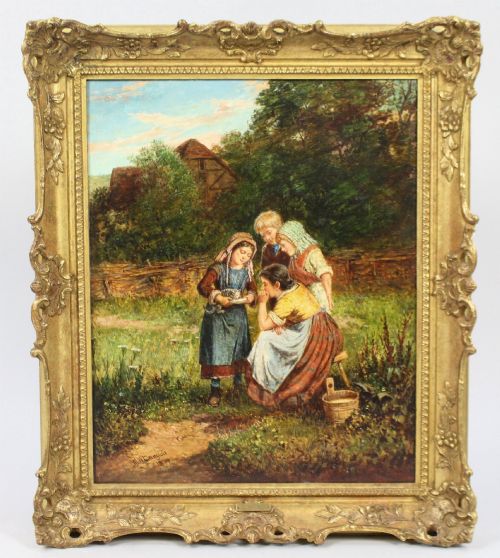
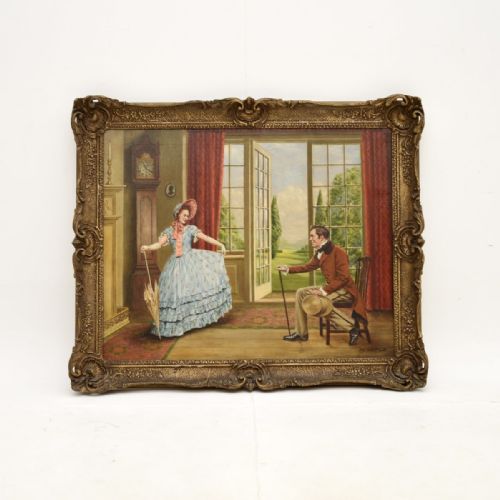
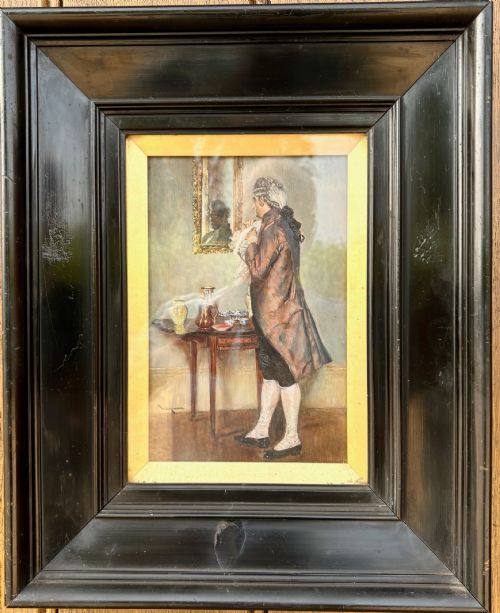
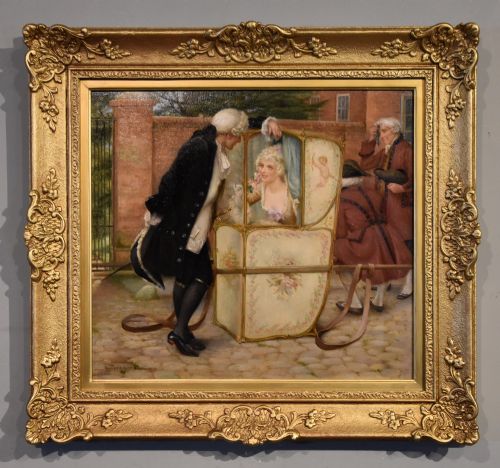
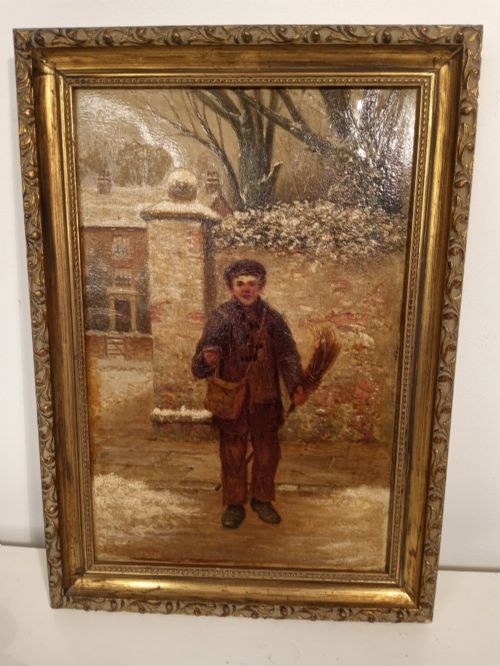
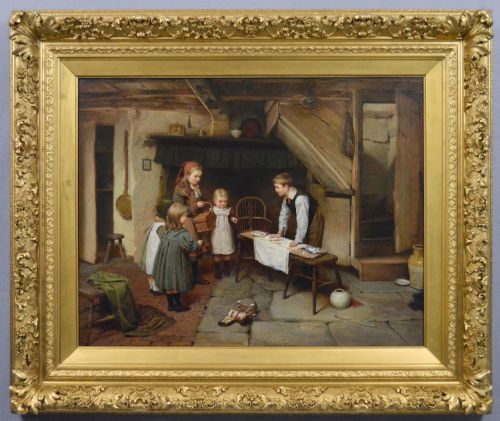
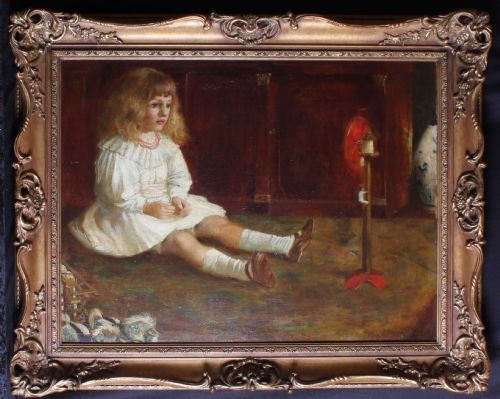
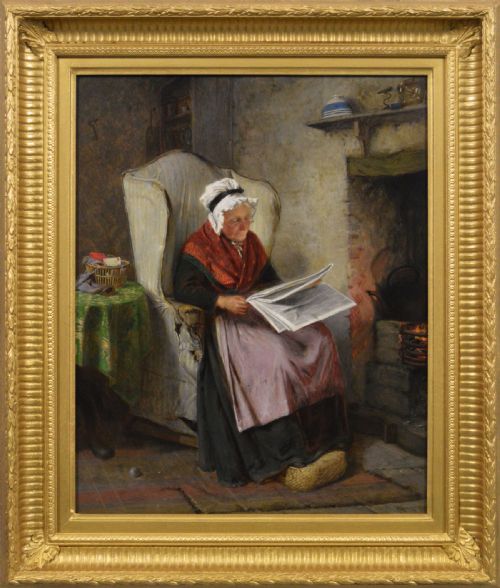
These British genre oil paintings capture domestic life and social scenes across the nineteenth and early twentieth centuries.
British Genre Oil Painting
A British genre oil painting depicts everyday scenes, domestic interiors, and social narratives rather than formal portraits or vast landscapes. These works focus on ordinary people engaged in domestic chores, quiet moments by the hearth, or children playing in cottage settings.
The pieces on this page span the Victorian and Edwardian periods, stretching from the late eighteenth century into the early twentieth century. Examples range from intimate cottage scenes with women and children to larger historical and social commentary pieces.
Collectors encounter works executed on canvas, wood panels, and boards, often preserved within their original giltwood and gesso frames. The subjects reveal Victorian social realism, country house interiors, and picturesque rural life through the hands of named period artists.
Materials and technique
Artists painted primarily with oil paint on prepared canvas or wood panels, building up layers of pigment to achieve rich interior lighting and textile textures. The foundational support was typically stretched canvas or solid wood panel, secured within wooden frames.
Many of these works retain ornate giltwood and gesso frames embellished with gold leaf, which complemented the domestic display of the artwork in period homes. The application of oil medium allowed artists to render fine details in clothing, facial expressions, and cottage furnishings.
British Genre Oil Painting Retail Price Guide 2026
Typical asking prices for british genre oil painting among the pieces listed under this phrase on Sellingantiques today, from the lower quarter to the upper quarter. They describe what is for sale here now, not the wider market.
The inventory records popular nineteenth-century themes including domestic cottage interiors, children at play, and rural working life.
Assessing quality
Quality rests upon the artist's ability to handle narrative expression, facial detail, and the interplay of light within an interior or landscape setting. Works by artists exhibited at the Royal Academy often demonstrate superior draughtsmanship and composition.
The preservation of the original paint surface and the condition of the canvas relative to its age dictate the visual integrity of the piece. Additionally, the survival of the authentic period giltwood and gesso frame enhances the historical completeness of the artwork.
Felix Stone Moscheles·Valentine T Garland·John Opie·Stephen Samuel Lewin·Thomas Barker of Bath·Mark William Langlois·Alfred Lyndon Grace·W D Almond·Delapoer Downing·Harry Brooker·Byam Shaw·Alexander Rosell·John Arthur Lomax·John Watkins Chapman·Haynes King·John Sanderson Wells·Charles Burton Barber·James Kyd·C S Lidderdale·James Mallard Bromley·Henry John Yeend King·Edwin Thomas Roberts·Robert Alexander Hillingford·George Smith·Edwin Hughes
The British Genre Oil Painting Glossary
- Genre painting
- A depiction of aspects of everyday life by portraying ordinary people caught in common activities. These works provide visual records of social history and domestic routines.
- Oil on canvas
- Pigments bound in an oil medium applied to a stretched woven fabric support. This combination allows for subtle blending and enduring depth of colour.
- Giltwood
- Wood carved and coated with gold leaf or a gold-coloured metallic finish. It forms the decorative framing typical of nineteenth-century picture presentations.
- Gesso
- A paint mixture consisting of a white pigment binder used to prepare wood or canvas surfaces. It provides a smooth base for oil painting applications.
- Social realism
- An artistic movement that depicts the everyday conditions of the working classes and poor. These paintings highlight social issues and contemporary realities.
British Genre Oil Painting: Frequently Asked Questions
What is a genre oil painting?
A genre oil painting portrays scenes from everyday life, such as domestic interiors, street sellers, or children playing. Rather than focusing on grand historical events or formal portraits, these works capture the ordinary moments and social interactions of past eras.
Created by artists working across the nineteenth and early twentieth centuries, these paintings serve as visual documents of historical dress, domestic architecture, and social customs.
How do I date a Victorian oil painting?
Dating these artworks involves examining the artist's recorded working dates, stylistic markers, and the materials used in the canvas stretcher and frame. Victorian works often reflect specific aesthetic shifts toward realism or sentimentality in domestic subjects.
Inscriptions on the reverse, artist signatures, and period framing details also provide reliable clues for establishing the approximate decade of creation.
Where were these paintings originally displayed?
These works hung primarily in British country houses, suburban parlours, and domestic drawing rooms during the Victorian and Edwardian periods. Their manageable domestic scale suited the wall spaces of middle-class and aristocratic homes alike.
Owners frequently matched the paintings with ornate giltwood frames designed to catch the gaslight or natural daylight of nineteenth-century interiors.
How should I care for an antique oil painting?
Preserving an oil painting requires stable room temperatures and protection from direct sunlight, which can fade pigments over time. Dusting the canvas and the carved giltwood frame should be done gently with a soft, dry brush without applying moisture or cleaning solutions.
Professional conservation should be sought if the canvas shows signs of sagging, cracking, or surface darkening from aged varnish layers.