


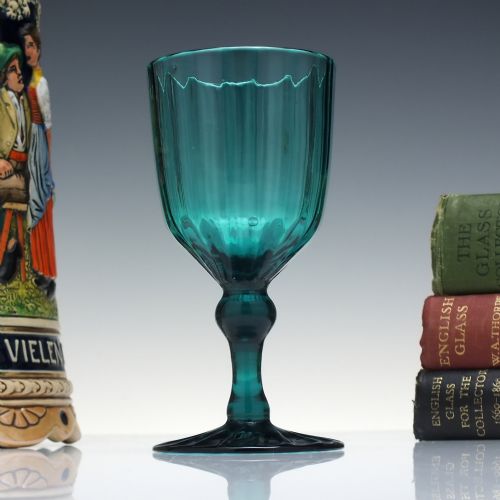


Coloured Glass Wine Stemware
Coloured glass wine stemware brings striking vibrancy to the table through rich hues and traditional forms.
Coloured Glass Wine Stemware
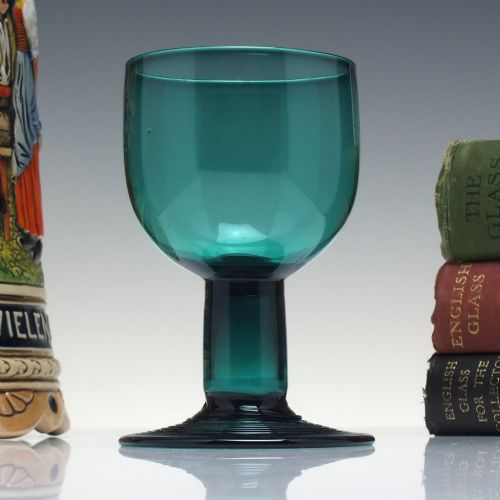
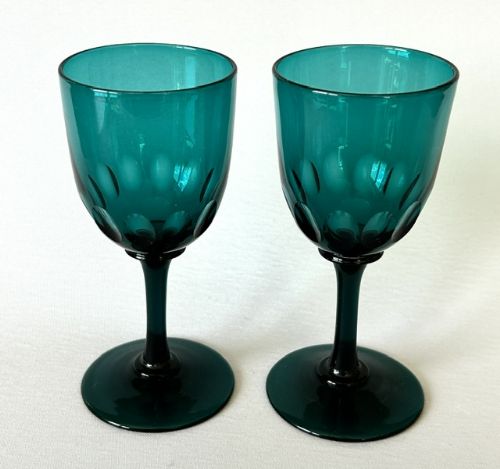
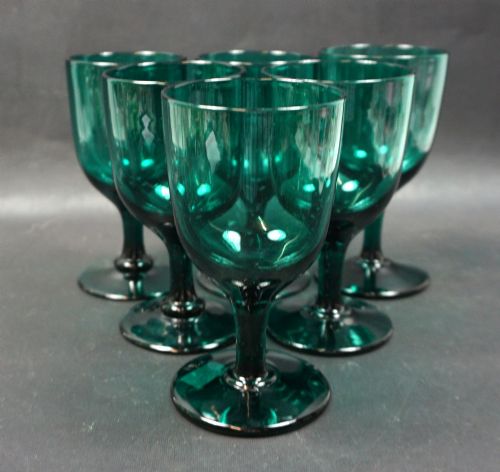
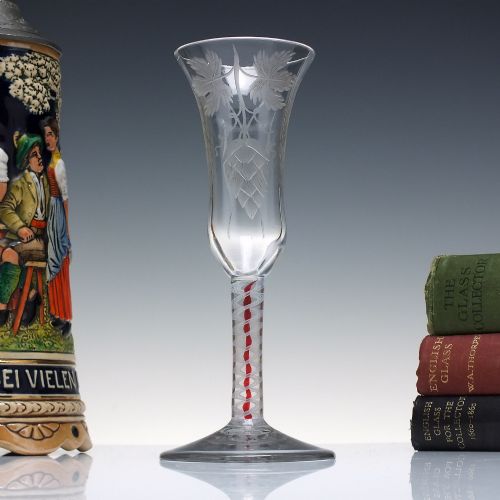
Coloured glass wine stemware encompasses drinking vessels ranging from Georgian dram glasses and 18th-century colour twists to Victorian cranberry sets and Edwardian turquoise goblets. Buyers encounter single pieces, pairs, and full matched sets in varied shades from aqua and emerald to deep cranberry.
The selections span distinct periods including Georgian, Victorian, and Edwardian eras alongside Venetian Revival and Bohemian influences. Forms include tulip shapes, handled dessert wines, and tall stemware intended for formal dining or display.
Materials and construction methods
Pieces are formed from lead glass and coloured glass, frequently shaped through hand-blowing and rib moulding techniques. Makers also utilised enamel decoration and surface cutting to define the profiles.
Colour is introduced directly into the glass mass or layered, creating deep cranberry, green, blue, and amethyst tones that define the character of each vessel.
Evaluating distinction and craftsmanship
Quality rests upon the depth and consistency of the glass colour, the precision of the form, and the crispness of any engraved or cut details. Early pieces show individual character in the hand-blown metal and subtle variations in tone.
The integrity of matching sets and the sophistication of specific hues, such as rich cranberry or peacock blue, separate standard domestic glassware from finer examples.
The Coloured Glass Wine Stemware Glossary
- Colour Twist
- A stem containing coloured threads of glass enclosed within the stem structure, typically found in 18th-century drinking vessels.
- Cranberry Glass
- A rich red-pink transparent glass created using gold chloride, popular during the Victorian period for tableware and stemware.
- Rib Moulded
- Glass blown into a patterned mould to create raised vertical ribs on the body before final shaping and finishing.
- Lead Glass
- A heavy, brilliant glass formulation containing lead oxide that permits deeper cutting and sharper optical clarity.
Coloured Glass Wine Stemware: Frequently Asked Questions
Can I use antique coloured wine glasses?
These historical glasses are robust enough for careful occasional use during special meals, though hand washing is essential to preserve the antique glass.
Many collectors prefer to use them strictly for display or gentle toastings to protect the delicate hand-blown stems and historical surfaces.
How do I date coloured wine stemware?
Dating relies upon observing the shape of the bowl, the thickness and formation of the stem, and the type of metal used in the glass.
Georgian pieces often display simpler, heavier forms with distinct pontil marks on the base, whereas Victorian and Edwardian examples show greater variety in bright hues and matching sets.
Are matched sets common in antique stemware?
Assembling complete matched sets of six or more older glasses requires patience because many earlier pieces survive only as singles or pairs.
Victorian and Edwardian manufacturers produced larger uniform sets more frequently, making matched groups from the later periods easier to find.
What causes different shades in green glassware?
Variations arise from the specific mineral oxides added to the molten batch and the chemical composition of the glasshouse recipes used.
Terms like Bristol green, aqua, and emerald describe these distinct tonal variations shaped by historical glassmaking traditions.