
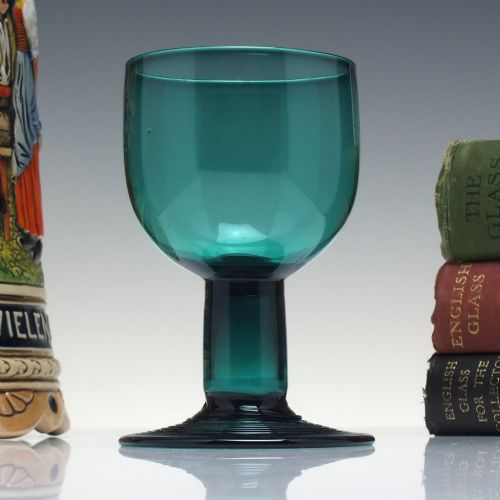

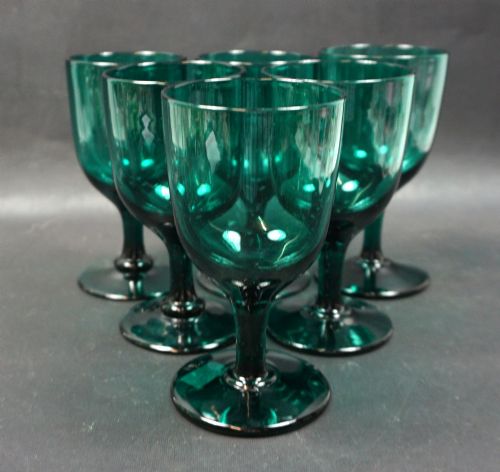


Antique Green Roemers
These antique green roemers bring deep forest tones and historic heft to the table, offering a tangible connection to centuries of European dining.
Antique Green Roemers
When you search for antique green roemers, you are looking at substantial drinking vessels characterised by rich forest or aqua hues and distinctive rounded bowls. The pieces you will most likely meet on this page span the Georgian and Victorian eras, alongside early twentieth-century continental examples from Bohemia and France.
How they were made
The primary material across these listings is green glass, shaped through traditional methods of hand-blowing and lead crystal production. Makers achieved the distinctive colour through natural mineral impurities in the batch or deliberate metallic oxides added during the melting process.
Decoration on finer examples involves polychrome enamel work and precision cutting, requiring skilled artisans to apply intricate surface details while the vessel was worked hot or cold. Cased glass techniques also appear, layering different tones to create depth when cut.
Early glass drinkers relied on thumb-sized glass prunts welded to stems simply to stop the vessel slipping from greasy dining hands.
What varies in quality
Quality in these pieces is dictated by the clarity and depth of the green glass, the precision of the hand-cutting, and the complexity of any enamel decoration. Superior examples display crisp facet work and balanced proportions without heavy distortion in the metal.
The distinction between ordinary utility glassware and workshop pieces lies in the crispness of applied details such as prunts and the finesse of hand-painted polychrome enamelling. Maker attribution to known houses like Baccarat, St Louis, or Theresienthal elevates the standing of an individual piece.
Baccarat·St Louis Massenet·Lobmeyer·Theresienthal·Frits Hechert
The Antique Green Roemers Glossary
- Roemer
- A traditional Germanic wine glass featuring a large bowl on a cylindrical stem, frequently decorated with applied glass prunts. This form evolved from sixteenth-century forest glass traditions.
- Prunt
- A small applied blob or globule of molten glass, often drawn into a point or raspberry shape, fused to the stem of a roemer to ensure a secure grip with greasy fingers.
- Hock glass
- A tall stemmed wine glass traditionally used for German Rhine wines, often produced in coloured glass such as green or amber. The long stem helps keep the wine cool.
- Cased glass
- A manufacturing technique where a layer of coloured glass is fused over a clear or contrasting inner layer, allowing artisans to cut through the outer skin to reveal the layer beneath.
- Polychrome enamel
- A decorative technique utilising multiple colours of glass paint fired onto the surface of the vessel to create detailed floral or heraldic motifs.
Antique Green Roemers: Frequently Asked Questions
What were antique green roemers used for?
These vessels were designed primarily for drinking white wines, hock, and cordials during formal meals and gatherings. Their distinctive green hue traditionally helped mask sediment in early white wines.
Over time, they transitioned from functional tavern and dining ware into decorative display pieces collected for their striking colour and historical forms.
How do I identify a Georgian roemer?
Georgian examples typically display simpler hand-blown forms with hollow stems and natural imperfections in the glass. The metal often carries a pale or bottle-green tone rather than bright modern pigments.
Examining the pontil mark on the base provides further clues, showing a rough, snapped-off scar characteristic of eighteenth-century production methods before grinding became common.
Can I use antique green roemers for dining?
Many collectors enjoy using these glasses for special dinners, provided they are hand-washed with care. Sudden temperature changes should be avoided to protect the historic glass.
Because lead crystal and older soda-lime glass can be fragile, warm water is safer than boiling temperatures or modern dishwashers.
What is Bohemian historicism in glassware?
Bohemian historicism refers to nineteenth-century revival styles that drew inspiration from Renaissance and Baroque glassmaking traditions. Workshops in Bohemia utilised deep green glass and elaborate enamel work to echo earlier luxury wares.
These pieces often combine heavy cutting with vibrant polychrome painting, reflecting the region's dominance in decorative glass production during that period.