




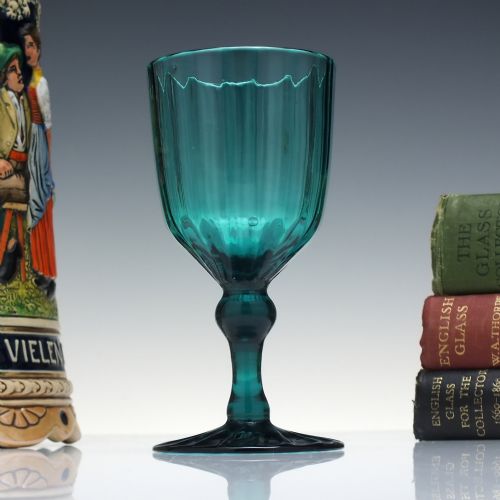


Antique Green Drinking Glasses
These antique green drinking glasses bring rich tone and historical form to the table, spanning Georgian ribs to Victorian enamel.
Antique Green Drinking Glasses
When you search for antique green drinking glasses, you encounter a distinct array of vintage vessels designed for wine, rum, and cordials. The selection on this page ranges from Georgian dram glasses and rib moulded wine vessels to Victorian vaseline glass and tall Edwardian goblets.
You are most likely to meet Victorian sets and Georgian single glasses or pairs in various shades of green. Forms include roemers with hollow stems, tulip shaped bowls, and cut crystal drinking glasses produced across Britain and Europe.
How they were made
The pieces listed on this page rely on hand-blown glass and lead glass techniques, shaping molten material into ribbed, moulded, or smooth vessels. Skilled artisans utilised optical moulds to create distinct surface patterns like the ribbing found on 18th century examples.
Decoration on these drinking vessels sometimes involves polychrome enamel work and precision cutting. Bohemian and English workshops applied coloured glass formulas, including uranium glass, to achieve deep emerald, turquoise, and pale green hues.
Antique Green Drinking Glasses Retail Price Guide 2026
Typical asking prices for green drinking glasses among the pieces listed under this phrase on Sellingantiques today, from the lower quarter to the upper quarter. They describe what is for sale here now, not the wider market.
Some Victorian wine glasses glow bright green under UV light because makers added uranium to the mix, turning ordinary drinks into a radioactive party trick.
What varies in quality
Quality in these drinking glasses rests upon the clarity and depth of the green glass, alongside the precision of the hand-blown form. Fine examples display even wall thickness, balanced proportions, and clean pontil marks on the base.
The complexity of decoration separates standard production from finer work, such as detailed polychrome enamel painting or intricate wheel cutting. Intact sets of matching glasses command greater interest than assembled groups due to uniform wear and colour consistency.
Lobmeyer·Frits Hechert
The Antique Green Drinking Glasses Glossary
- Roemer
- A traditional Germanic drinking glass featuring a large bowl set on a wide, hollow stem wrapped with applied prunts. This form was widely adopted in England and Europe for white wine.
- Rib Moulded
- A glassblowing technique where molten metal is inflated inside a ribbed dip mould to impart vertical or spiral ridges onto the body. The vessel is then expanded and finished by hand.
- Vaseline Glass
- A type of glass coloured with uranium oxide that exhibits a distinct yellow-green hue and fluoresces bright green under ultraviolet light. It enjoyed popularity during the Victorian period.
- Pontil Mark
- The rough scar left on the base of a hand-blown glass vessel where the pontil rod was snapped off after shaping. Its presence indicates traditional free-blown or mould-blown manufacture.
- Dram Glass
- A small historical drinking vessel intended for serving neat spirits such as whisky or gin. These compact glasses date predominantly to the Georgian era.
Antique Green Drinking Glasses: Frequently Asked Questions
Are antique green glasses safe to use?
Most antique green drinking glasses are safe for occasional use with cold beverages. However, pieces containing uranium glass require careful handling and should not be used for acidic liquids.
Wash these vessels gently by hand in lukewarm water rather than placing them in a dishwasher. Sudden temperature changes can cause old hand-blown glass to crack.
How do I date an old green glass?
Dating relies on examining the manufacturing traits, pontil scars, and stylistic forms present in the piece. Georgian glasses often feature thick lead metal and rib moulding, whereas Victorian examples introduce brighter vaseline tones and pressed designs.
Comparing the bowl shape and stem construction against documented periods helps narrow down the decade of production. English export pieces also exhibit distinct regional characteristics.
Why are some green glasses called Bristol green?
Bristol green refers to a deep, intense shade of dark green glass traditionally associated with glasshouses operating in Bristol during the late 18th and 19th centuries. The term now commonly describes similar dark green wine and liquor glasses from the Georgian and Victorian eras.
Not all glasses of this colour originated in Bristol, as various British and European factories produced identical hues. The label is primarily descriptive of the dark tone.
How should I display my green glassware?
Display these glasses in a well-lit cabinet where natural light can pass through the coloured metal. Illumination highlights the rich turquoise, emerald, and pale green tones characteristic of these historical vessels.
Keep them away from direct, harsh sunlight to protect any delicate enamel decoration from fading over time. Ensure shelves are stable and spacious enough to prevent accidental knocks.