




Colonial Wooden Writing Box
These colonial wooden writing box examples bring campaign travel history home through dense hardwoods and brass mounts.
Colonial Wooden Writing Box
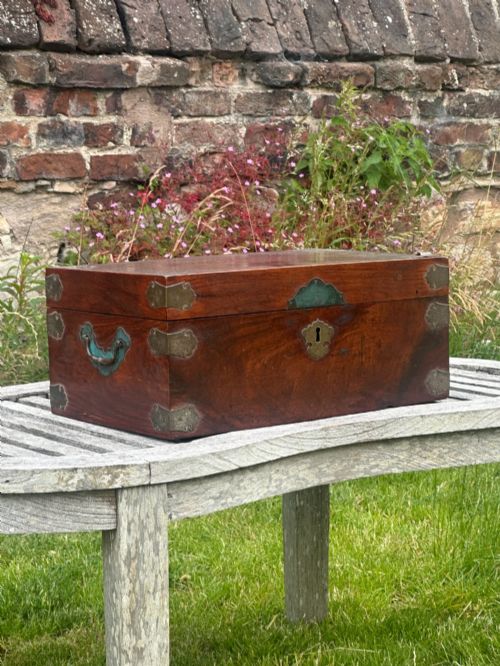
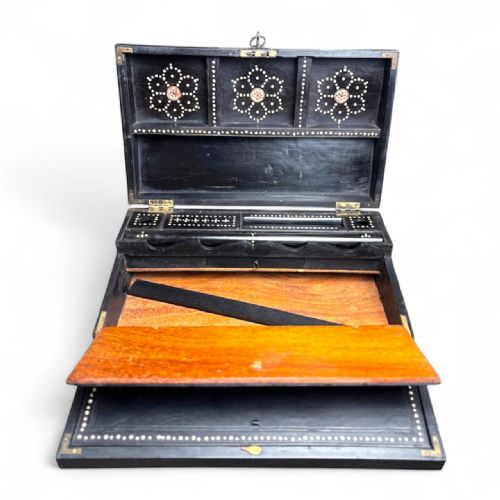
A colonial wooden writing box encompasses portable desk forms made for travel, predominantly found from the nineteenth century in styles such as Victorian colonial, Regency, and Anglo-Indian. Buyers encounter various utilitarian and decorative iterations here, ranging from campaign correspondence boxes to fitted writing slopes.
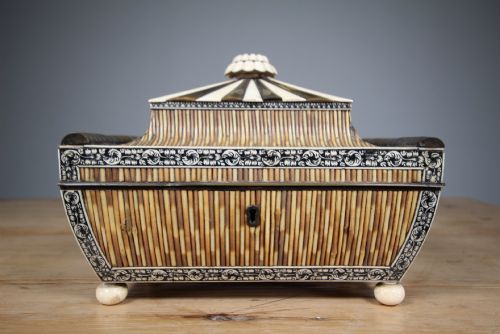
The objects frequently originate from diverse colonial spheres, demonstrating distinct regional preferences like Ceylonese porcupine quill work or Vizagapatam craftsmanship. These pieces served travellers and officials who required portable writing facilities during transit across distant outposts.
Forms span from sarcophagus-shaped quill boxes and stationery boxes to solid ebony writing slopes and padouk deed boxes. The selection reflects both military campaign necessities and domestic writing habits of the period.
How they were made
Maker construction relies heavily upon resilient tropical hardwoods such as teak, camphor wood, padouk, and dense ebony, often paired with contrasting structural elements. Artisans incorporated brass binding and mounts to protect corners and edges during arduous journeys.
Decoration involves meticulous inlay techniques using bone, ivory, antler, and porcupine quill alongside carved wood surfaces and reeded ornamentation. These decorative components highlight regional artisan traditions tied to Anglo-Indian and Ceylonese workshops.
Listings feature nineteenth-century pieces utilising camphor wood, teak, padouk, ebony, brass, bone, and porcupine quill.
What varies in quality
Quality differences emerge through the selection and density of the timber, alongside the precision of the brass binding and corner reinforcement. Superior examples display tighter joinery and more harmonious integration of natural materials like bone and ivory.
The intricacy and preservation of surface ornamentation, such as carved wood details and porcupine quill arrays, distinguish finer boxes from simpler utilitarian containers. Regional specialisation also plays a role, where elaborate Vizagapatam work or solid ebony construction commands attention.
The Colonial Wooden Writing Box Glossary
- Writing slope
- A portable desk featuring a sloping lid designed to provide a comfortable writing angle. These boxes typically fold open to reveal interior compartments for inkwells and paper.
- Campaign box
- A piece of furniture or portable container built for military officers on active service. They often feature recessed brass handles and reinforced corners for durability.
- Porcupine quill
- A decorative material utilised in Ceylonese boxes, arranged in geometric patterns across the exterior. The quills provide a distinctive textured surface.
- Padouk
- A heavy, durable tropical hardwood noted for its deep colouration. It appears frequently in nineteenth-century campaign furniture and deed boxes.
- Vizagapatam
- A coastal Indian centre known for intricate box construction incorporating bone and ivory inlay. Pieces from this region display exceptional decorative detail.
Colonial Wooden Writing Box: Frequently Asked Questions
What is a colonial wooden writing box?
A portable desk or storage chest constructed from exotic hardwoods for use during travel and colonial administration. These boxes incorporated internal compartments for stationery, ink, and correspondence.
They represent the intersection of utilitarian design and regional decorative arts from the nineteenth century.
How were campaign boxes used?
Officers and officials used them to transport writing materials securely while on military campaigns or long sea voyages. The heavy woods and brass mounts withstood rough handling in transit.
Upon arrival at a destination, the box unfolded to create an immediate writing surface.
What woods are commonly found?
Makers utilised durable exotic timbers including teak, camphor wood, padouk, and ebony. These woods resisted warping and insect damage in humid climates.
Lighter materials such as bone, ivory, and porcupine quill provided decorative contrast.
How do I care for a wooden writing box?
Keep the box away from direct sunlight and sudden temperature shifts to protect the timber and delicate inlay work. Maintaining stable indoor humidity prevents the wood and natural decorative elements from cracking.
Apply suitable furniture wax sparingly to nourish the hardwood surface.