



Colonial Indian Tripod Tables
Colonial Indian tripod tables bring dense carvings and rich timbers together for practical daily use in any room.
Colonial Indian Tripod Tables
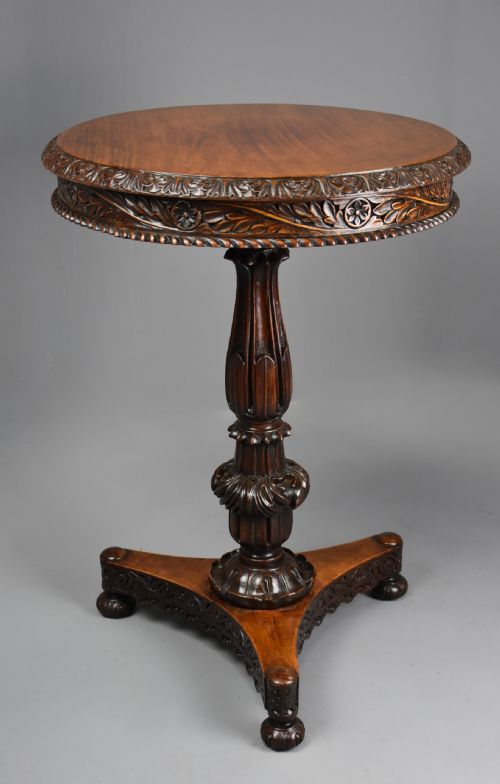
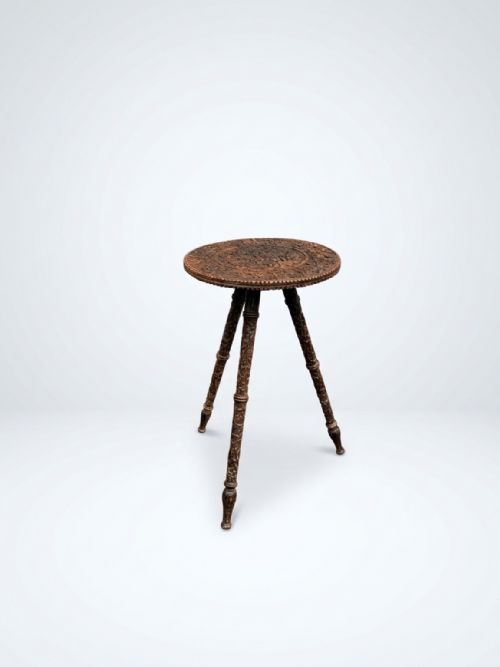
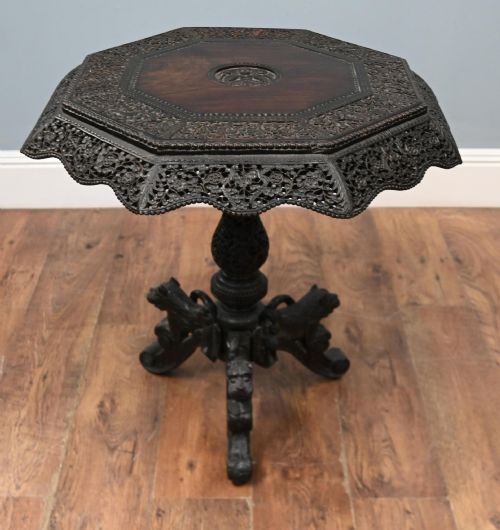
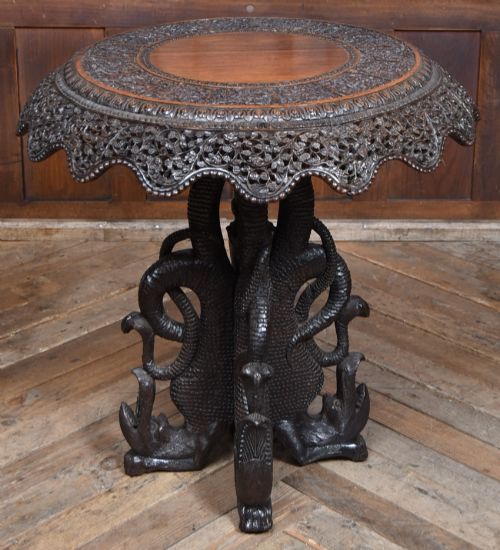
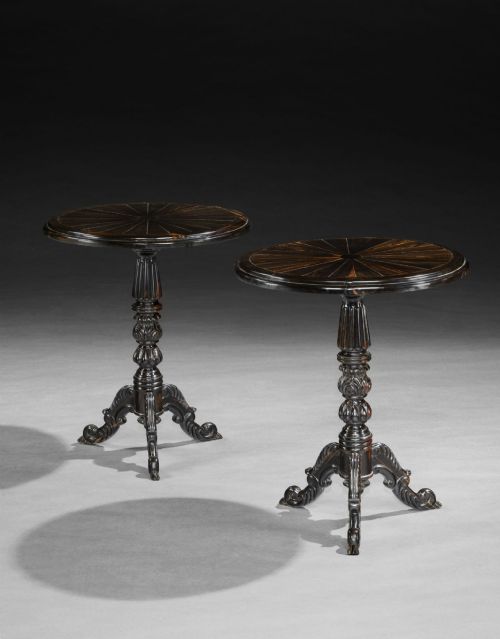
Colonial Indian tripod tables appear across this selection in forms such as occasional tables, side tables, tilt-top tables, and plant stands. These pieces reflect British design influence merged with regional craftsmanship from the nineteenth century onwards.
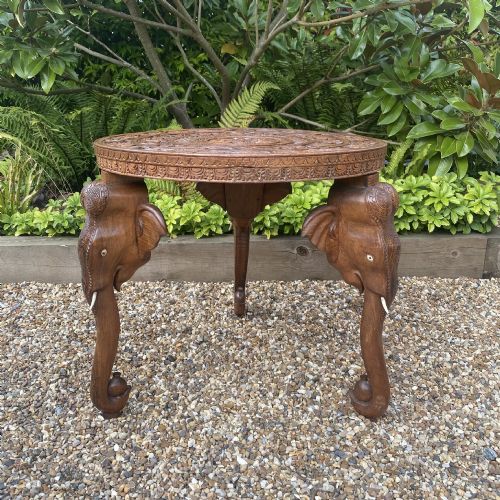
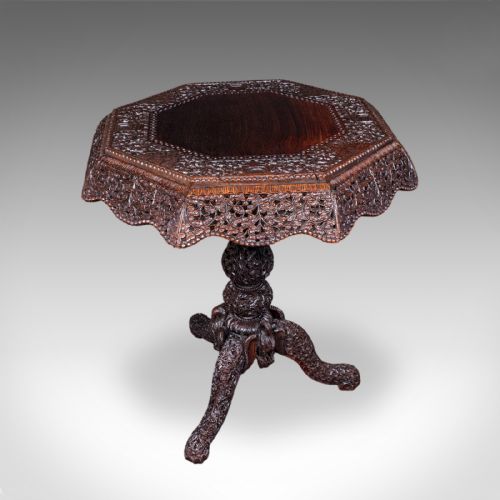
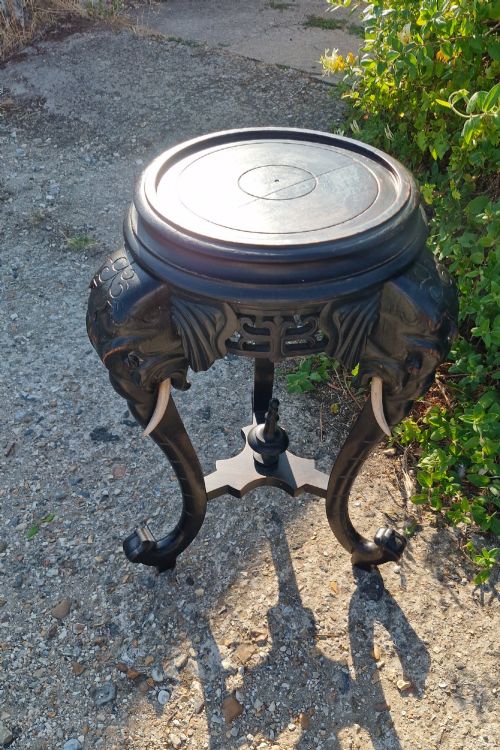
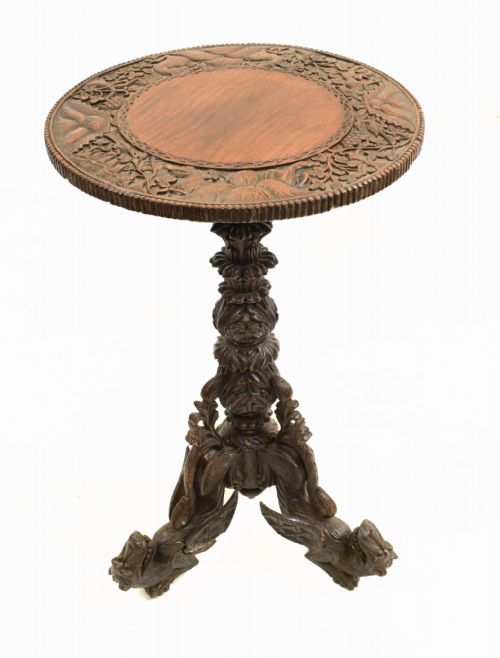
The most common examples you encounter here are carved teak, padouk, and ebony pieces featuring three-legged pedestal bases. Many incorporate distinctive regional motifs, including elephant heads and intricate foliate patterns.
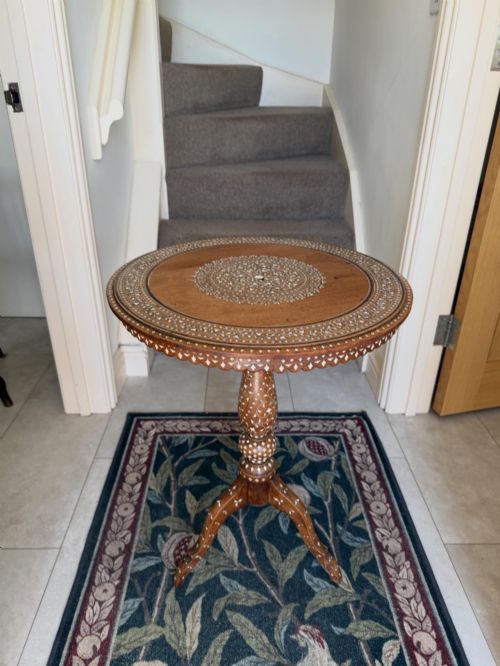
Makers utilised native hardwoods to construct sturdy surfaces suited for tea service, display, or needlework. The inventory shows diverse forms, from plain circular tops to inlaid surfaces bearing mother-of-pearl or bone.
Judging the work
The depth and crispness of the hand-carving dictate the visual success of the piece. Shallower, softer carving lacks the dimension found in better examples.
The choice of timber and the precision of the inlay work separate standard regional pieces from superior works. Intricate bone or mother-of-pearl detailing demands steady alignment across the grain.
Colonial Indian Tripod Tables Retail Price Guide 2026
Typical asking prices for colonial indian tripod tables among the pieces listed under this phrase on Sellingantiques today, from the lower quarter to the upper quarter. They describe what is for sale here now, not the wider market.
At least one nineteenth-century table arrives complete with painted wooden tusks attached to its carved elephant head base.
The Colonial Indian Tripod Tables Glossary
- Padouk
- A heavy, durable reddish-brown tropical hardwood frequently used in nineteenth-century colonial furniture. It takes a fine finish and supports deep relief carving.
- Tilt top
- A hinged table top that folds vertically when not in use to save space. This mechanism appears frequently on nineteenth-century examples.
- Hoshiarpur
- A city in Punjab known for intricate woodwork and inlay. Pieces from this tradition typically feature dense geometric patterns in bone or wood.
- Teapoy
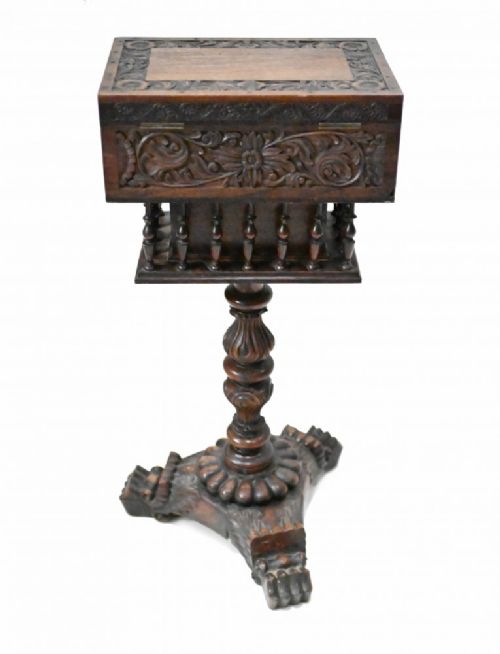
- A small occasional table designed originally for holding tea paraphernalia. Many surviving examples double as general side or lamp tables.
Colonial Indian Tripod Tables: Frequently Asked Questions
What are colonial Indian tripod tables used for?
These tables function well as side tables, lamp stands, or occasional surfaces in sitting rooms and hallways. Their compact footprint allows them to fit easily beside chairs or sofas.
Tilt-top variants offer the added flexibility of storing flat against a wall when floor space is required.
How do I identify a Hoshiarpur table?
Hoshiarpur tables are characterised by dense surface inlay using materials like bone or lighter woods. The patterns often cover the entire top and pedestal in geometric or floral arrangements.
This specific style originates from the Punjab region and represents a distinct branch of nineteenth-century Anglo-Indian production.
Are these tables sturdy enough for daily use?
The dense hardwoods used in their construction, such as teak and padouk, provide a naturally robust structure. Tripod bases offer reliable stability on even floor surfaces.
Care should be taken with heavily carved edges and delicate inlay work during routine cleaning.
How do I tell Burmese tables from Indian ones?
Burmese pieces generally display deep, pictorial woodcarvings depicting traditional figures or dense foliage. Indian and Ceylonese examples often lean towards geometric strapwork, ebony turning, or ivory and bone inlay.
Regional styles merged considerably during the colonial period, making material choice and carving depth the primary clues to origin.