





Antique Indian Wine Tables
Antique Indian wine tables are compact, portable surfaces crafted in exotic timbers that bring versatile display space and rich colonial history into a room.
Antique Indian Wine Tables
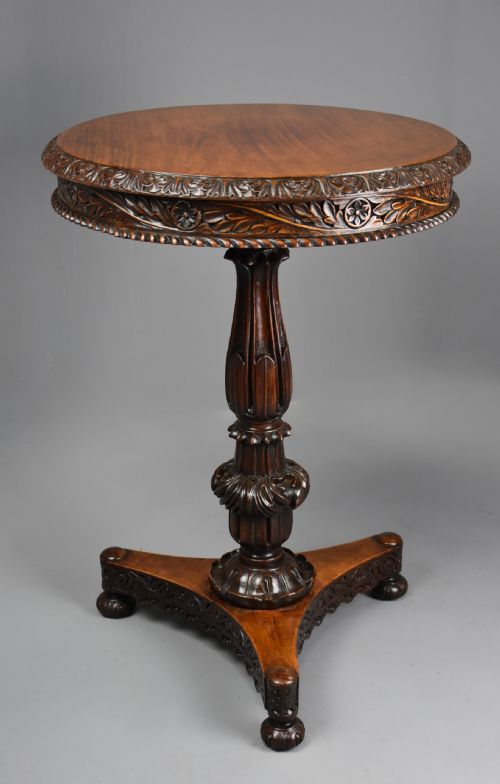
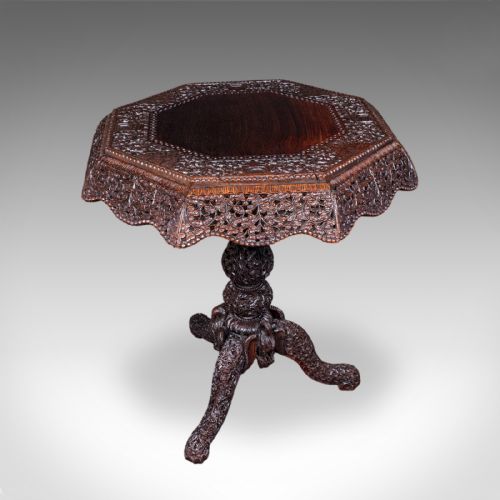
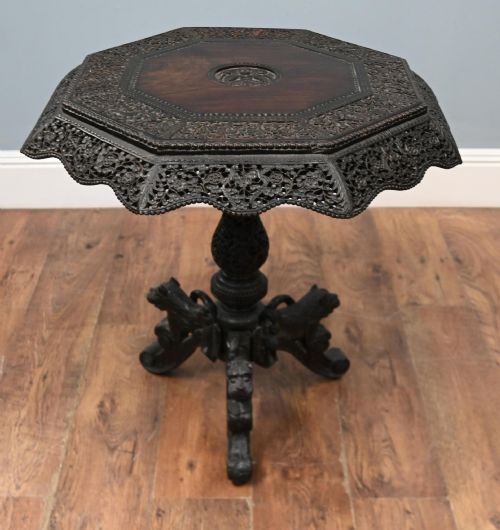
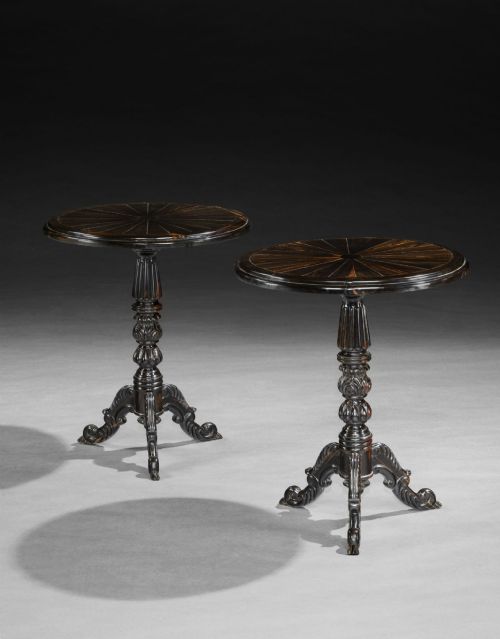
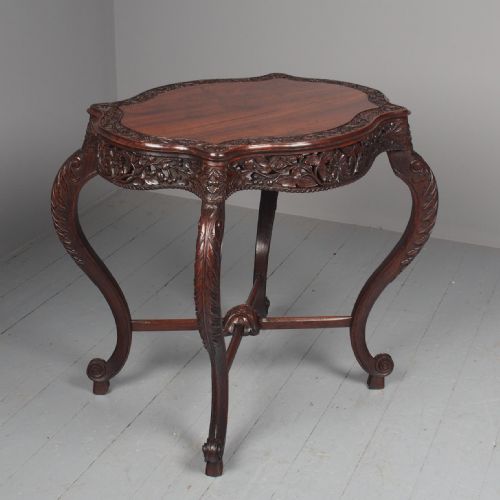
Antique Indian wine tables encompass a diverse group of portable side, occasional, and tea tables created during the nineteenth and early twentieth centuries under British colonial influence. These pieces frequently manifest as Anglo-Indian, Anglo-Burmese, or colonial designs intended for domestic entertaining and serving.
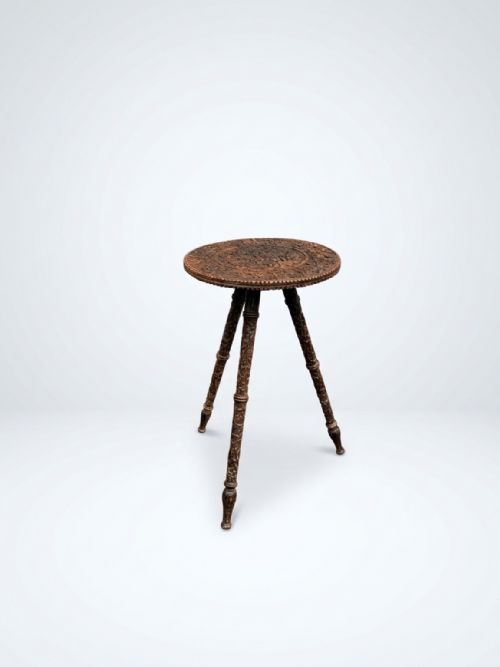
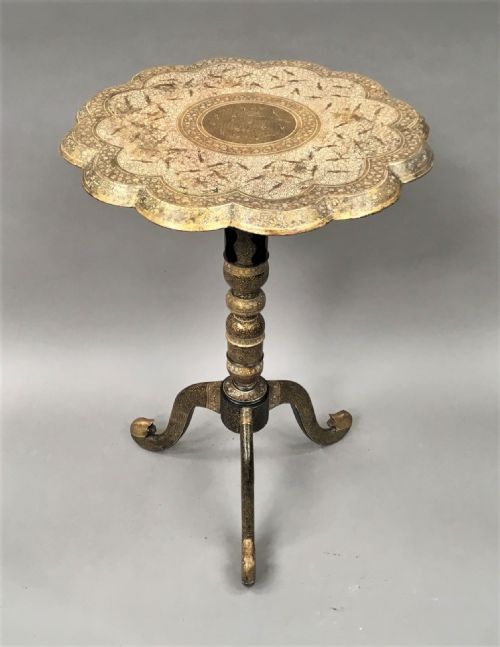
The versions most commonly met on this page include heavily carved circular side tables, tripod stands, and tilt-top tables. They utilise regional forms such as pedestal bases and folding campaign frames, reflecting both local craftsmanship and British utility.
Geographic origins span across the Indian subcontinent and neighbouring regions, featuring specific regional outputs from Ceylon, Burma, Kashmir, and Bombay. These origins dictate the decorative vocabulary, ranging from dense floral carving to geometric bone inlay.
How they were made
Makers utilised dense regional hardwoods such as teak, padouk, rosewood, and ebony to construct these surfaces. These heavy timbers provided the structural integrity needed for intricate carving and folding mechanisms.
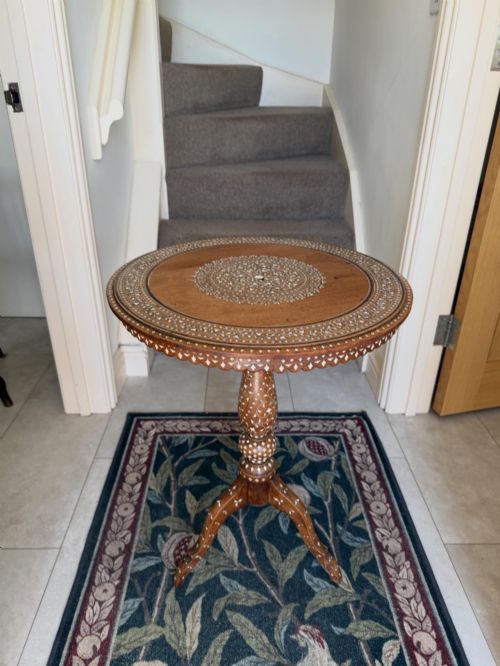
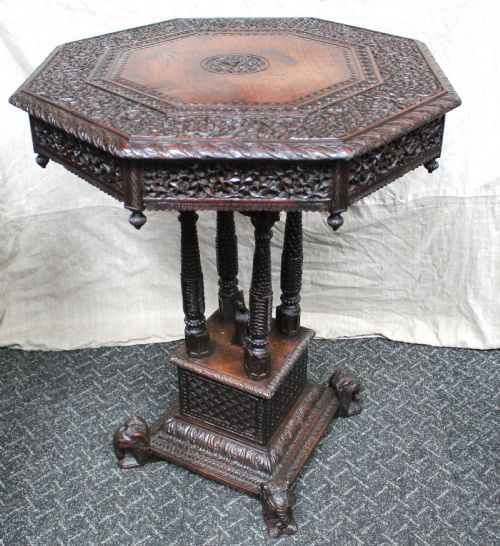
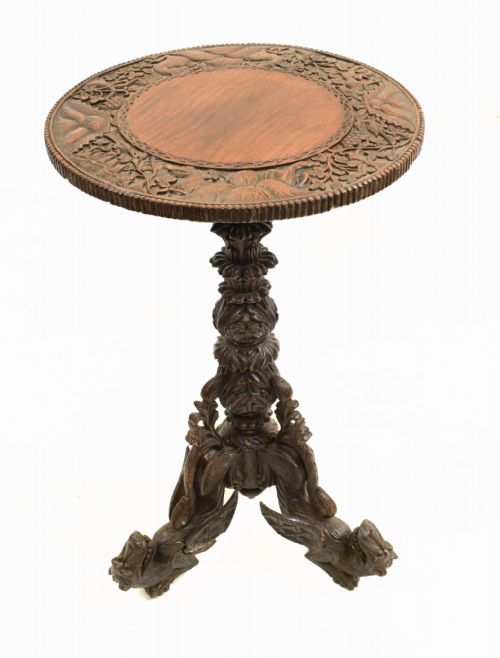
Decoration relied heavily on deep relief carving, specimen wood marquetry, and delicate bone inlay. Certain pieces also incorporate fine detailed paintwork on wood substrates to create intricate surface patterns.
Antique Indian Wine Tables Retail Price Guide 2026
Typical asking prices for indian wine tables among the pieces listed under this phrase on Sellingantiques today, from the lower quarter to the upper quarter. They describe what is for sale here now, not the wider market.
The selection spans from the mid-nineteenth century through the Edwardian period, encompassing Victorian colonial imports.
What varies in quality
The depth and crispness of the hand-carved detail separate ordinary production from superior examples. Skilled carvers achieved sharp, clean undercut foliage and figures that retain their definition across the entire top surface.
The selection and stability of the timber timber influence longevity and visual appeal. Richly grained exotic woods and precise inlay work elevate a piece above standard utility furniture.
The Antique Indian Wine Tables Glossary
- Anglo-Indian
- A style describing furniture made in India during the British colonial period, combining European forms with local decorative techniques. It bridges two distinct design traditions.
- Padouk
- A durable, heavy tropical hardwood prized for its deep reddish-brown colour and stability. It was frequently selected for carved side and occasional tables.
- Tilt-top
- A mechanism allowing the table top to pivot to a vertical position for storage when not in use. This practical feature was common on nineteenth-century tripod tables.
- Bone inlay
- A decorative technique where small pieces of bone are set into the timber surface to form geometric or floral patterns. It creates a striking contrast against dark woods like ebony or teak.
- Tripod table
- A small freestanding table supported by three legs radiating from a central pedestal. This form provides stable placement on uneven floors.
Antique Indian Wine Tables: Frequently Asked Questions
What are antique Indian wine tables?
These are small portable tables produced in India and surrounding regions during the nineteenth and early twentieth centuries. They served European expatriates for tea, wine, and general domestic use.
Most examples function as side, occasional, or tilt-top tables made from dense tropical hardwoods. Their forms range from simple folding campaign pieces to heavily carved pedestal stands.
How do I identify a Burmese table?
Burmese tables typically display dense, deep relief carving depicting traditional figures, foliage, and intricate border patterns. They are frequently constructed from teak or padouk.
Regional characteristics include solid circular tops supported by carved pedestals or tripod legs. The carving style remains distinct from the geometric bone inlay found in other areas of the subcontinent.
Where were Hoshiarpur tables made?
Hoshiarpur tables originated in the Punjab region of northern India, renowned for intricate woodwork and inlay traditions. They are easily recognised by dense patterns of bone or shesham wood inlay.
These pieces often incorporate architectural motifs reminiscent of the Taj Mahal alongside complex floral scrolls. The entire wooden surface is usually covered in meticulous decorative work.
How do I live with a tilt-top table?
Tilt-top tables offer the versatility of a display surface that can be folded flat against a wall when floor space is needed. They suit corners, beside armchairs, or as lamp stands.
Placing them away from direct heat sources protects the old timber and joinery. Regular gentle dusting preserves the detailed surface carvings.
How do I date a colonial Indian table?
Dating relies on examining the timber species, construction joints, and the style of carving or inlay. Nineteenth-century examples often display hand-turned components and traditional joinery methods.
Makers frequently utilised indigenous woods like ebony and padouk alongside specific regional motifs that evolved through the Victorian era. Comparing the decorative vocabulary to dated regional pieces helps narrow the decade of origin.