



Vintage Indian Pedestal Tables
Vintage indian pedestal tables bring together dense carved hardwoods and traditional craftsmanship from colonial workshops.
Vintage Indian Pedestal Tables
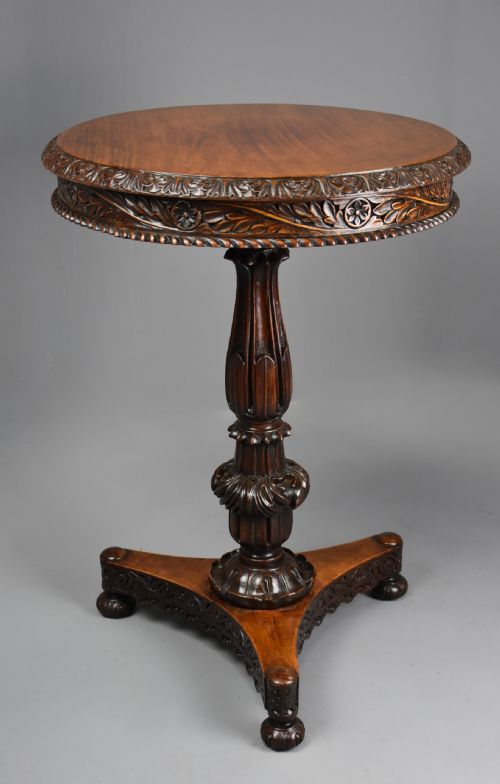
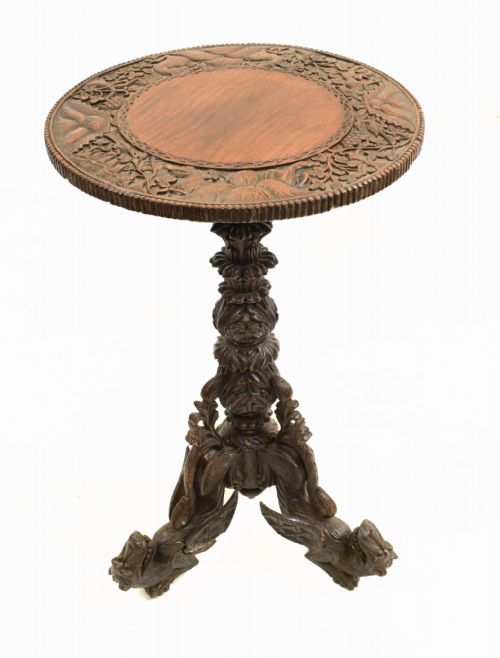
Vintage indian pedestal tables encompass a range of occasional, side, and centre tables originating from the nineteenth and early twentieth centuries. These pieces frequently bear intricate carving associated with Anglo-Indian and colonial workshop traditions.
Materials and construction methods
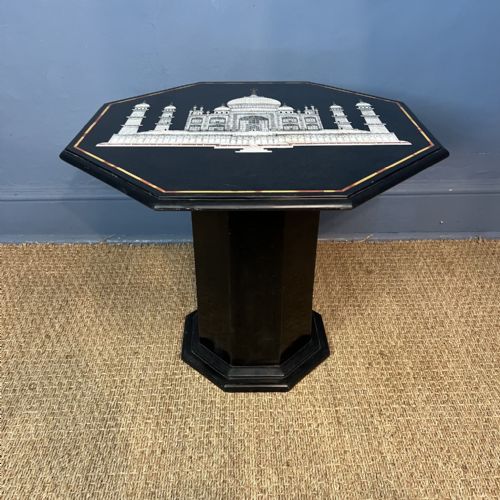
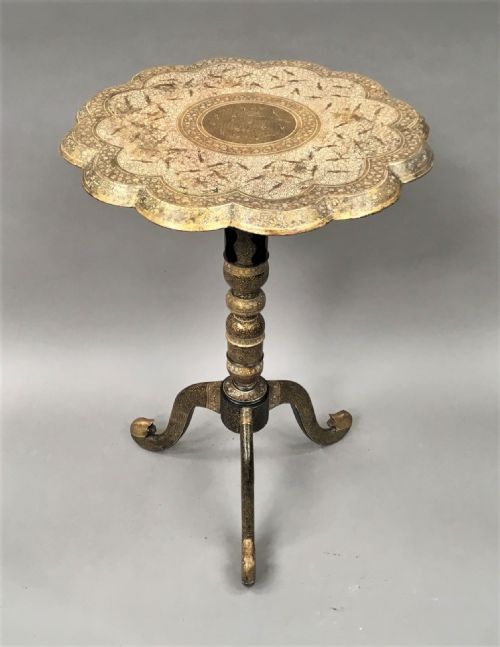
Workshops relied on dense tropical timbers such as teak, padauk, and rosewood, chosen for their ability to hold deep, crisp chisel work. Artisans combined these heavy hardwoods with specialist decorative techniques including mother of pearl inlay, black marble panels, and detailed lacquer paintwork.
Construction often involved central pillar supports linked to carved tripod or platform bases, allowing stability beneath elaborate tabletops. Joinery accommodated timber movement while presenting a seamless exterior of foliate and geometric relief.
Vintage Indian Pedestal Tables Retail Price Guide 2026
Typical asking prices for vintage indian pedestal tables among the pieces listed under this phrase on Sellingantiques today, from the lower quarter to the upper quarter. They describe what is for sale here now, not the wider market.
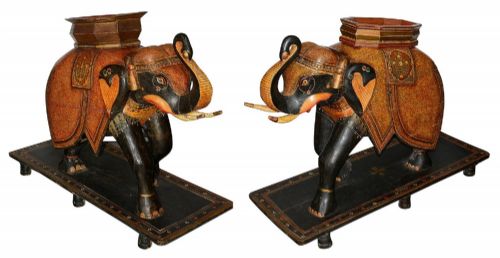
Several tables share floor space with carved wooden elephants and painted figures.
Assessing quality in carved tables
Excellence in these pieces rests upon the depth, sharpness, and discipline of the hand carving across the timber surface. Superior examples maintain crisp relief work without softness in the foliage or geometric motifs, while lesser specimens display shallow or hurried chisel marks.
The selection of raw material also dictates standing, with dense padauk and richly grained rosewood holding greater prestige than generic mixed hardwoods. Furthermore, the integration of specialised elements like mother of pearl inlay or intact lacquer elevates a piece above standard carved production.
The Vintage Indian Pedestal Tables Glossary
- Anglo-Indian
- A style designation for furniture made in India during the British colonial period, blending European furniture forms with traditional Indian carving techniques. These items often feature dense botanical motifs.
- Padauk
- A heavy, durable tropical hardwood prized for its reddish-brown colour and stability, commonly utilised in nineteenth-century colonial furniture. It accepts fine detail work exceptionally well.
- Tilt-top
- A tabletop hinged to a central pillar, allowing the surface to fold vertically when not in use. This mechanism saved space in nineteenth-century domestic interiors.
- Inlay
- A decorative technique where contrasting materials such as mother of pearl or marble are embedded into recesses within the wooden surface. It creates flat, patterned ornamentation.
Vintage Indian Pedestal Tables: Frequently Asked Questions
What is an Anglo-Indian table?
An Anglo-Indian table is a piece produced in India under British influence, combining European forms with local artisan carving traditions.
These items typically showcase dense foliage, figural motifs, and deep relief work executed in heavy tropical hardwoods.
How do I care for a carved hardwood table?
Maintain these surfaces by dusting regularly with a soft, dry cloth and avoiding excessive moisture or direct sunlight.
Applying occasional natural wax helps preserve the timber grain and protects intricate carved recesses from drying out.
Are these tables sturdy enough for daily use?
Most examples utilise dense timbers like teak and padauk, providing a solid structure suited for holding lamps, books, or drinks.
Pillar and pedestal designs distribute weight effectively through the central shaft to the feet.
How are different periods identified?
Dating relies upon stylistic markers, construction methods, and documentation matching nineteenth-century colonial output.
Earlier examples often feature heavier padauk construction and hand-cut joinery, while later pieces introduce alternative lacquered finishes.