
Colonial Carved Wooden Table
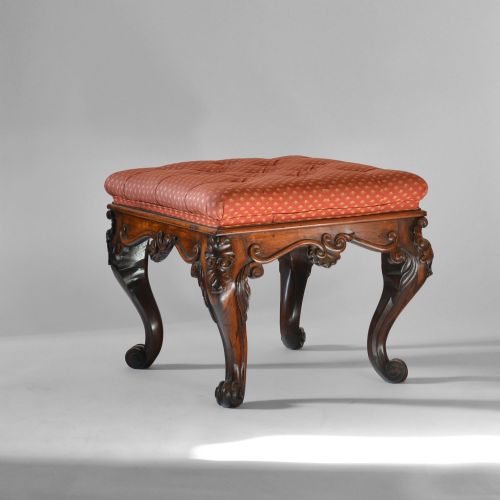
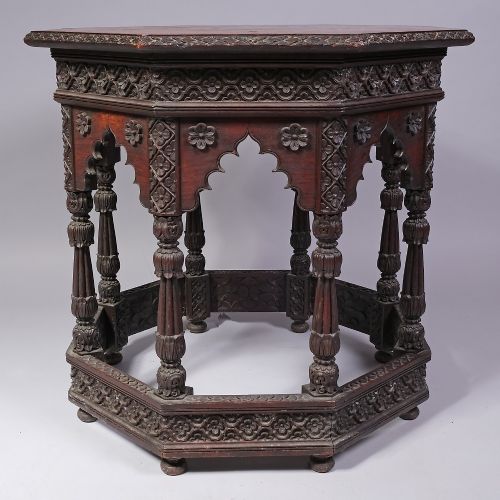
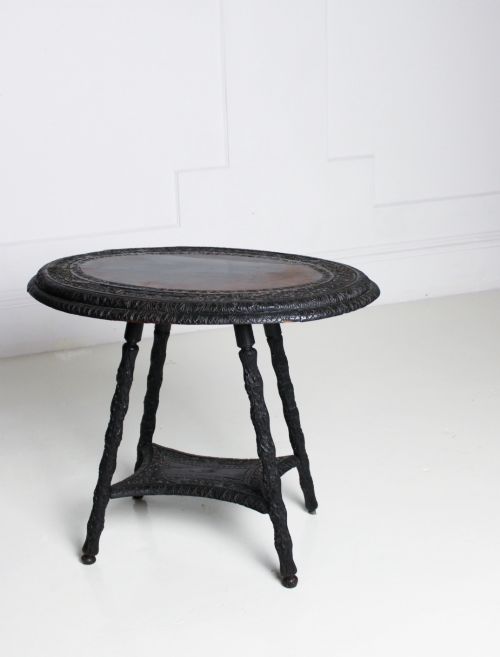
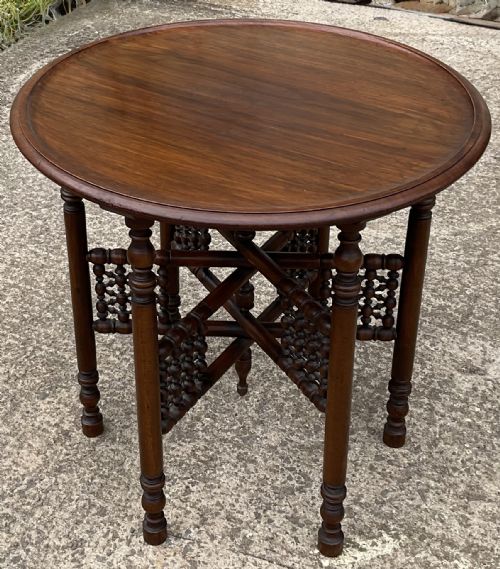
A colonial carved wooden table brings dense timber, intricate carving, and global trade history directly into a room.
Colonial Carved Wooden Table
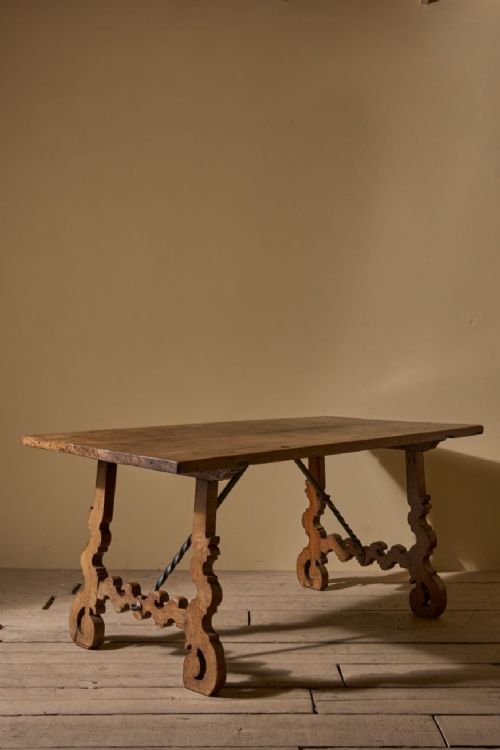
A colonial carved wooden table encompasses diverse forms created during periods of international exchange and British or Spanish influence overseas. Buyers seeking a colonial carved wooden table typically encounter pieces originating from India, Burma, and Spain, spanning from the seventeenth to the twentieth century.
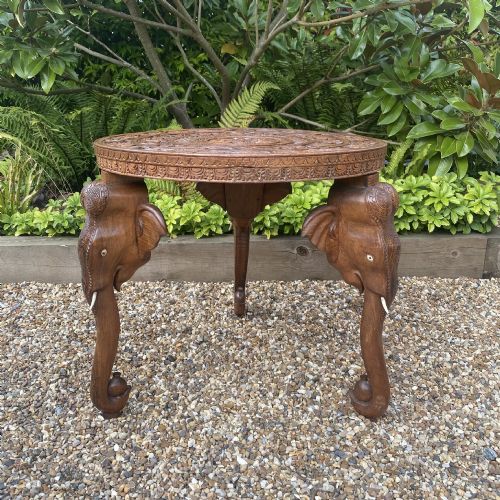
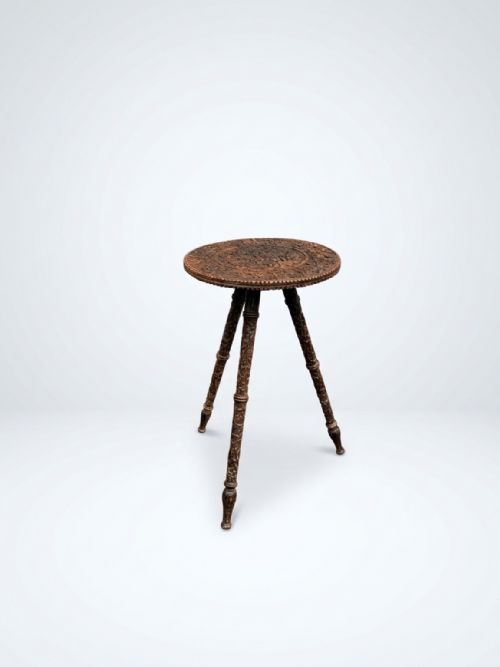
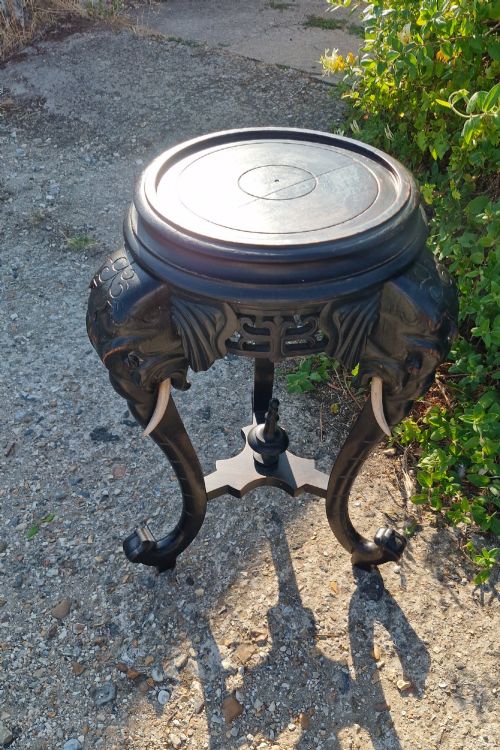
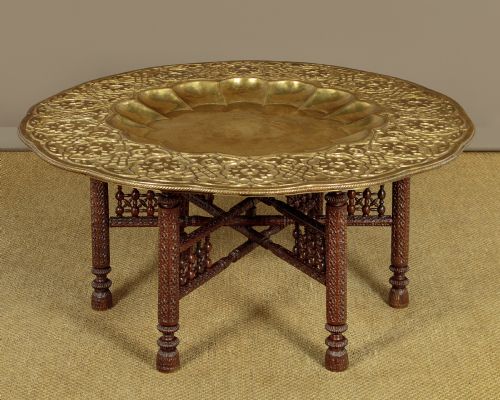
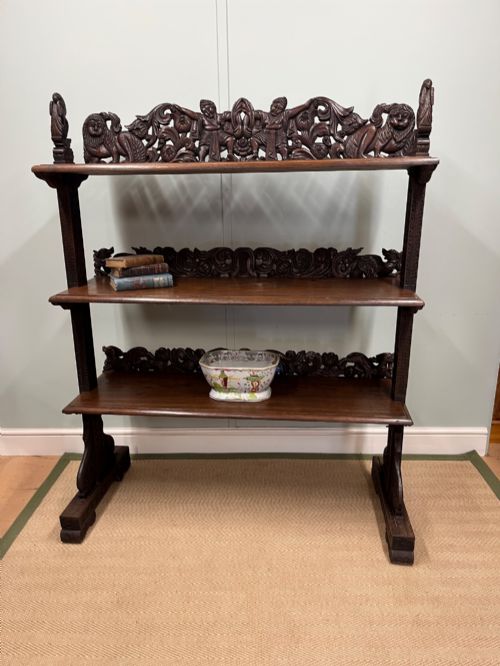
The selection ranges widely in form and function. Side tables, coffee tables, console tables, and occasional tables dominate the offerings, alongside more specialised forms like elephant tables, teapoys, and tiered buffets.
Materials and construction
Craftsmen utilised heavy tropical hardwoods such as teak, rosewood, padauk, and walnut as the structural foundation for these items. These dense timbers allowed artisans to execute deep, intricate relief carving without compromising the stability of the furniture.
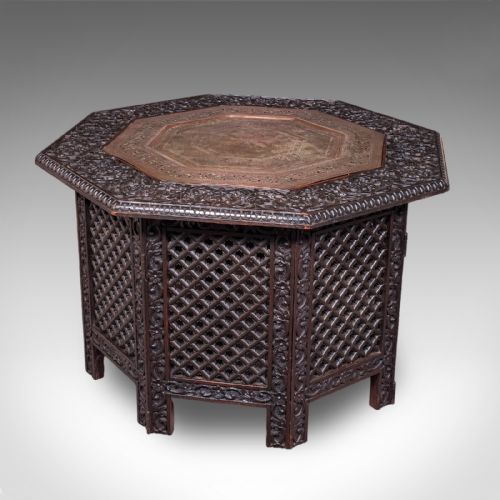
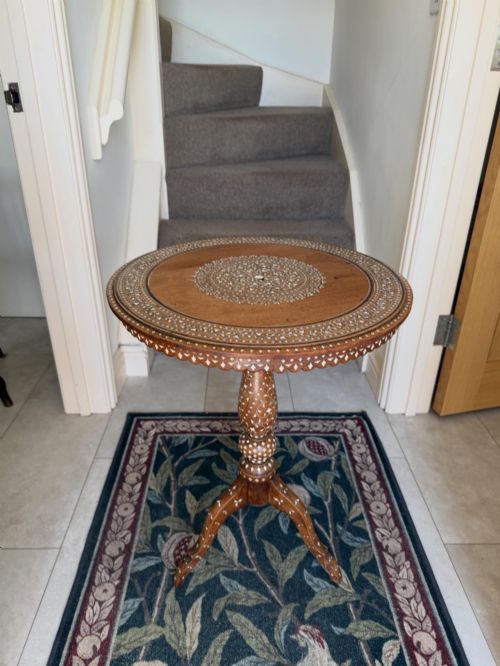
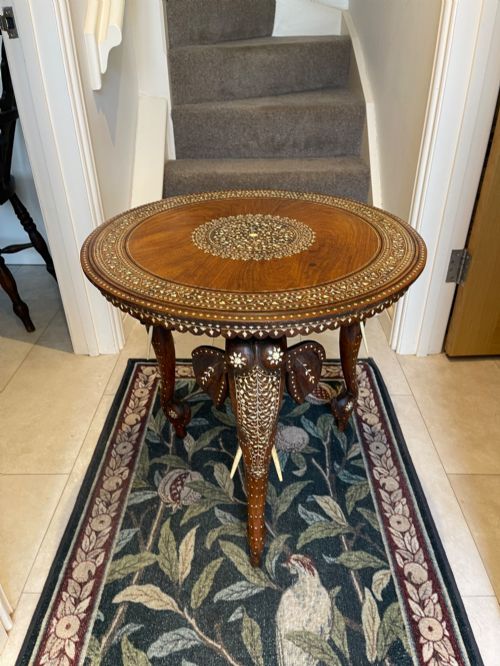
Many examples incorporate contrasting decorative elements set directly into the timber. Brass, bone inlay, and wrought iron appear frequently, requiring precise hand-fitting alongside traditional joinery.
Materials documented across the inventory include teak, rosewood, padauk, walnut, brass, bone inlay, and wrought iron.
Assessing craftsmanship and finish
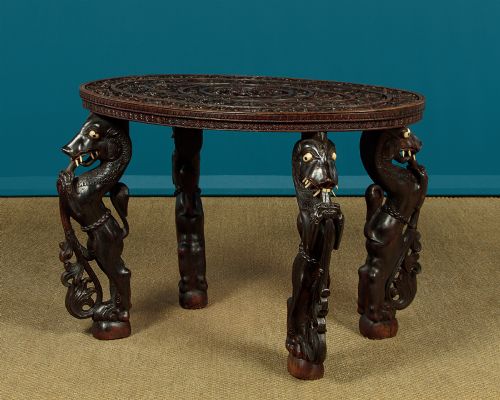
Quality rests primarily on the depth and crispness of the hand carving. Finer pieces display sharply defined motifs, such as foliage, figures, or animal forms, whereas simpler items show softer, shallower detailing.
The choice of primary wood and the integration of secondary materials also differentiate the range. Solid rosewood, padauk, or teak combined with meticulous brass or bone inlay represents the upper tier of execution.
The Colonial Carved Wooden Table Glossary
- Anglo-Indian
- Describes furniture made in India during the British colonial period, often combining European forms with local carving traditions. These pieces frequently utilise dense hardwoods like padauk and rosewood.
- Padauk
- A heavy, durable tropical hardwood valued for its rich reddish-brown colour and stability. It is commonly found in nineteenth-century side tables and occasional furniture.
- Teapoy
- A small table traditionally used for holding tea equipment or serving beverages. Many surviving examples feature elaborate carving and compartmentalised interiors.
- Inlay
- A decorative technique where contrasting materials such as brass or bone are embedded flush into the wooden surface. This method creates geometric or floral patterns across the tabletop.
Colonial Carved Wooden Table: Frequently Asked Questions
What is an elephant table?
An elephant table is a specific form of carved occasional furniture featuring structural elements modelled after elephants, sometimes incorporating wooden tusks.
These pieces typically originate from the nineteenth century and reflect regional Indian craftsmanship designed for export.
How do I clean a carved wooden table?
Dust the intricate carved recesses regularly with a soft, dry brush to prevent dirt accumulation in the grain. Avoid chemical polishes that can build up within the detailed relief work.
Maintain the timber using traditional beeswax applied sparingly with a soft cloth to preserve the natural lustre.
Where were these tables made?
Production centres span across various regions under colonial administration or Spanish influence, including the Bombay Presidency, Burma, and Spain.
Local artisans adapted European furniture forms to incorporate indigenous motifs, regional timbers, and traditional carving techniques.
Are these tables suitable for daily use?
The dense hardwoods used in these pieces provide robust durability for everyday placement in modern interiors. Many forms, such as coffee tables and side tables, function practically while serving as decorative focal points.
Protect finished surfaces from excessive moisture and heat by using coasters or mats.