

19th Century Anglo Indian
When you examine 19th century anglo indian furniture, you encounter the hybrid designs created for colonial patrons through native craftsmanship.
19th Century Anglo Indian
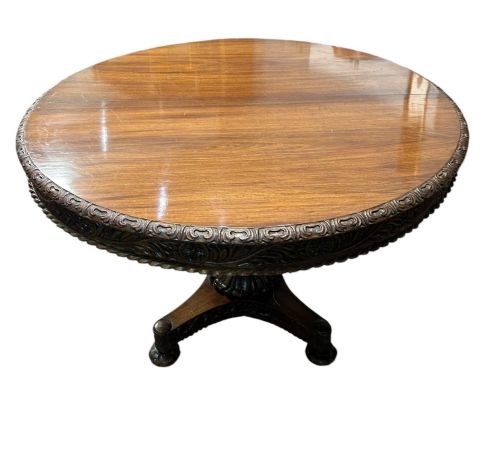
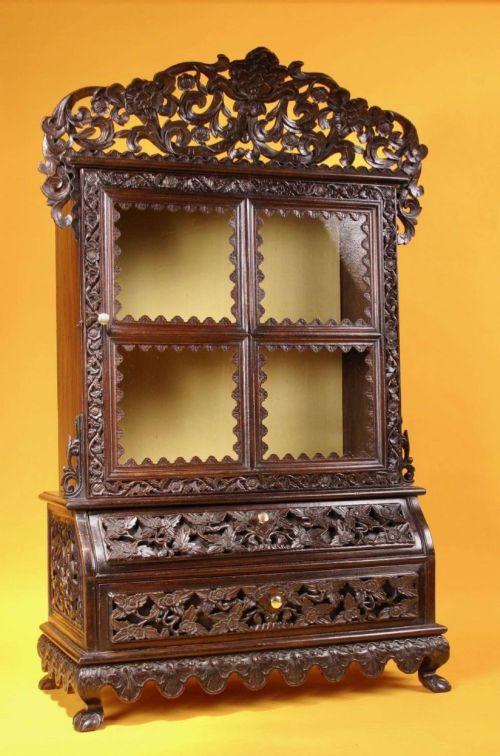
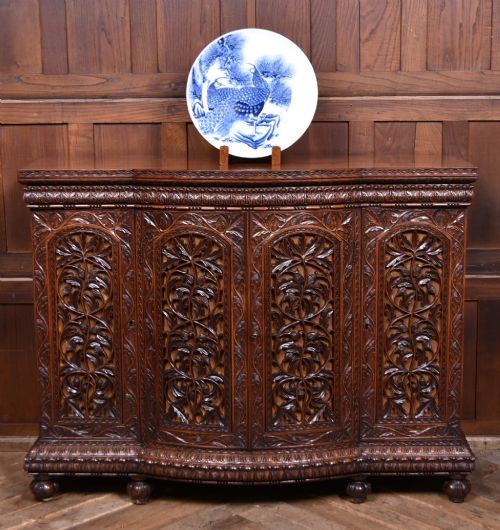
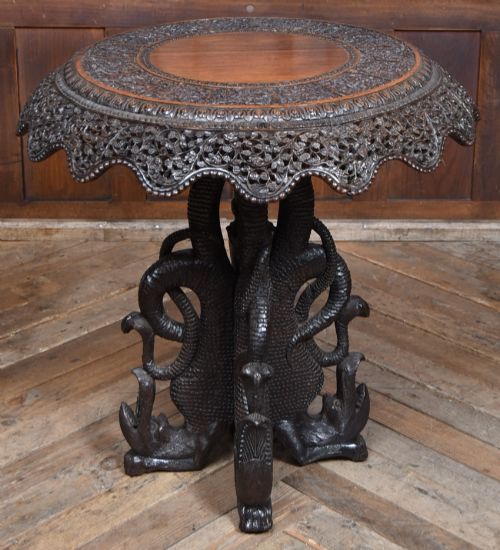
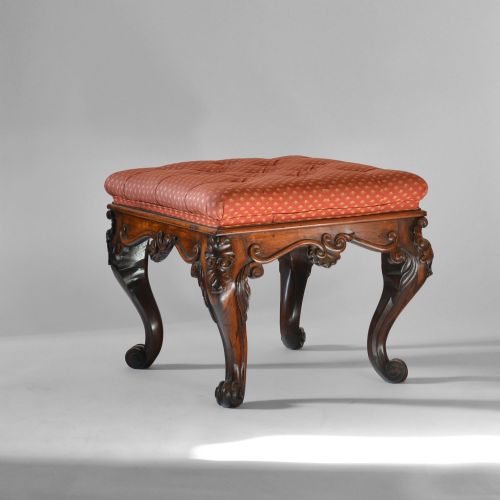
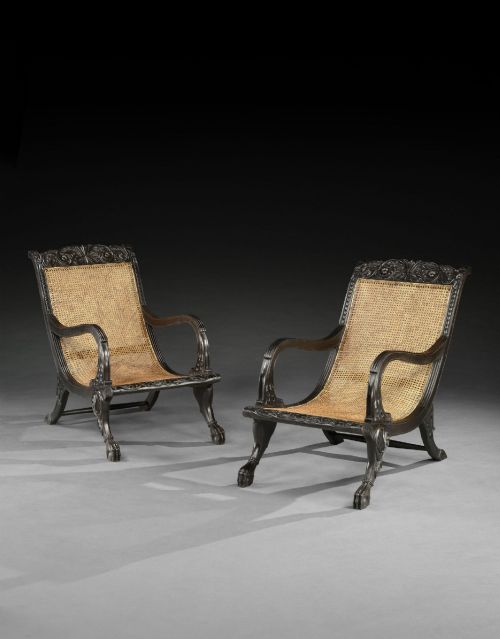
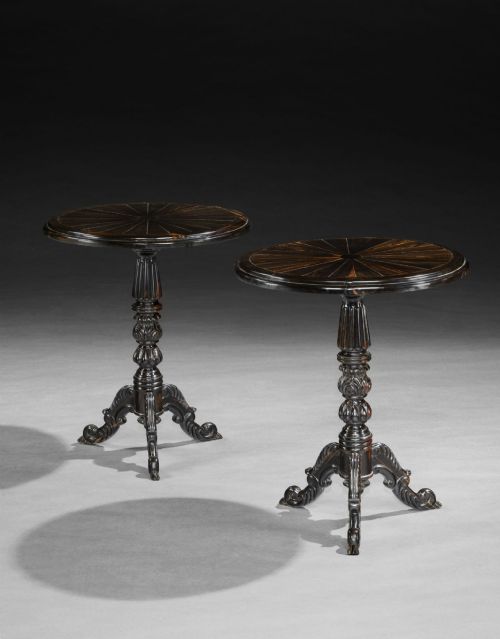
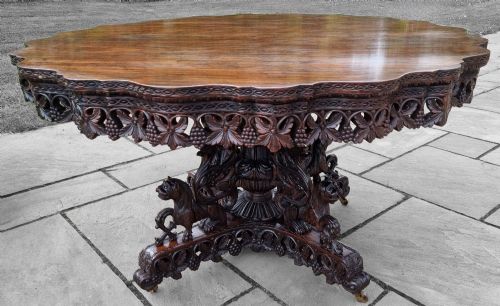
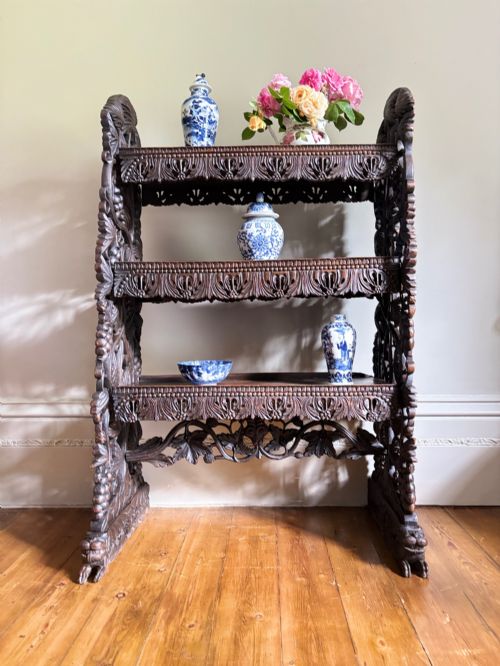
19th century anglo indian pieces combine traditional British furniture forms with elaborate South Asian decorative carving and construction methods. Buyers encounter numerous occasional tables, centre tables, and armchairs alongside larger cabinets, bookcases, and campaign chests.
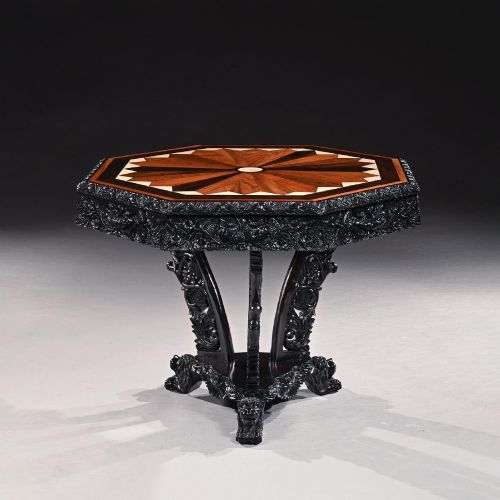
The objects originate from specific regional hubs such as Bombay, Ceylon, and the Punjab town of Hoshiarpur. Octagonal tables with intricate inlay work and heavy padauk or ebony seating form the core of what appears on this page.
How They Were Made
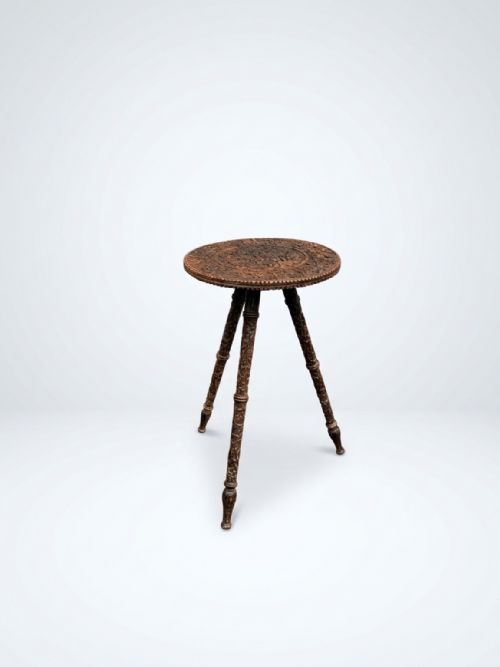
Artisans utilised dense tropical timbers including padauk, rosewood, teak, and solid ebony as the structural foundation for these items. These heavy woods supported deep, microscopic relief carving executed entirely by hand.
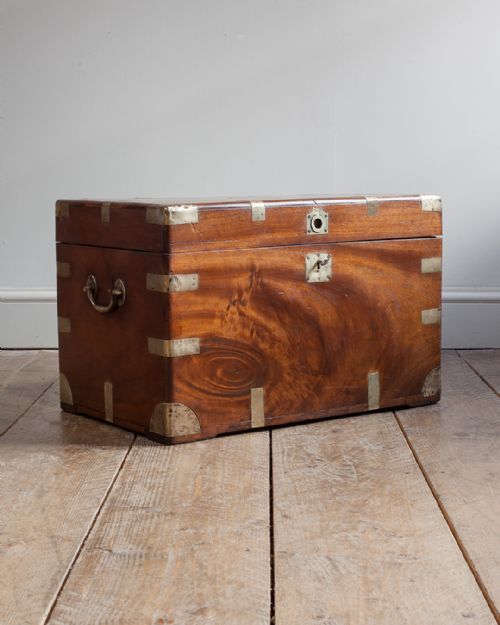
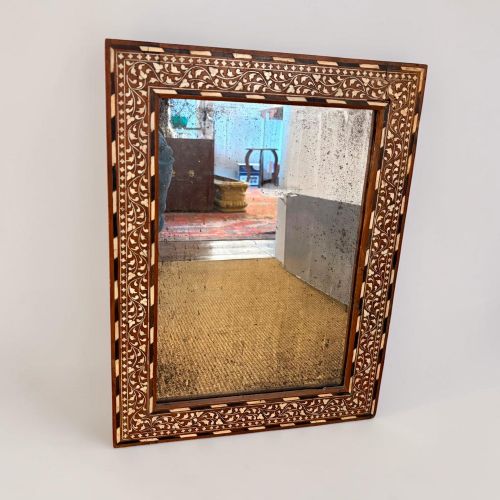
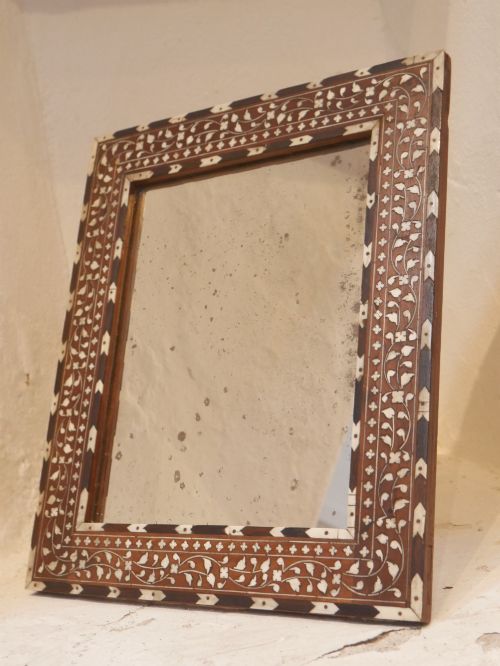
Makers integrated brass bindings, campaign handles, and intricate wire or bone inlay into the wooden surfaces. Local workshops also applied cane seating and leather upholstery to suit the climate of the British Raj.
The inventory records regional specialties including Hoshiarpur inlaid tables, Ceylonese ebony chairs, and Bombay sofas.
What Varies in Quality
Depth and crispness of the hand-carving separate the exceptional examples from routine production. Superior pieces display unbroken symmetry and meticulous detail across every visible surface.
The choice of primary timber heavily influences the standing of an object. Solid ebony and figured padauk command greater regard than secondary mixed hardwoods.
The 19th Century Anglo Indian Glossary
- Hoshiarpur
- A district in the Punjab known for intricate inlaid woodwork. Items from this centre typically combine shisham wood with brass wire and resin.
- Padauk
- A dense reddish-brown tropical timber favoured for carved furniture. This durable wood darkens gracefully with age.
- Campaign chest
- A modular storage trunk built in sections for military transport. These units feature recessed brass handles and corner brackets.
- Cane
- Split rattan woven into open mesh panels. This material provided cool seating in tropical colonial interiors.
19th Century Anglo Indian: Frequently Asked Questions
What is an Anglo-Indian table?
These tables adapt standard British forms like tripod bases or octagonal tops using native woods and dense carving. They reflect the exchange of design ideas between British occupants and local artisans.
Most examples employ padauk, teak, or rosewood, often featuring inlaid brass or bone motifs. They served as occasional furniture in colonial drawing rooms.
How do I identify Hoshiarpur work?
Hoshiarpur pieces are defined by dense geometric or floral inlay covering the entire wooden surface. Artisans embedded brass wire, ivory, or bone into dark timber.
Tables and small cabinets from this region retain a characteristic mosaic appearance. The technique spread widely during the later decades of the nineteenth century.
Were these pieces made for export?
Many items were commissioned by British administrators and merchants residing in India. Others were produced directly for the European export market to satisfy Victorian tastes for exotic furnishings.
Form matched European domestic requirements while decoration followed regional South Asian styles. This fusion created the distinct aesthetic seen across campaign chests and armchairs.
Why are campaign trunks heavy?
Campaign furniture utilised solid tropical hardwoods like teak and padauk to withstand harsh travel conditions. Brass reinforcement protected the corners and edges during transit.
These chests were built to dismantle or separate into stacking sections for military relocation. Their robust construction ensures structural survival today.