


Victorian Elephant Side Table
These Victorian elephant side tables bring carved exotic creature forms into domestic spaces through nineteenth-century Anglo-Indian and Burmese craftsmanship.
Victorian Elephant Side Table
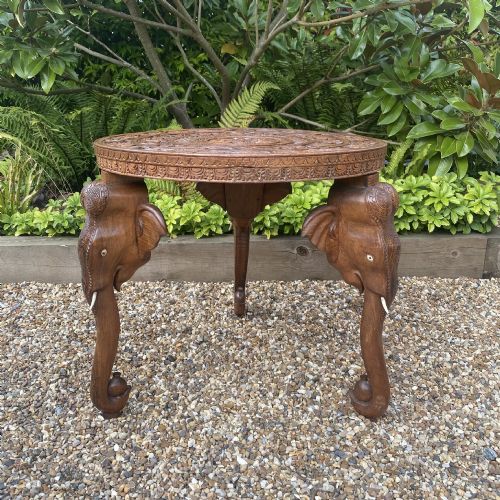
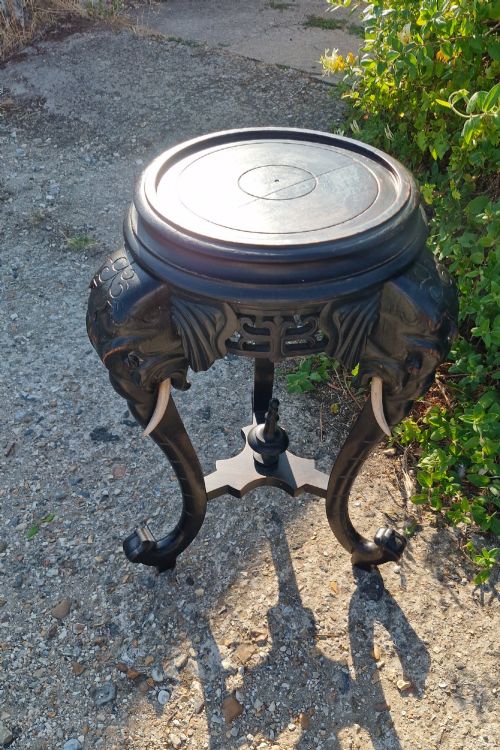
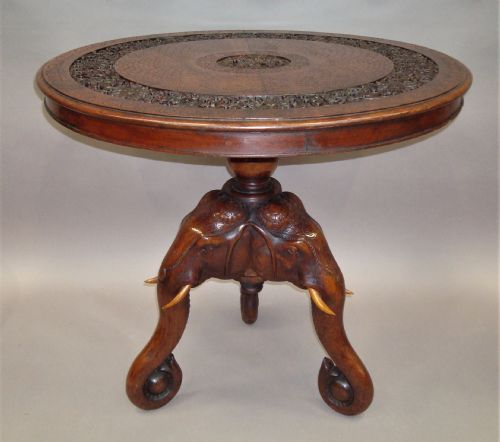
A victorian elephant side table combines sturdy occasional or side table formats with sculptural animal supports originating from nineteenth-century workshops. When searching this phrase, a buyer encounters distinctive carved forms that bridge British domestic utility and colonial design traditions.
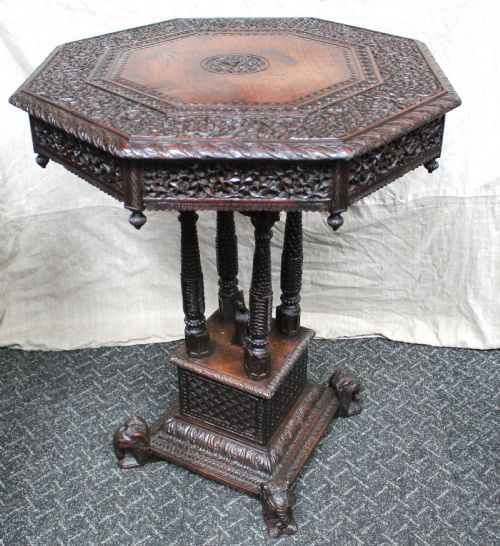
The versions most commonly met on this page span the late nineteenth century, specifically from the 1870s through to 1900. These include circular, octagonal, and rectangular tabletops supported by intricately shaped elephant figures.
Origins heavily lean towards Anglo-Indian, Anglo-Burmese, and Bombay Presidency workshops rather than domestic British cabinet-making. They serve equally well as lamp tables or decorative occasional surfaces within a room.
Materials and construction
Construction relies upon dense tropical timbers such as teak and hardwood, chosen for their stability and capacity to hold deep sculptural detail. Artisans carved these woods by hand to form both the structural elephant legs and the patterned tabletops.
Surface treatments vary between natural polished hardwood, ebonised finishes, and painted wooden elements. Specific examples incorporate carved bone or painted wooden tusks to complete the zoomorphic forms.
Materials recorded across the inventory include teak, bone, ebonised hardwood, and painted wood.
Judging the range
Quality rests upon the depth, precision, and proportion of the hand-carved elements forming the elephant supports. Finer pieces display crisp anatomical definition and balanced integration between the animal figures and the geometric tops.
The choice of material and finish also dictates distinction, moving from simpler painted or ebonised surfaces to finely carved solid teak with intricate surface ornamentation.
The Victorian Elephant Side Table Glossary
- Anglo-Indian
- Describes furniture made in India during the British period, combining British furniture forms with local craftsmanship and decorative motifs.
- Ebonised
- Wood finished with a dark stain or polish to imitate genuine ebony, frequently utilised in nineteenth-century decorative pieces.
- Occasional table
- A small, versatile table intended for light, movable use around a reception room rather than for dining.
- Bombay Presidency
- A historic administrative division of British India known for distinctive regional furniture production in teak and other hardwoods.
Victorian Elephant Side Table: Frequently Asked Questions
How were these tables used originally?
In nineteenth-century homes, these pieces served as decorative occasional tables for displaying lamps, ornaments, or calling cards. Their exotic appearance made them popular conversation items in Victorian drawing rooms.
Today, they fulfil a similar role as accent furniture that introduces historic character and sculptural form to modern interiors.
Where were elephant tables made?
Production centred in nineteenth-century workshops across India and Burma, specifically within regions like the Bombay Presidency. Local artisans adapted traditional carving skills to suit British domestic furniture demands.
These pieces were subsequently exported to Britain, reflected in the Anglo-Indian and Anglo-Burmese stylistic classifications seen in the listings.
How do I date an elephant table?
Dating relies upon stylistic markers, material analysis, and recorded workshop origins pointing to the nineteenth century, particularly between 1870 and 1900. Victorian examples often show specific regional carving characteristics associated with colonial production.
Examining the construction methods and timber ageing helps confirm whether a piece belongs to the late nineteenth-century period.