


Colonial Blanket Chest
A colonial blanket chest provides sturdy storage with a travel-worn history, bringing heavy timber and brass mounts into modern rooms.
Colonial Blanket Chest
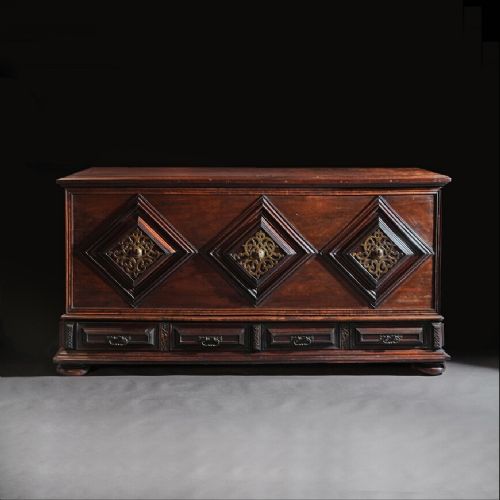
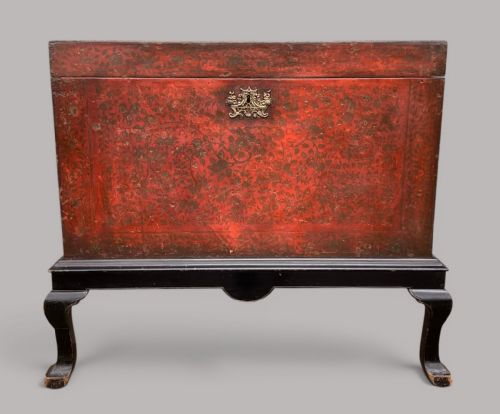
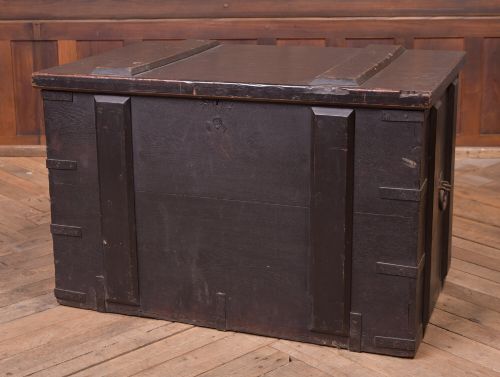
When a buyer searches for a colonial blanket chest, they encounter heavy timber trunks made for travel and storage across distant trade routes. These pieces span periods from the seventeenth century through the nineteenth century, reflecting Dutch, Spanish, Portuguese, and British colonial influences.
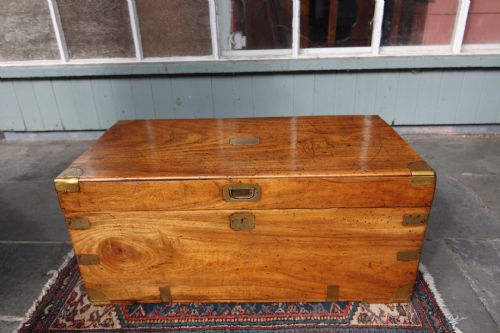
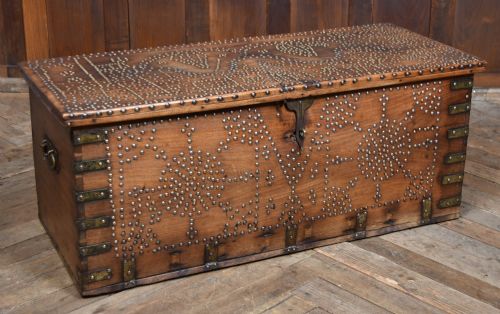
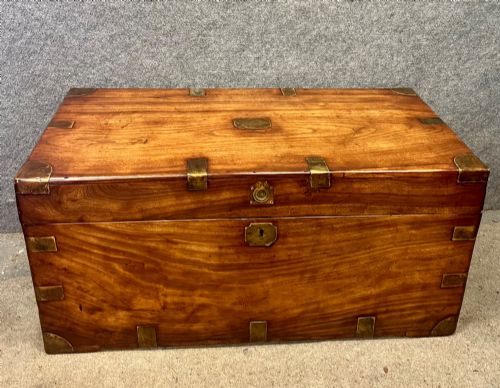
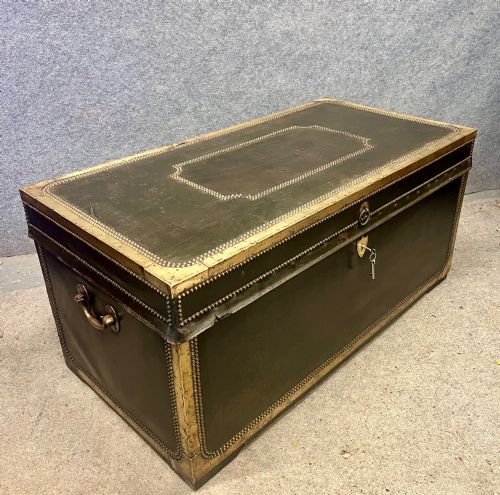
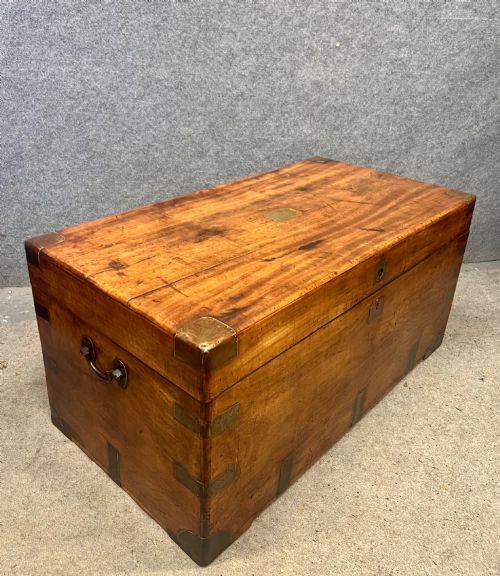
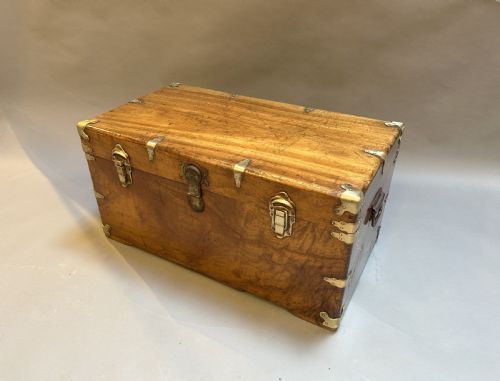
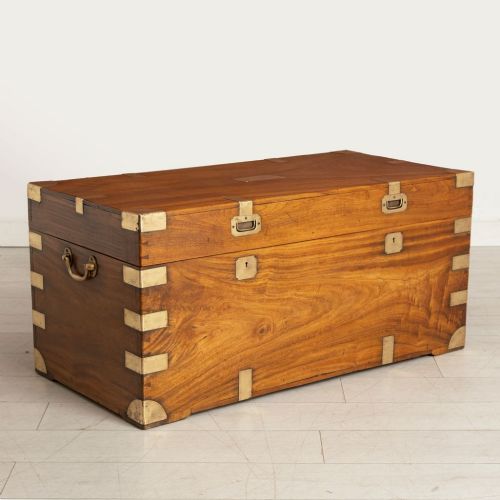
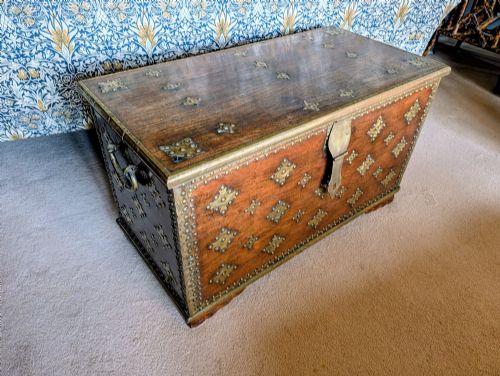
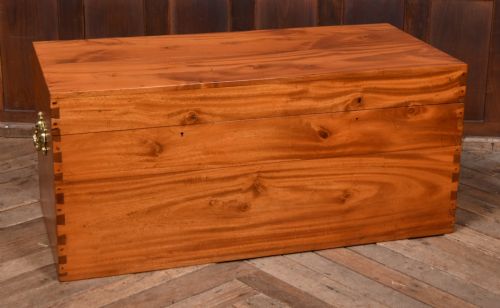
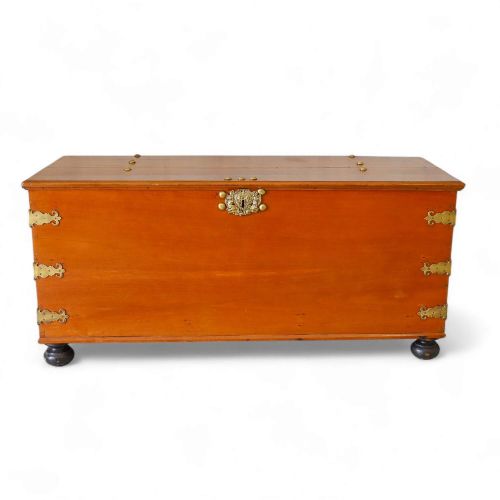
The version most commonly met on this page is the nineteenth-century camphor wood or teak campaign trunk, frequently fitted with brass bindings and corner brackets. Alongside these, buyers find padouk Zanzibar boxes, walnut chests, and leather-covered coffers dating back to the seventeen-hundreds.
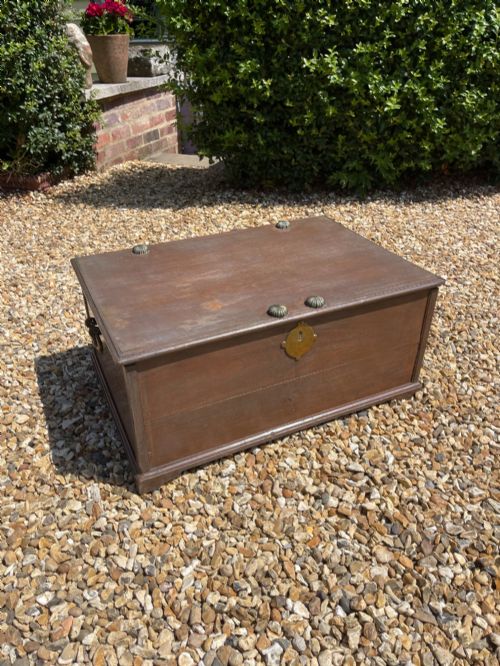
Makers constructed these chests for mobility, outfitting them with iron or brass carrying handles and robust locks to protect textiles and valuables on long sea voyages. Their utilitarian origins mean interiors often retain simple open compartments or small till boxes designed for practical sorting.
Materials and Construction
Craftsmen utilised aromatic and dense tropical timbers such as camphor wood, teak, padouk, walnut, and mahogany, selecting woods that resisted humidity and insect damage. Camphor wood remains especially prevalent, chosen for its insect-repelling scent as well as its stability.
Heavy brass straps, corner braces, and flush-fitting hardware reinforced the structural joints of campaign chests and storage boxes against the rigours of transit. Artisans secured leather coverings and applied brass studding on Spanish and Portuguese examples using meticulous hand-forged techniques.
Listings feature camphor wood, teak, padouk, walnut, and mahogany alongside brass, iron, and leather across the eighteenth and nineteenth centuries.
Factors Determining Quality
Quality rests primarily on the integrity of the original hardware and the selection of dense native hardwoods. Pieces retaining their heavy brass mountings, strapwork, and original locks command greater interest than those with replaced or stripped fittings.
The fineness of the dovetail joints and the thickness of the timber distinguish standard utility trunks from superior merchant or campaign chests. Well-preserved patination on the wood and leather surfaces indicates careful handling and longevity.
The Colonial Blanket Chest Glossary
- Campaign trunk
- A robust chest designed for easy transport by military officers or merchants, typically featuring recessed brass handles and reinforced corners.
- Camphor wood
- An aromatic timber native to Asia, prized in chest construction for its distinct scent and natural resistance to moths and dampness.
- Padouk
- A heavy, durable tropical hardwood with a reddish hue, frequently utilised in nineteenth-century Zanzibar and Anglo-Indian storage boxes.
- Brass bound
- A construction method where protective brass straps and corners are fastened to the exterior of a timber chest for added strength.
- Coffer
- A large box or chest traditionally used for holding valuables, distinguished from standard blanket boxes by deep proportions and heavy locking mechanisms.
Colonial Blanket Chest: Frequently Asked Questions
What were colonial blanket chests used for?
These chests originally served merchants, officers, and travellers as secure luggage for transporting clothing, documents, and personal belongings across oceans and continents.
Today, owners utilise them primarily in bedrooms and living spaces for storing blankets, linens, and bulky items while adding historical character to a room.
How do I identify a camphor wood chest?
A distinct, clean aromatic scent remains the most reliable indicator of genuine camphor wood construction, even after many decades of use. The timber itself tends to show a warm, honeyed tone with varied grain patterns that darken gracefully over time.
Are campaign chests different from standard blanket boxes?
Campaign chests feature specific structural adaptations for travel, such as flush-mounted brass handles that do not project beyond the sides and reinforced brass corners. Standard blanket boxes often lack these specific military or maritime transit fittings.
How do I date an eighteenth-century Spanish walnut box?
Dating relies on examining the construction methods, including hand-cut dovetails, forged iron hinges, and the specific style of the lock plate. Eighteenth-century examples often display simpler, heavier walnut panels with minimal decoration compared to later Victorian iterations.