



Solid Wood Coffer
A solid wood coffer is a heavy, utilitarian storage chest built to last generations, offering practical space alongside historic timber character.
Solid Wood Coffer
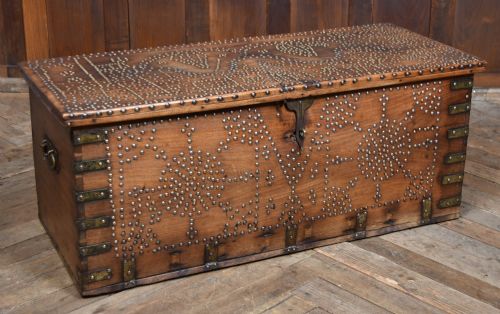
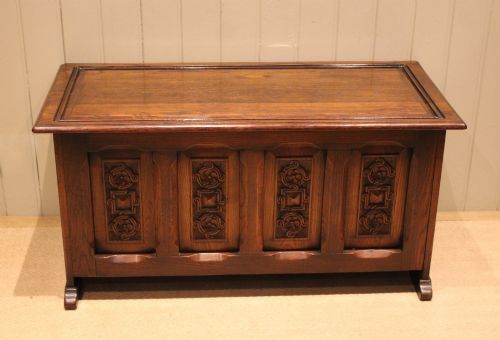
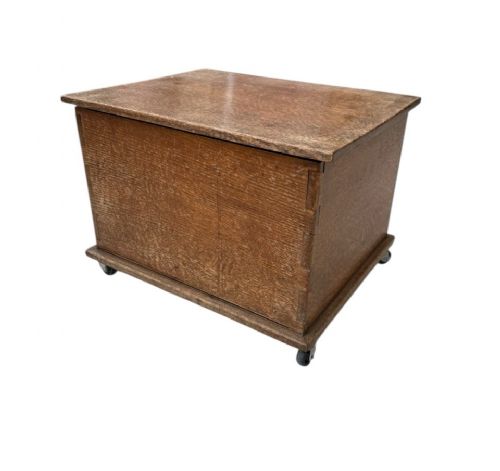
A solid wood coffer serves as a traditional storage chest, appearing across various forms including oak blanket chests, mule chests, and camphorwood campaign trunks. These sturdy boxes emerge from centuries ranging from the seventeenth century through to the early twentieth century, reflecting domestic and colonial storage needs.
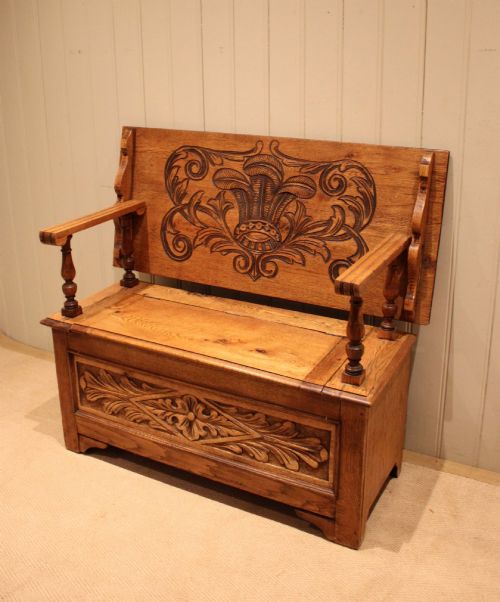
The pieces on this page lean heavily towards substantial oak construction, alongside exotic timbers like padouk and camphorwood brought back via trade and military campaigns. Forms vary from plain panels to carved surfaces, monk benches, and specialised trunks designed for transport.
Buyers encounter everything from early seventeenth-century oak coffers to Victorian campaign trunks and later Arts and Crafts interpretations. Each piece provides deep interior storage while carrying the distinct patina and grain of its primary timber.
How they were made
Construction relies upon dense hardwoods such as oak, camphorwood, padouk, and cherrywood, joined to withstand heavy use over centuries. Carpenters utilised solid planks, panel-in-frame assembly, and dovetailed corners to ensure structural stability in domestic and travel environments.
Hardware plays a crucial role in the build, incorporating brass corners, iron strapwork, and hinges designed for durability. Surface finishes rely on natural grain enhancement and traditional waxing rather than modern synthetic treatments.
Solid Wood Coffer Retail Price Guide 2026
Typical asking prices for solid wood coffer among the pieces listed under this phrase on Sellingantiques today, from the lower quarter to the upper quarter. They describe what is for sale here now, not the wider market.
Listings feature timbers including oak, camphorwood, padouk, pine, satinwood, and cherrywood spanning the seventeenth to twentieth centuries.
What varies in quality
Quality rests upon the selection of timber and the integrity of the original construction, distinguishing robust architectural chests from lighter utility boxes. Thick, well-figured solid boards command attention over plain secondary timbers.
The preservation of original hardware, locks, and hinges separates standard utility items from finer campaign pieces and detailed seventeenth-century joinery. Intact interior compartments and unaltered patination elevate the standing of a coffer.
The Solid Wood Coffer Glossary
- Coffer
- A heavy wooden chest traditionally used for storing valuables, linens, or documents. These storage pieces often feature hinged lids and sturdy boarded or panelled construction.
- Campaign trunk
- A portable chest constructed for military officers on the move, typically featuring brass bindings and recessed handles. These pieces utilise durable timbers like camphorwood or padouk to withstand tropical climates.
- Mule chest
- A storage chest combining the deep box of a coffer with one or more drawers built into the base. This form bridges the gap between traditional blanket chests and modern chests of drawers.
- Monk bench
- A convertible piece of furniture featuring a hinged top that folds down to transform a storage coffer into a table or bench. This dual-purpose design maximises space in period interiors.
- Panelling
- A method of joining wooden frames around a thinner central board to allow timber to expand and contract safely with humidity changes. This technique prevents warping in large oak furniture.
Solid Wood Coffer: Frequently Asked Questions
What is a solid wood coffer used for?
A solid wood coffer provides deep interior storage for blankets, bed linen, and household items.
Beyond practical storage, these heavy chests function as statement furniture pieces, serving as coffee tables, window seats, or hallway benches.
How do I date an antique coffer?
Dating relies upon examining the construction techniques, tool marks, and joinery methods visible on the interior and underside.
Early seventeenth-century pieces display hand-riven oak boards and peg joinery, whereas later Victorian and Edwardian examples show machine-sawn timber and different hardware styles.
Where should I place a camphorwood chest?
Camphorwood trunks suit bedrooms and hallways because the natural aromatic timber repels moths and insects.
Keep these chests away from direct heat sources and radiators to prevent the solid wood from drying out and splitting.
What is the difference between a coffer and a mule chest?
A standard coffer consists of a single deep compartment accessed entirely through a top-hinged lid.
A mule chest incorporates one or more drawers beneath the main storage compartment for easier access to smaller garments.