


Colonial Accent Table
A colonial accent table brings rich regional carving and diverse timbers from distant trade routes directly into a modern room.
Colonial Accent Table
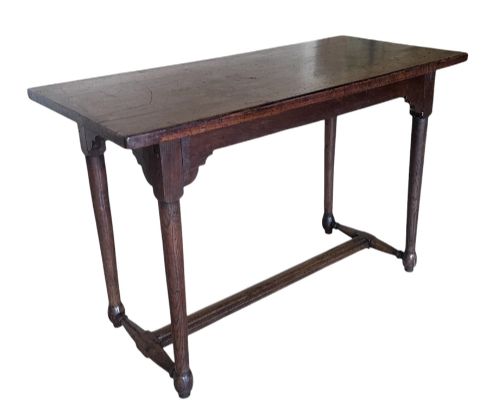
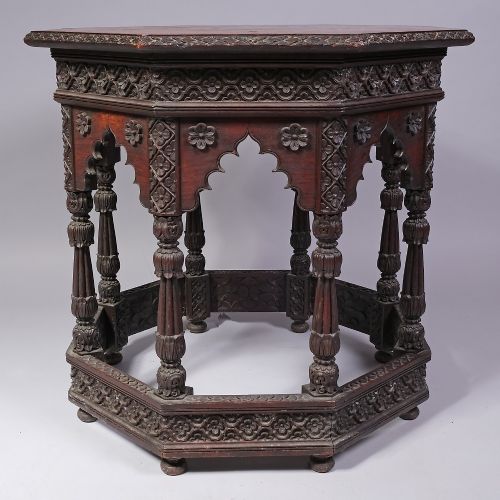
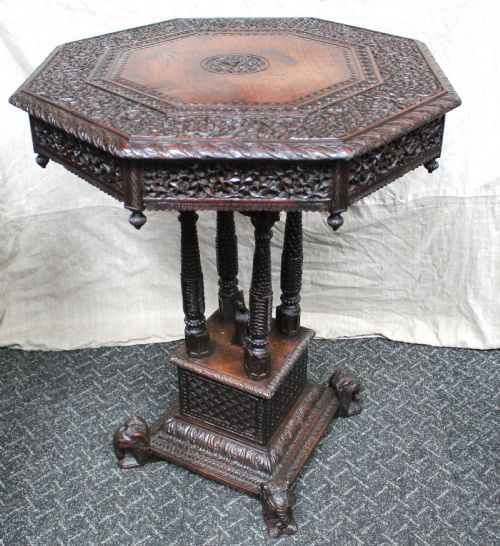
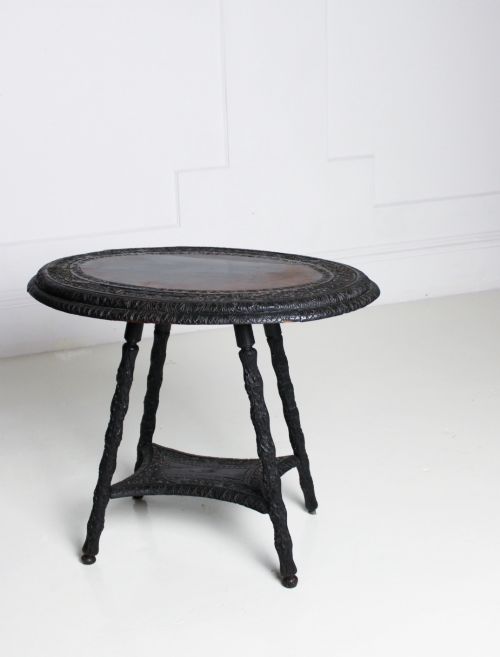
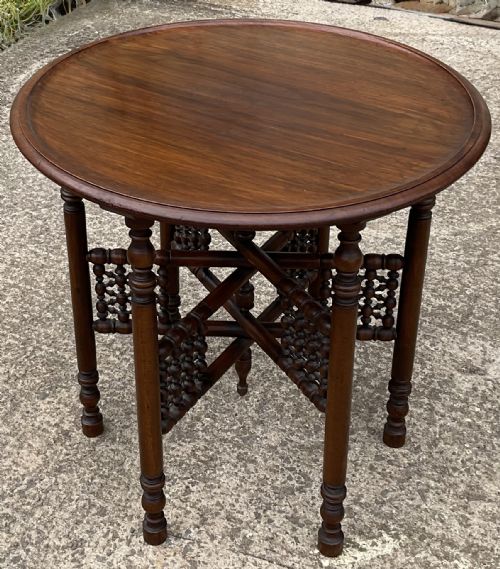
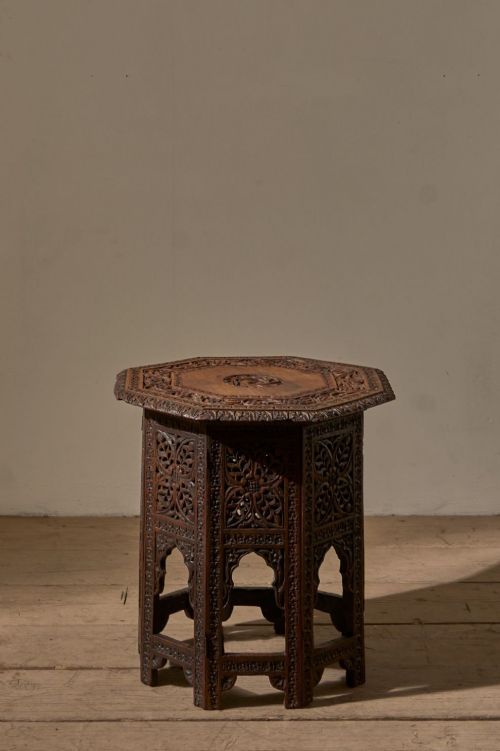
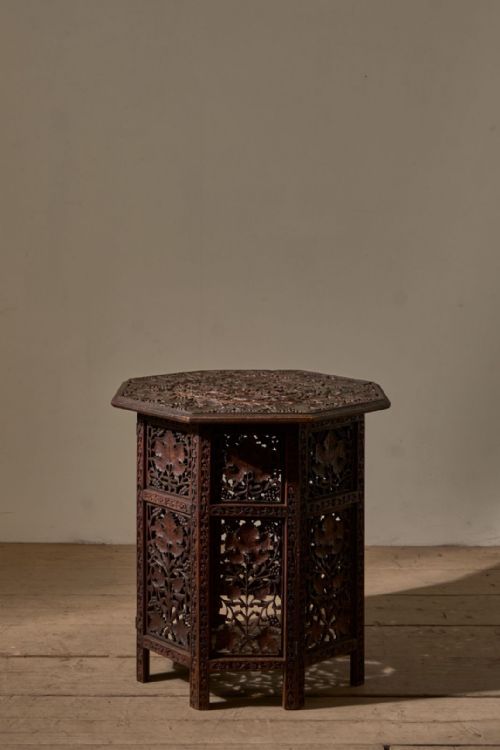
A colonial accent table encompasses small occasional, side, coffee, and console pieces produced during the nineteenth and early twentieth centuries under British, Spanish, and European influence overseas. Buyers seeking a colonial accent table most frequently encounter richly carved octagonal, pedestal, and folding forms originating from India, Burma, and colonial outposts. These versatile items served domestic purposes in expatriate households before travelling back to European interiors as decorative furnishings.
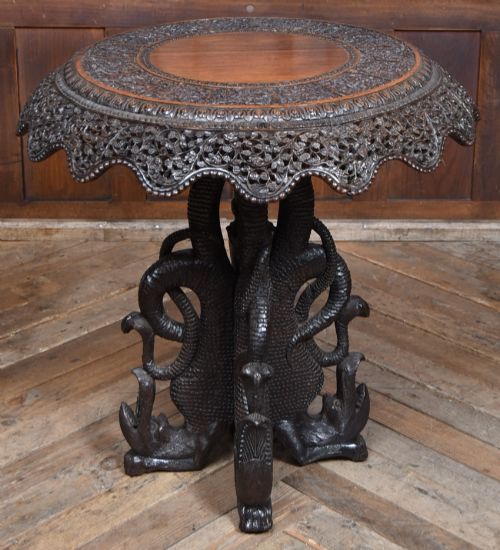
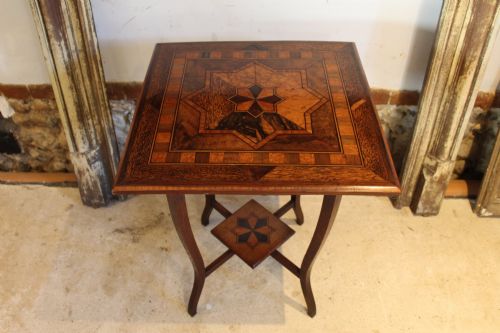
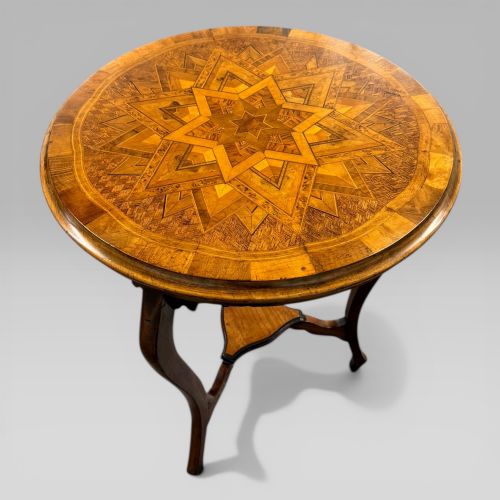
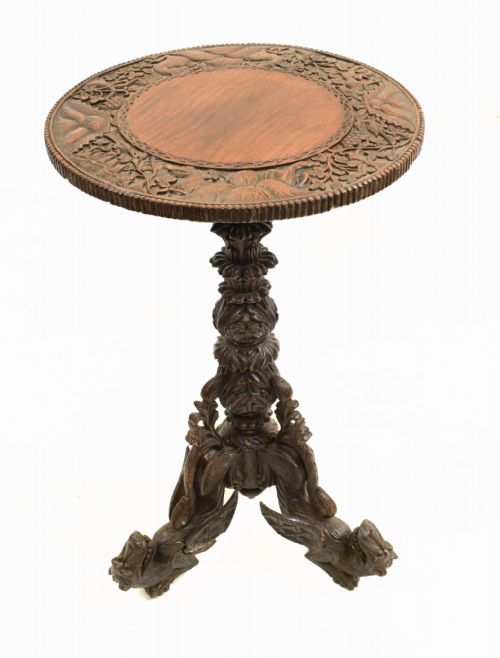
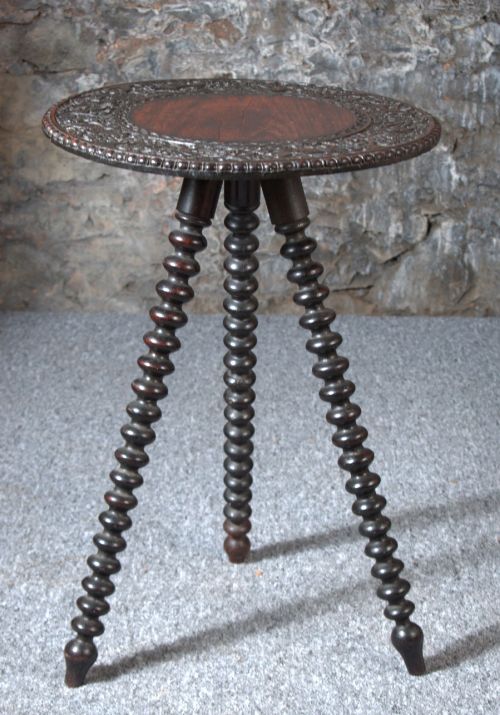
The aesthetic bridges domestic European furniture shapes with intricate indigenous craftsmanship, resulting in distinct regional types such as Hoshiarpur work and Burmese dragon or elephant motifs. Materials range from dense regional hardwoods like padauk, teak, and rosewood to lighter occasional tables incorporating complex botanical marquetry from New Zealand. Identifying these pieces relies on recognising the union of familiar Western table forms with non-Western decorative programmes.
Materials and construction
Maker workshops utilised dense tropical timbers including padauk, teak, and rosewood, which provided stable foundations capable of supporting deep, multi-layered carving. These resilient woods allowed artisans to fashion intricate pierced lattice panels, folding mechanisms, and heavy pedestals without sacrificing structural integrity.
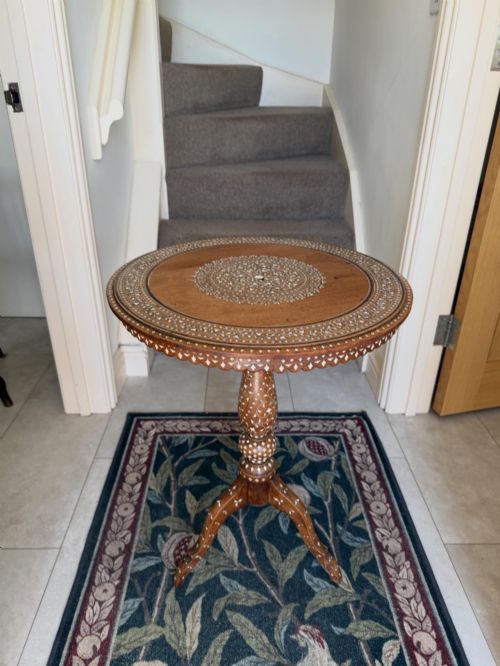
Surface ornamentation relied heavily on meticulous inlay work using bone, mother of pearl, and contrasting brass wire set directly into the timber. Artisans also employed specimen wood marquetry, assembling numerous small sections of native woods to create elaborate geometric or pictorial tabletops.
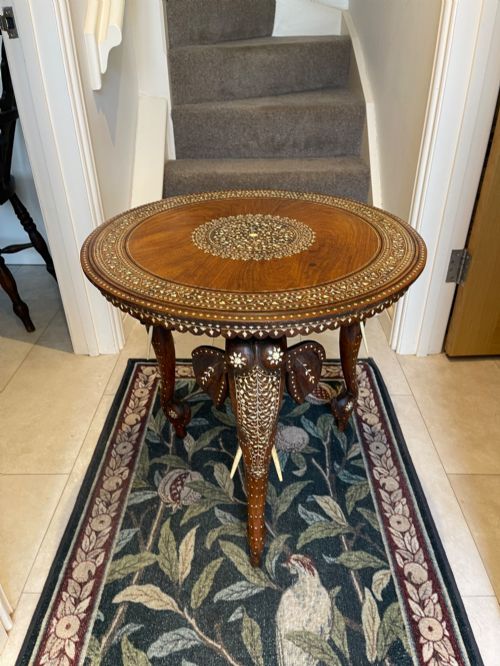
Several tables feature carved elephant heads and trunks serving as structural supports, bringing immediate personality to any quiet hallway corner.
Judging quality and execution
Excellence in these tables rests upon the crispness and depth of the hand carving, where superior examples exhibit sharp undercutting and well-defined motifs rather than shallow, mechanical indentation. The complexity of the inlay work further distinguishes finer workshops, particularly where bone, brass, or mother of pearl pieces fit precisely into the surrounding timber without excessive filler.
Structural joinery and the selection of timber grain dictate the long-term stability of the piece, especially in folding and pedestal designs subject to daily movement. Tables constructed from solid, well-seasoned exotic hardwoods with balanced proportions demonstrate the highest standard of period colonial cabinetmaking.
Anton Seuffert
The Colonial Accent Table Glossary
- Hoshiarpur
- A style of woodwork originating from Punjab, defined by dense geometric patterns formed from inlaid wood, brass, and bone. This intricate surface decoration covers every available inch of the supporting frame.
- Marquetry
- The art of applying small pieces of veneered wood to a structure to form decorative patterns or pictorial scenes. Skilled makers utilised contrasting natural timber colours to achieve detailed imagery.
- Padauk
- A heavy, durable tropical hardwood displaying a reddish hue that darkens with age. Cabinetmakers favoured this timber for pieces requiring robust structural support alongside intricate relief carving.
- Pedestal table
- A freestanding support consisting of a central column rising from feet and carrying a flat tabletop. This configuration allows for compact placement beside seating or in hallways.
- Tip top
- A tabletop mounted on a hinge mechanism that tilts into a vertical position when not in use. This clever space-saving construction originated in earlier centuries and continued into colonial production.
Colonial Accent Table: Frequently Asked Questions
What is a colonial accent table?
A colonial accent table is a small nineteenth or early twentieth-century furnishing produced in regions under European influence, combining Western forms with local craftsmanship.
These pieces typically include side, coffee, and occasional tables featuring dense regional carvings and contrasting inlays.
How were these tables used originally?
Expatriate families and local elites utilised these portable tables for serving tea, displaying ornaments, or holding lamps within colonial residences.
Their flexible designs, including folding frames and tilt tops, allowed for easy relocation and storage in warm climates.
How do I care for exotic hardwoods?
Maintain these surfaces by keeping them away from direct heat sources and sudden humidity changes that might cause timber to split or warp.
Apply occasional natural wax and dust gently with a soft cloth to preserve the polished finish without harming delicate inlays.
How do I tell regional styles apart?
Distinguish regional variations by observing the specific decorative motifs and inlay techniques applied to the timber frame.
Indian examples frequently display elephant figures and Hoshiarpur bone inlay, whereas Burmese pieces typically showcase deep relief floral and animal carvings.