
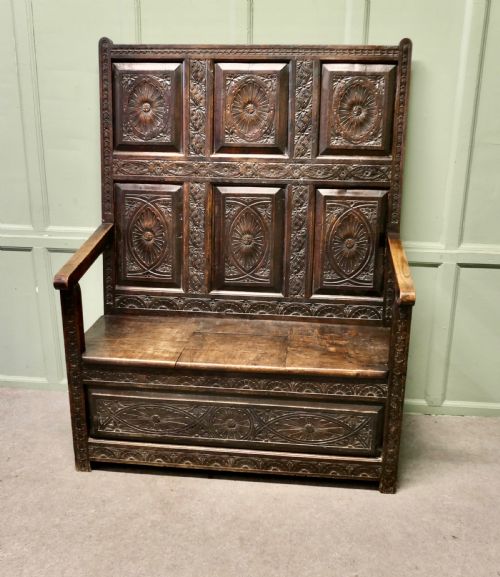
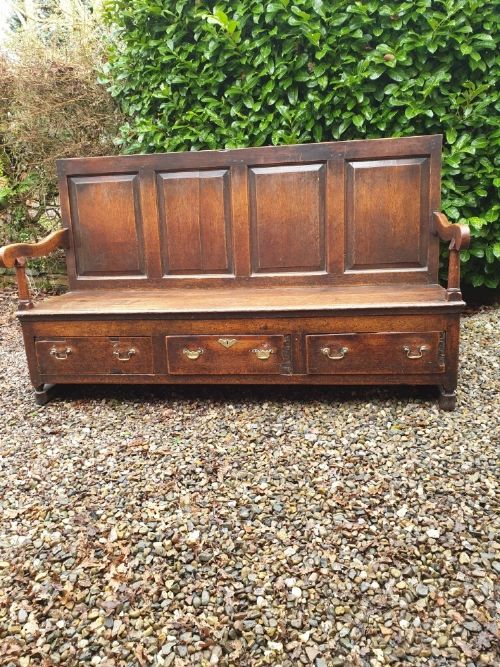
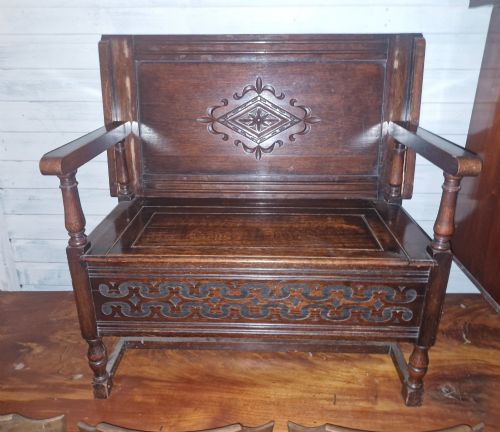
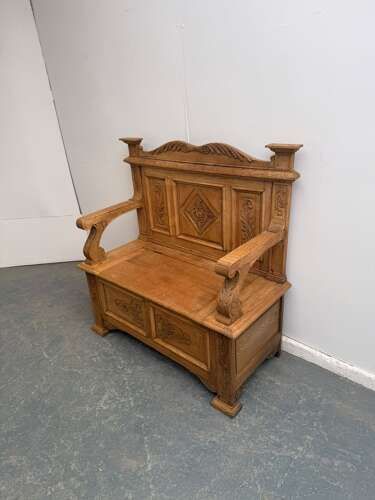
Coffer Seat Bench
A coffer seat bench combines storage with a traditional seat, offering practical utility and period character for a hallway or living space.
Coffer Seat Bench
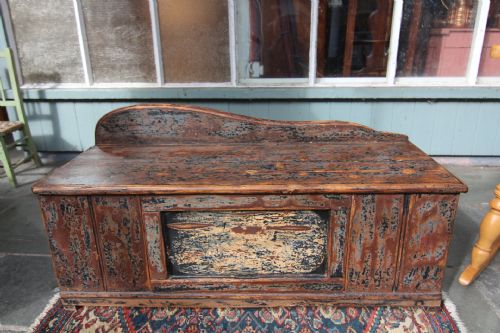
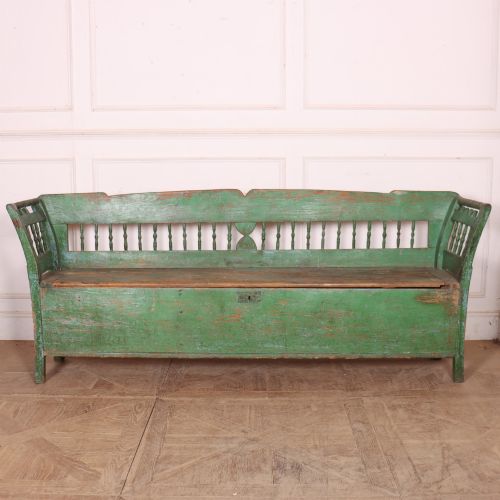
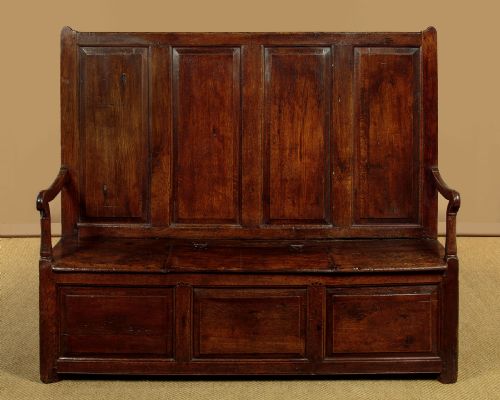
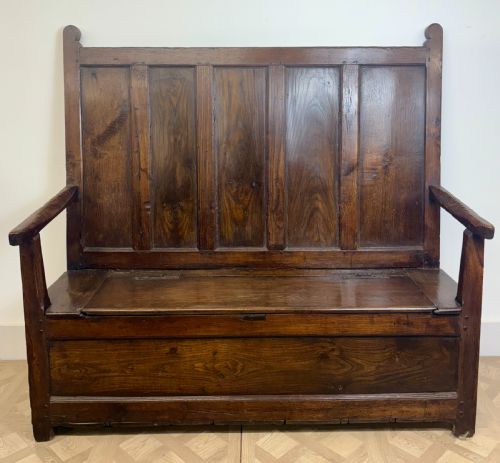
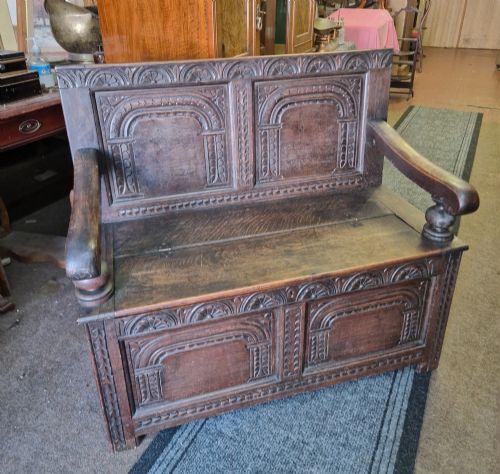
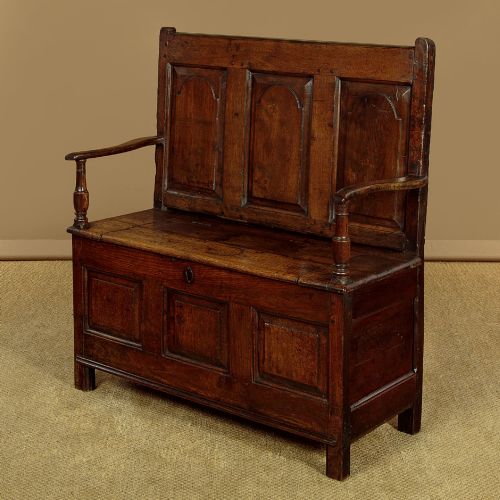
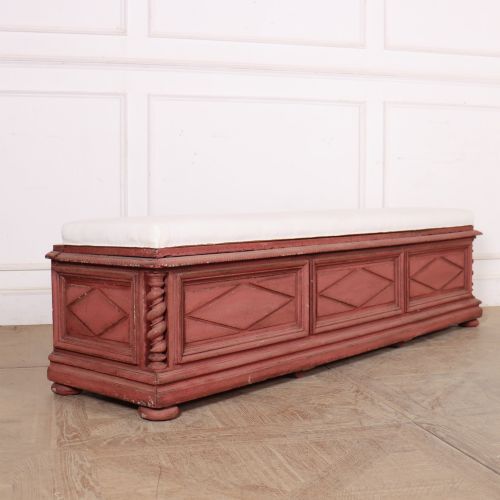
When you search for a coffer seat bench, you encounter forms that merge seating with enclosed storage, historically used in halls and farmhouses. The pieces appearing here span centuries of craftsmanship, ranging from seventeenth-century vernacular oak examples to later revival pieces and painted continental designs.
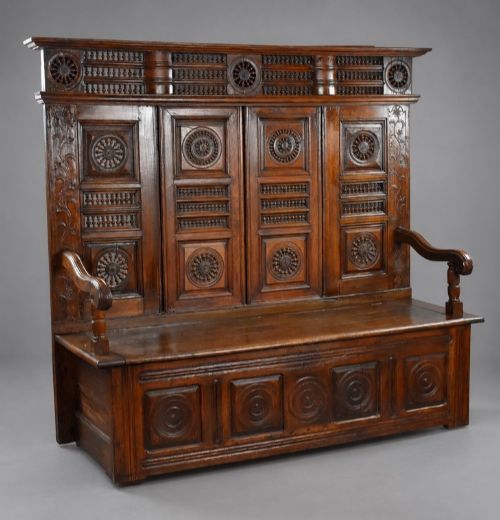
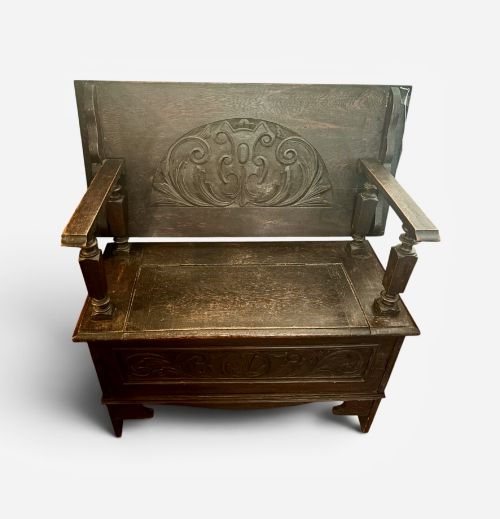
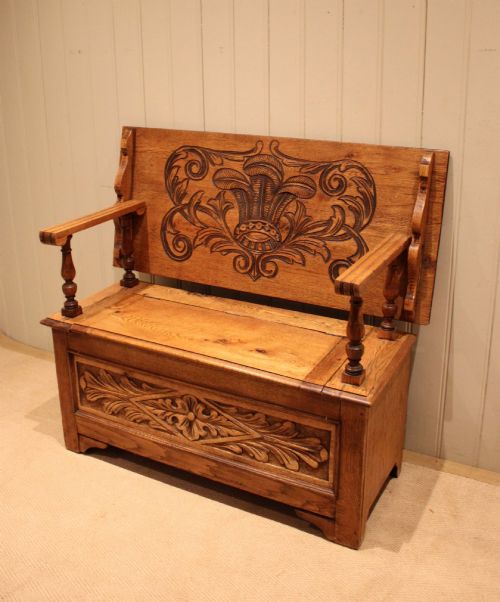
You are most likely to meet solid oak box settles and hall benches featuring lift-up seats or fold-over table tops. These items served a dual purpose in domestic spaces, keeping household textiles or belongings secure while providing a bench for the hearth or entrance.
The selection includes regional pieces from Wales, England, France, Italy, and Hungary, showing variety in timber choice and decorative carving. Forms stretch from high-backed settlers designed to block draughts to smaller monks benches and low window seats.
How they were made
Joinery relies heavily on solid timber construction, with oak predominating alongside pine, ash, walnut, and mahogany. Carpenters utilised traditional panel-and-frame techniques to build the enclosed box bases, ensuring the storage compartments remained sturdy under daily use.
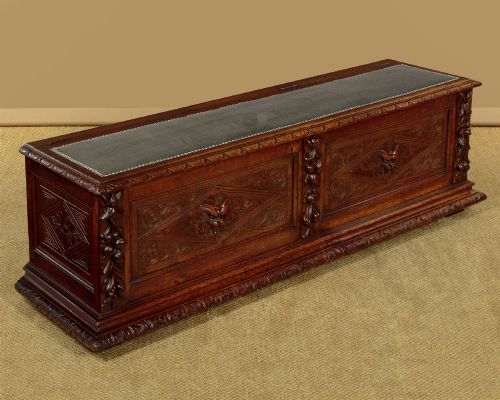
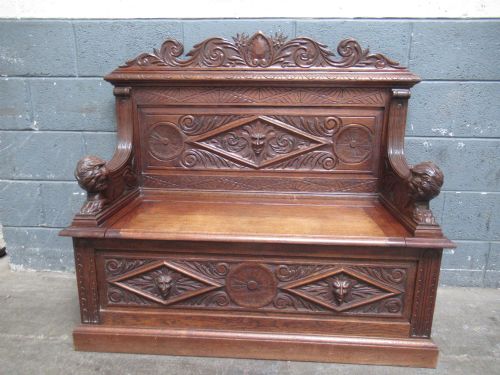
Surface decoration frequently involves hand carving, incorporating panels, linenfold motifs, or figural details such as Green Man masks. Finishes range from natural wax over aged timber to historic painted surfaces in blue, black, or earthy tones.
Some Victorian examples include carved Green Man motifs glaring out from the woodwork, keeping a watchful eye over your hallway.
What varies in quality
Quality rests in the proportion of the timber, the crispness of the hand carving, and the degree of original construction remaining intact. Earlier seventeenth and eighteenth-century examples display tighter joinery and heavier boards, whereas later revival pieces vary in the depth and execution of their decorative panels.
The survival of original hinges, feet, and interior floorboards distinguishes uncompromised pieces from those subject to extensive timber replacement. Surface patination also plays a role, with untouched waxed finishes holding more integrity than heavily refinished surfaces.
The Coffer Seat Bench Glossary
- Settle
- A wooden bench with a high back, solid arms, and a box seat compartment beneath. This form protected sitters from cold draughts in medieval and early modern rooms.
- Monks bench
- A dual-purpose piece featuring a hinged back that folds down flat to transform the seat into a table. These compact items suit smaller halls and reception rooms.
- Coffer
- A chest or box with a lid, used for storing valuables or linens. When fitted with arms and a back, it becomes a seating bench.
- Vernacular
- Objects designed by local craftsmen for everyday domestic use, following regional traditions rather than high-style academic design.
- Panelling
- Framework constructed with fitted thin wooden boards set into grooved stiles and rails to prevent warping.
Coffer Seat Bench: Frequently Asked Questions
What is a coffer seat bench?
A coffer seat bench is a piece of furniture that combines a lidded storage box with a wooden bench seat. It functions simultaneously as a seat and a trunk for household storage.
Historically found in halls and farmhouses, these pieces keep items stored out of sight while offering everyday seating.
How were settle benches used?
Settle benches were placed near firesides or in entrance halls to shield occupants from cold draughts. The high backs and solid wooden sides trapped heat around the sitter.
The enclosed box beneath the seat held blankets, winter clothing, or household stores.
Are monks benches tables too?
Certain types of coffer seat benches feature a hinged back that flips forward onto the arms. This action converts the bench seat into a table top.
Craftsmen designed this convertible format to save space in smaller rooms during past centuries.
How do I date an old bench?
Dating relies on observing construction methods, timber species, and tool marks visible on the wood. Earlier pieces from the seventeenth century often show hand-riven boards and pegged mortise and tenon joints.
Later Victorian and revival pieces typically display machine-sawn timber and more uniform decorative carving.