



Oak Tilting Top Table
An oak tilting top table combines clever domestic engineering with sturdy country carpentry, offering a versatile surface that folds away neatly when not in use.
Oak Tilting Top Table
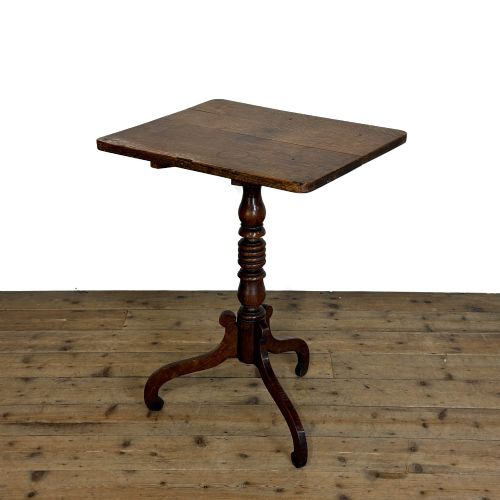
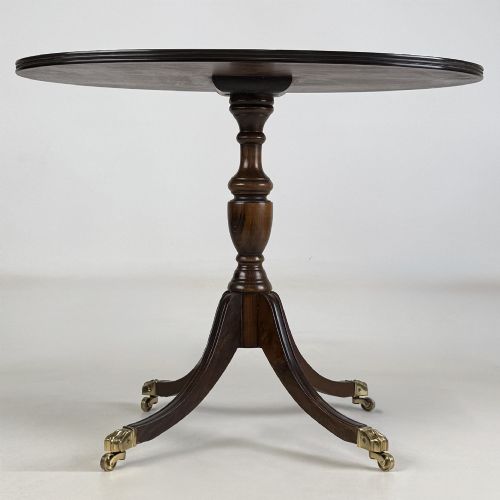
An oak tilting top table is a practical antique form designed to save space in domestic interiors. When searching this phrase, a buyer encounters pieces intended for various household uses, from small lamp tables to larger dining formats.
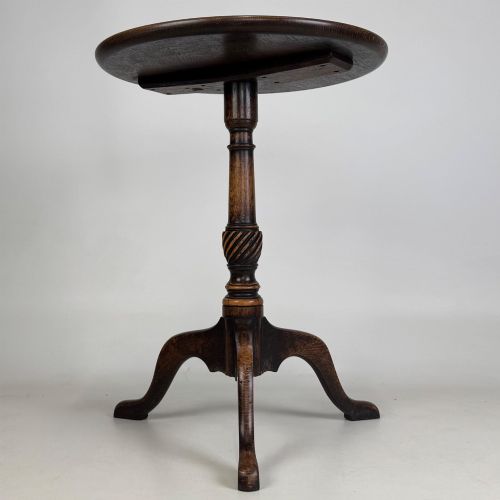
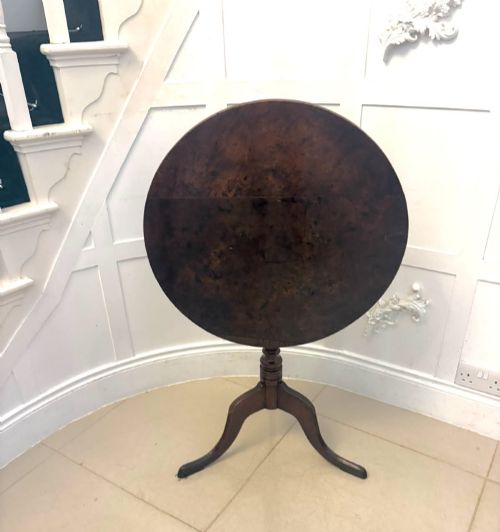
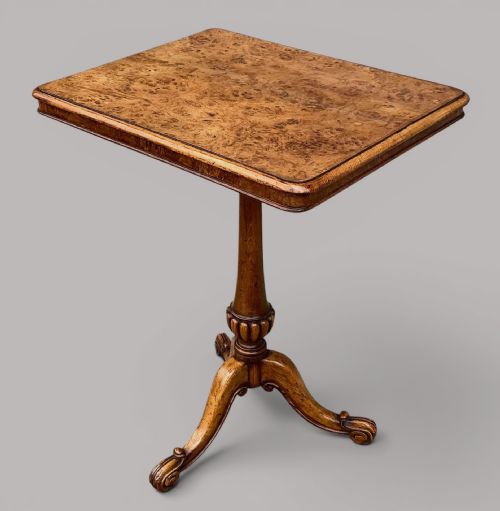
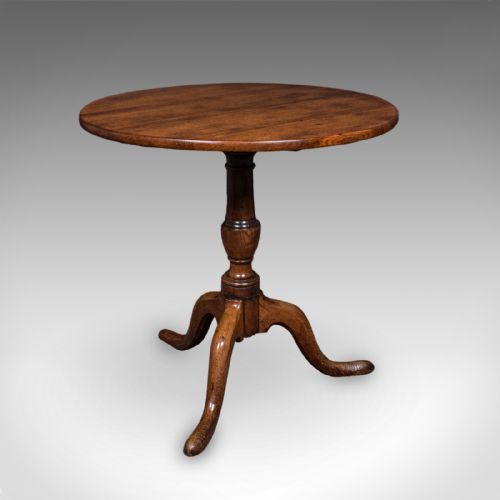
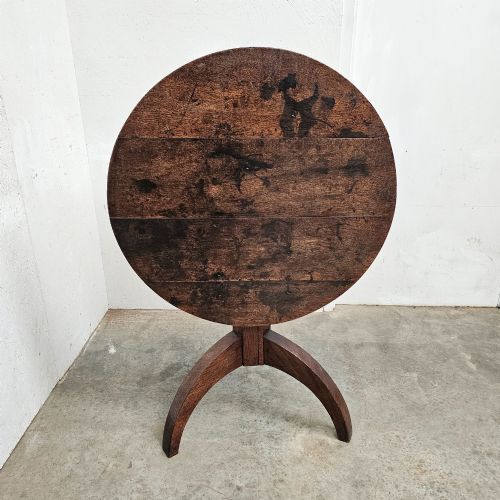
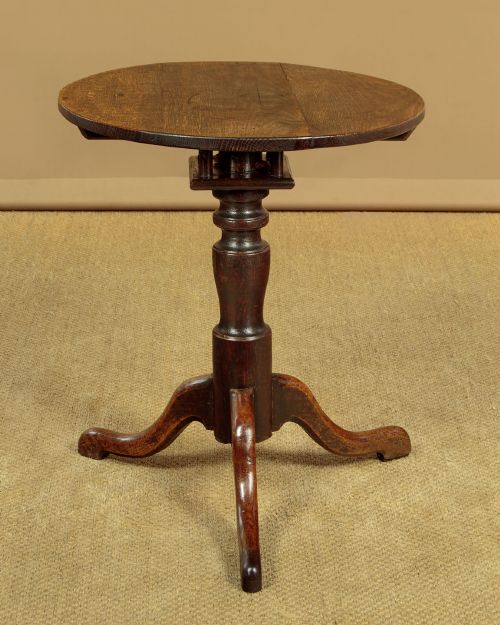
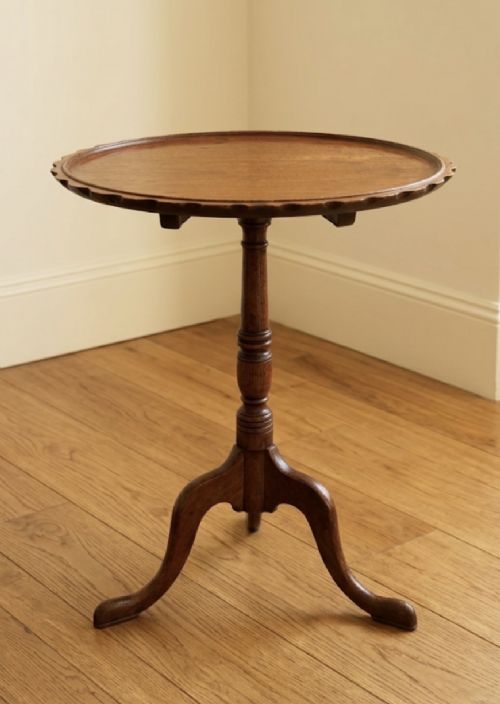
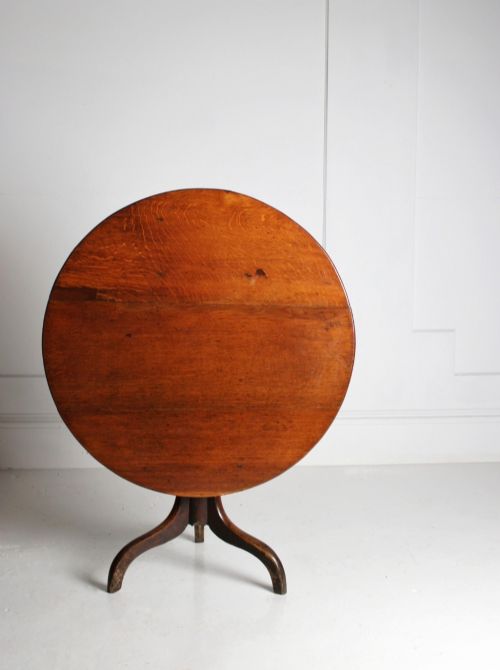
The most common examples on this page are tripod tables originating from the eighteenth and nineteenth centuries. These feature circular tops mounted on pivoting mechanisms supported by three splayed legs.
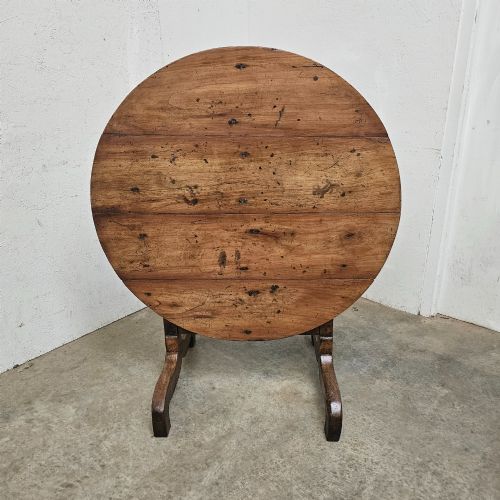
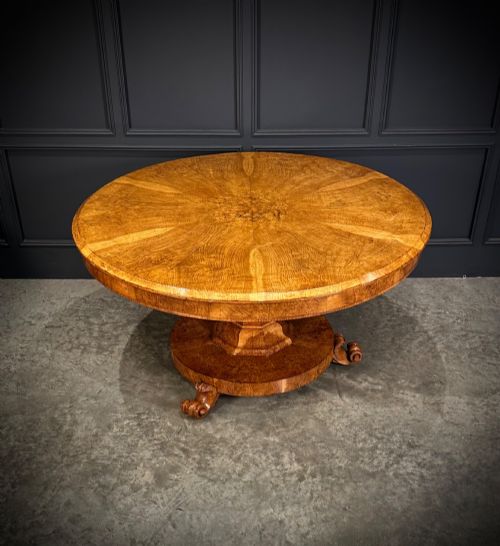
Other variations include French folding vendange or vineyard tables alongside larger breakfast and centre tables. Regional pieces display distinct characteristics influenced by both English country workshops and continental makers.
How they were made
Cabinet makers built these tables primarily using solid timber such as oak, often incorporating burr oak, pollard oak, or fruitwood veneers for decorative top surfaces. Secondary woods like beech sometimes appear in the structural tripod legs and under-framing.
The tilting mechanism relies on a birdcage or catch block attached beneath the table top, allowing the surface to pivot upright on a central turned pillar. Joinery techniques include tenon joints and hand-turned components that demonstrate traditional carpentry skills.
Certain Victorian examples abandon plain utility entirely, featuring specialised zodiac carvings for tarot readings.
What varies in quality
Quality in an oak tilting top table rests primarily on the choice of timber and the grain figure of the wood used for the top. Selected burr or pollard oak surfaces provide a striking visual depth that separates finer vernacular pieces from standard utilitarian examples.
Proportion and stability determine the success of the design. Well-balanced tripod bases with slender, shapely legs and crisp turning on the central column represent superior workshop production compared to heavier, unrefined constructions.
The Oak Tilting Top Table Glossary
- Tilt top table
- A table with a hinged mechanism allowing the surface to pivot from horizontal to vertical. This design enabled the furniture to stand flat against a wall when not in use.
- Tripod table
- A small freestanding table supported by a central pillar resting on three legs. They gained popularity during the Georgian period for tea drinking and general occasional use.
- Vendange table
- A French wine harvest table featuring a folding mechanism designed for easy storage. They typically display round wooden tops paired with collapsible wooden bases.
- Birdcage
- A timber framework beneath the table top that connects the pivoting mechanism to the central column. It allows the top to both tilt and rotate independently.
- Pollard oak
- Timber taken from trees that were cut close to the trunk to encourage dense branching. This growth pattern creates a heavily figured and mottled grain highly prized by cabinet makers.
Oak Tilting Top Table: Frequently Asked Questions
How do I use a tilt top table today?
These pieces function well as lamp tables, side tables, or compact surfaces in sitting rooms and hallways. Their tilting mechanism allows them to stand flush against a wall as decorative display pieces when floor space is limited.
Their sturdy timber construction handles daily use comfortably. Placing them away from direct heat sources helps preserve the stability of the solid wood top and its movement joints.
What is a vendange table?
A vendange table is a French folding table historically used during the grape harvest. They feature collapsible wooden bases that make them straightforward to store and move between rooms.
Today they serve frequently as casual dining tables or large coffee tables. Their rustic charm suits contemporary and traditional interiors alike.
How do I distinguish an 18th century table?
Eighteenth century examples often display hand-turned pedestals, pegged joints, and rich patination developed through centuries of wax polishing. The construction details beneath the top reveal traditional hand-tool marks rather than modern mechanical fasteners.
Timber selection in earlier pieces tends toward solid native oak and fruitwood with subtle grain variations. Examining the underside and the pivot mechanism provides clear indicators of age and construction method.
What is burr oak?
Burr oak is a specialised wood harvested from tree growths that produce swirling, knotty grain patterns. Cabinet makers prized this material for veneering table tops to create striking visual movement.
Tables featuring burr oak surfaces usually represent higher quality workshop production. The decorative grain provides a strong contrast against the simpler solid oak used for the base and legs.