


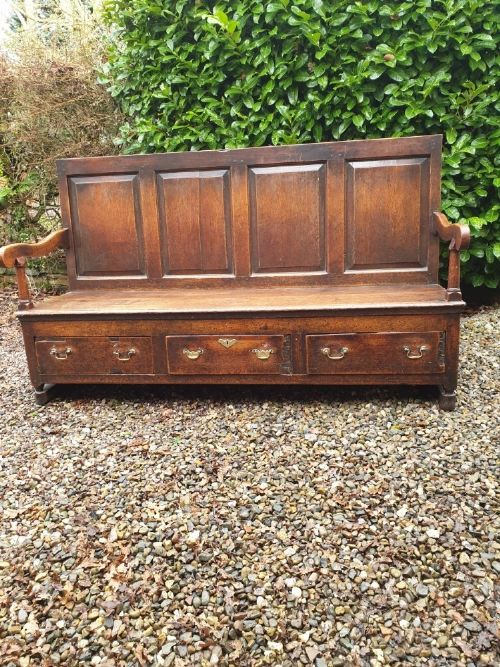
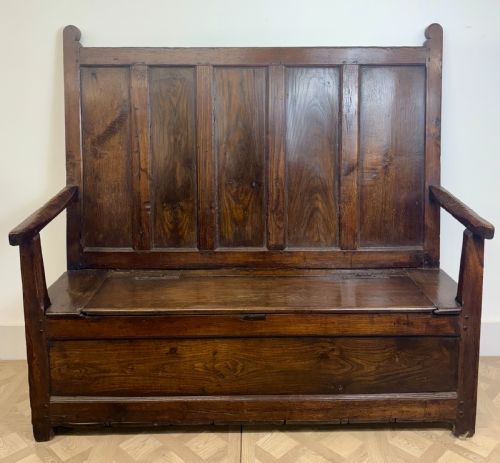
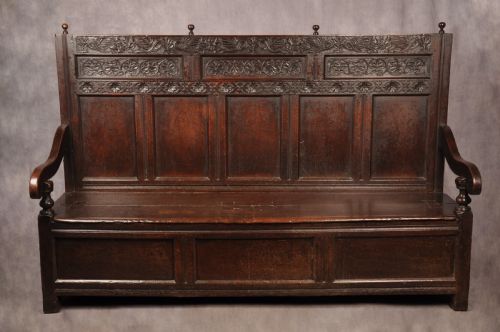

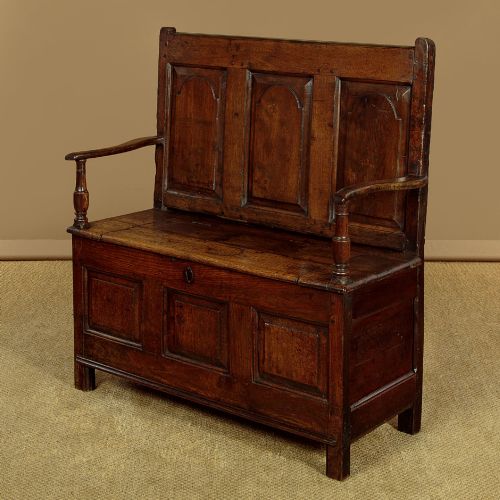



Coffer Bench with Back
These coffer bench with back pieces combine seating and storage in one sturdy frame, giving any hallway or kitchen an honest, practical foundation.
Coffer Bench with Back
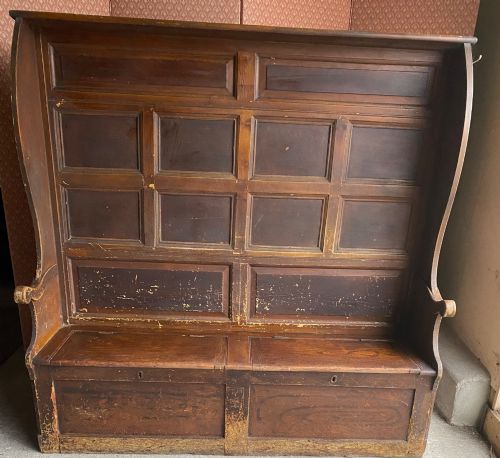
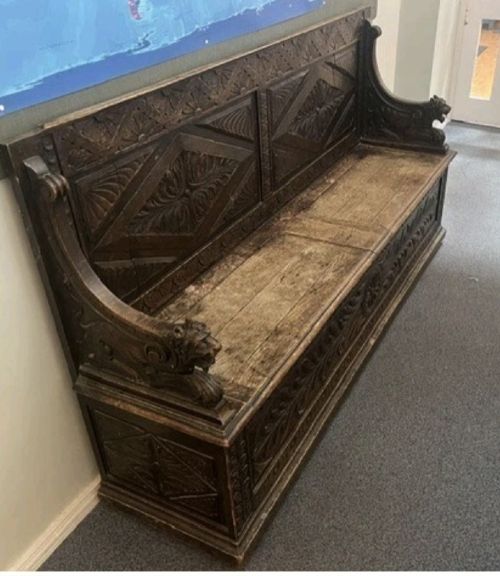
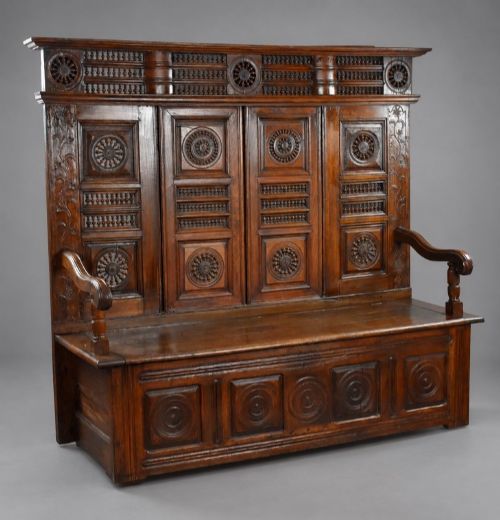
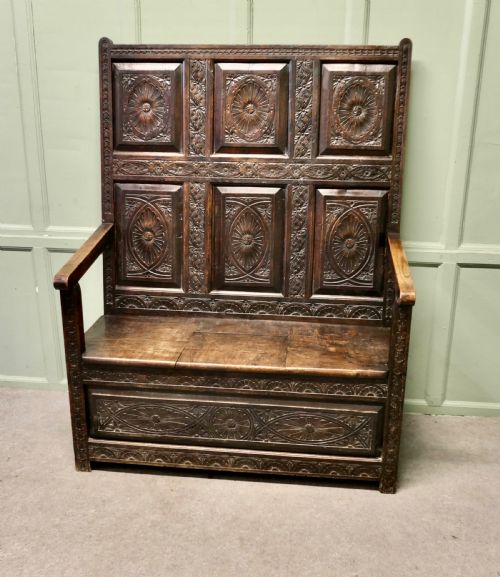
When you search for a coffer bench with back, you are looking at substantial seating with a concealed storage compartment beneath the seat and a protective high or low wooden back. The examples on this page span the seventeenth, eighteenth, and nineteenth centuries, originating from English, Welsh, French, Flemish, and Hungarian workshops.
The form frequently appears as a box settle or hall bench, utilising native timbers like oak and pine to create a solid piece of furniture that stood against draughty walls in domestic interiors. You will encounter robust country primitives alongside more finely carved Flemish Baroque and Georgian vernacular iterations.
These forms served practical household functions long before modern cupboards became common, keeping blankets and provisions away from damp flagstone floors. The high backs shielded occupants from cold draughts in large communal rooms.
How they were made
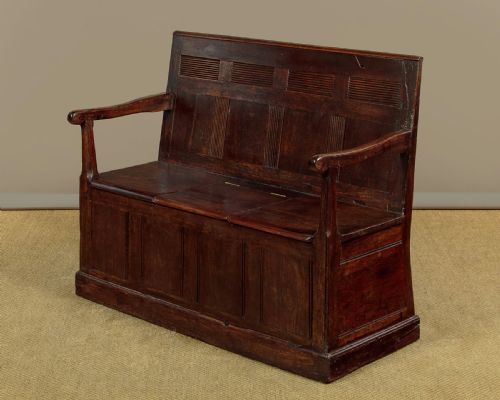
Joiners built these benches primarily from solid oak and pine, employing traditional pegged mortise and tenon joints to withstand decades of daily use. Iron strap hinges and brass fittings frequently secure the lids of the box seats, while paint or clear wax finishes protect the timber surfaces.
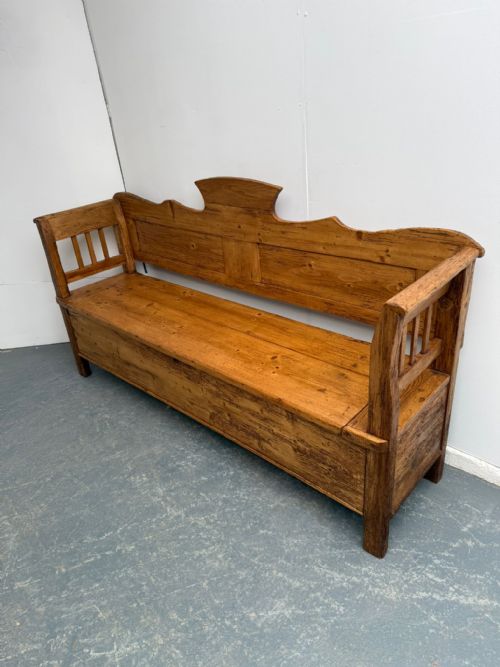
Makers shaped the backs using solid planks, spindles, or carved panels, depending on the regional style and the workshop tradition of the maker. Structural integrity relied on thick boards and heavy framing rather than internal veneers or modern adhesives.
Coffer Bench with Back Retail Price Guide 2026
Typical asking prices for coffer bench with back among the pieces listed under this phrase on Sellingantiques today, from the lower quarter to the upper quarter. They describe what is for sale here now, not the wider market.
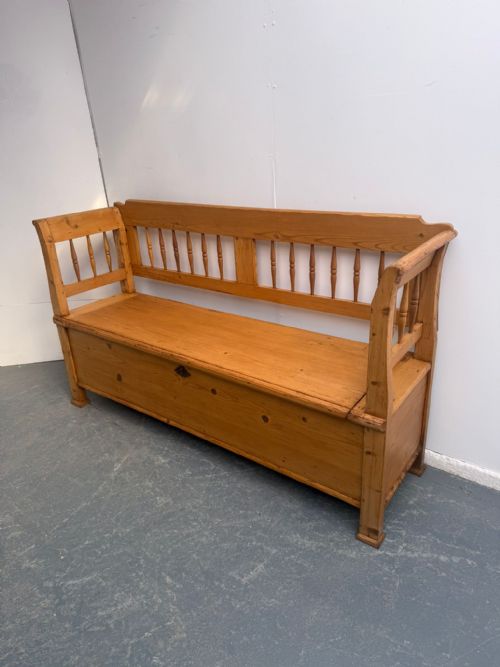
Several Hungarian pine benches feature spindled backs, proving that even utilitarian storage boxes sometimes wanted to look remarkably airy.
What varies in quality
Quality in these pieces rests upon the integrity of the original timber and the restraint shown in any subsequent timber repairs. Retaining original hinges, boards, and untouched surface patination elevates an example far above one stripped bare or heavily rebuilt.
Carved details range from simple vernacular mouldings to intricate Flemish Baroque reliefs, where the depth and crispness of the hand-carving define the ambition of the original maker. The balance of proportions between the box base and the backrest also dictates the visual weight of the bench.
The Coffer Bench with Back Glossary
- Box settle
- A wooden bench featuring a closed storage box beneath the seat and a high backrest designed to block draughts. This form combines seating with heavy-duty domestic storage.
- Vernacular
- Furniture made by local craftsmen using regional styles and readily available native timbers rather than following strict classical pattern books. These pieces reflect the practical needs of their immediate locality.
- Flemish Baroque
- An ornate seventeenth-century style originating in Flanders, characterised by dramatic carved relief work, scrolls, and dynamic surface movement. Pieces in this style display far greater decorative ambition than plain country furniture.
- Spindled
- Featuring rows of turned wooden bars or rods, typically forming an open backrest or decorative section. This technique lightens the visual mass of large pine or oak benches.
Coffer Bench with Back: Frequently Asked Questions
What is a coffer bench with back?
A coffer bench with back is a traditional seating furniture piece that incorporates a chest or box beneath the seat for storage, complemented by a vertical backrest.
These versatile items served generations as hallway or kitchen seating while keeping household textiles and goods securely stored away.
Where did these benches originate?
The pieces seen here come from various European traditions, including English, Welsh, French, Flemish, and Hungarian regional workshops.
Local timber availability and domestic customs heavily influenced whether a workshop built in plain pine or heavy carved oak.
How do I date an old bench?
Dating relies on observing construction methods, tool marks, timber shrinkage, and stylistic indicators such as panel carving or turned spindles.
Earlier seventeenth and eighteenth-century examples often display pegged joinery and hand-riven boards, while nineteenth-century pieces show more standardised machine preparation.
How should I care for waxed pine or oak?
Maintain the timber by applying a traditional beeswax polish sparingly and buffing it gently with a soft cloth to nourish the dry wood.
Keep the furniture away from direct heat sources and sudden humidity changes to prevent the old boards from splitting or warping.